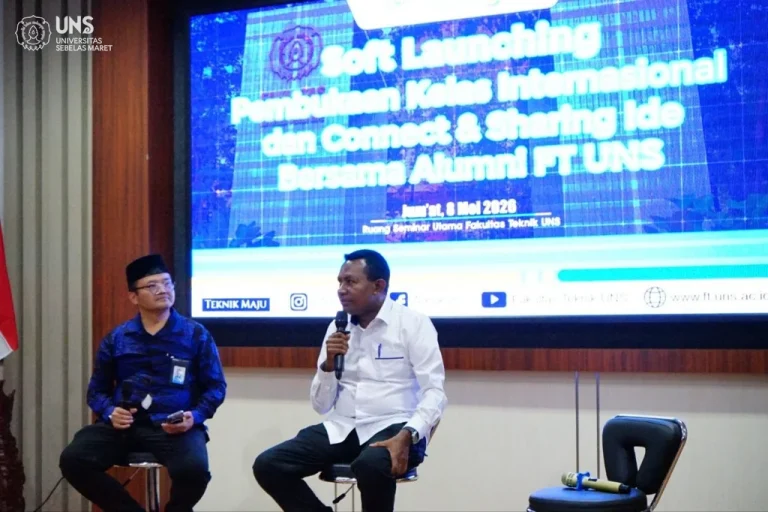
UNS – The Voluntary Corps (Korps Sukarela – KSR) Universitas Sebelas Maret (UNS) Surakarta hold an online seminar on Sunday (21/6/2020) on “Indonesia Hebat Hadapi New Normal” (Great Indonesia Facing the New Normal) inviting two speakers and guided by the young doctor from the Faculty of Medical Science (FK) UNS, Anisa Naziha, S.Ked through Google Meeting Application.
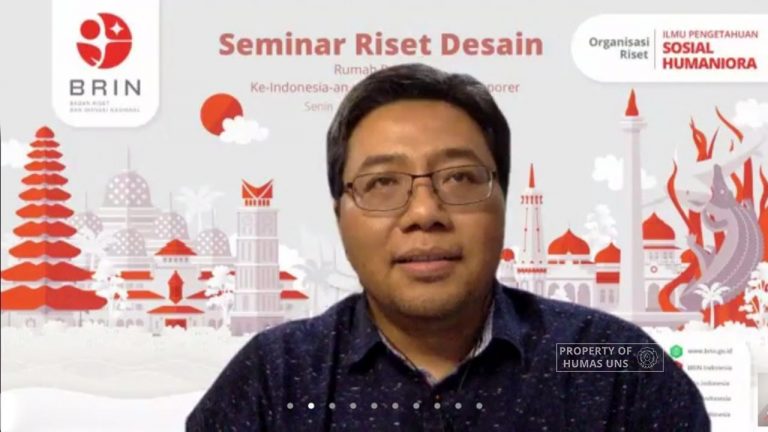
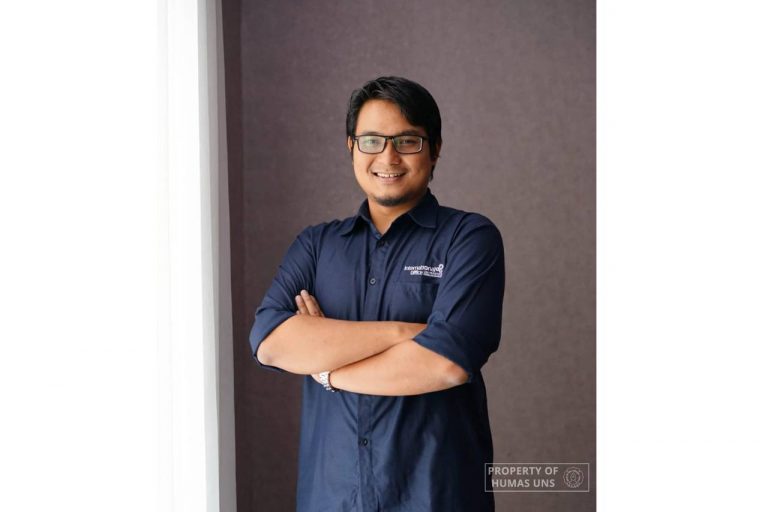
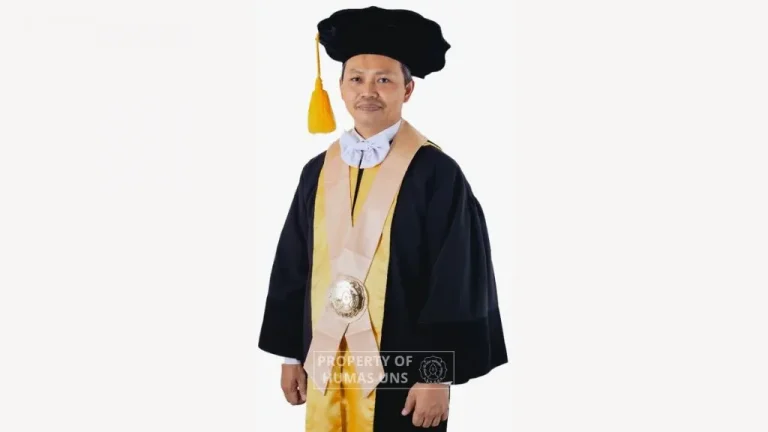
The invited speakers for the event were dr. Tonang Dwi Ardyanto, Sp.PK, Ph. D as the Deputy Director of Education and Research of UNS Hospital and the spokesperson for UNS Hospital Covid-19 Taskforce and Fadjri Kirana Anggarani, S.Psi., MA. The Faculty Member of Psychology Program UNS and Psychology Team at the Career Development Centre (CDC) UNS. More than 100 people attended the event from various regions.
Starting the material on “Healthy Life Style in New Normal Era”, dr. Tonang explained the development of Covid-19 and its transmission, its impacts on social life, especially on health, social, and economic aspects, which confused the community in choosing between health and economic aspects. As a response, the government issued a Large-Scale Social Restriction (PSBB). dr. Tonang mentioned that looking at the data, Indonesia should not relaxing the restriction at present because many considerations should be taken.
“To be frank, we cannot afford relaxation yet, but we realized that considering employments, economy, and other factors, thus, the government promotes the relaxation gradually,” explained dr. Tonang.
On the occasion, dr. Tonang explained the four stages of recommendation in facing the pandemic provided by the World Health Organization (WHO). The first stage is performing preparation on the existing condition. Followed by detection process, protection and treatment. Then reducing the transmission, and lastly develop innovation and learn from the condition. Indonesia has passed and performed the first three stages and currently goes through the fourth stage, finding innovation and learning in the form of the New Normal.
“We want to develop physical distance without widening the social distance,” dr. Tonang reminded.
Concerning the new normal, dr. Tonang explained the vaccine development process, that Indonesia is in the clinical test in Bandung. In normal conditions, this process takes 4-5 years, but WHO is trying to finish this process in 18 months. Thus, he asked the community to be more careful in processing the information. This disease was detected at the end of 2019; thus, it needs time for the research to develop a vaccine.
At the end of the session, dr. Tonang also suggested to the government to be more open and clearer in providing instructions to the community so that they can comprehend the steps that can take to contribute to solving the Covid-19 problems. The young generation also should contribute to becoming the agents of encouragement and reformers in sharing positive spirits by conveying information openly and being able to filter information that will be disseminated to the public.
The next session was presented by Fadjri Kirana Anggarani, S.Psi., MA from the psychology viewpoint on Boost Productivity in New Normal Era. Before starting the session, there was a small survey for participants to capture their activities during the pandemic and approaching the new normal. According to the result, there are changes in habits seen from the psychological condition of the community.
This condition challenges the community to face the new lifestyle which does not go back to how it used to be even after the relaxation. The habits are, for example, wearing a mask, washing hands, adding space in the queue, and many other things. From a productivity viewpoint, many agendas must be carried out from home and come almost simultaneously so that it puts pressure on individuals, which will put a negative effect on an individual’s psychological health.
Facing the new normal, Fadjri Kirana Anggarani, S.Psi., MA suggested that people move on from the existing condition. An individual must dare to take a stand and be creative in dealing with circumstances. Various ways can be done such as understanding or reconciling with the situation, updating the existing information, and trying to learn something new.
“Don’t be pressured to be productive. The pandemic is not a productivity contest. Enjoy the present because you might be more grateful,” she concluded. Humas UNS/Ratri/Dwi