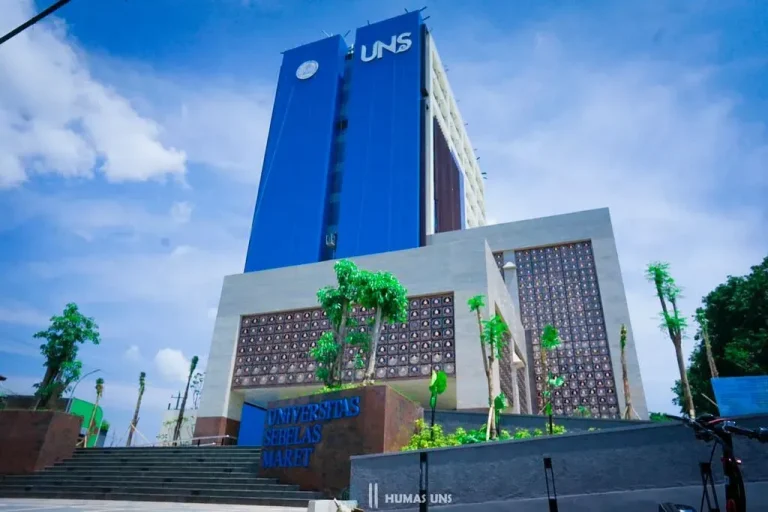
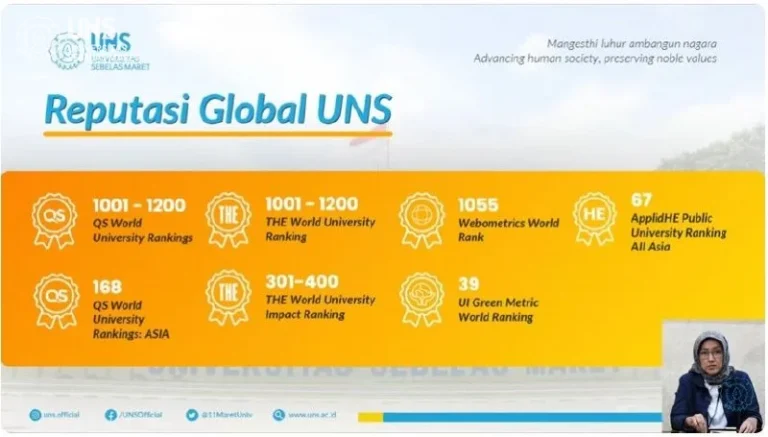
Universitas Sebelas Maret(UNS) Surakarta has once again achieved a remarkable feat in the international rankings. According to the Times Higher Education (THE) World University Rankings (WUR) 2026, UNS secured the second national spot, placing it in the 1001–1200 bracket globally. This achievement marks a significant improvement from the previous year, when UNS was in the 1201–1500 range.
UNS outperformed several prominent Indonesian universities, including Binus University, nstitut Teknologi Bandung (ITB), Universitas Airlangga (Unair), Universitas Gadjah Mada (UGM), Universitas Muhammadiyah Surakarta (UMS), and Universitas Padjadjaran (Unpad), all of which were ranked in the 1201–1500 band. Nationally, UNS is positioned just behind the Universitas Indonesia (UI), with a global ranking of 801–1000.
Commitment to Excellence and Global Competitiveness
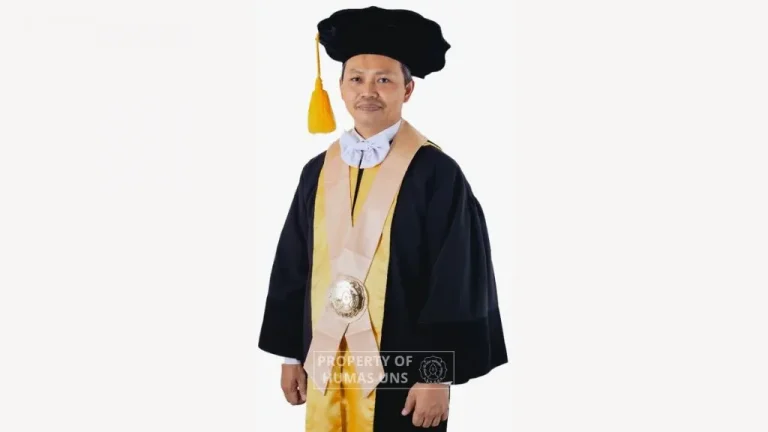
UNS Rector, Prof. Dr. Hartono, expressed gratitude and appreciation for the achievement. He stated that the improved ranking results from the academic community’s hard work and reaffirmed UNS’s commitment to enhancing the quality of education, research, and international collaboration.
“This achievement is tangible proof that UNS can compete globally. We will continue strengthening research, innovation, and our international network so that UNS becomes even more recognized worldwide,” Prof. Hartono said on Thursday, October 9, 2025.
In the THE WUR 2026, UNS received an overall score of 32.1–35.4. This score is based on five key pillars: teaching, research environment, research quality, industry, and international outlook.
- Teaching: UNS scored 25.1, reflecting the quality of its learning environment.
- Research Environment: With a score of 23.8, UNS demonstrated an increasing volume, income, and reputation for its research.
- Industry: UNS’s highest score was 51.0 in this category, showcasing the university’s ability to support innovation and discovery in the industrial sector.
- Research Quality: The university also performed well in this pillar with a score of 42.2, which measures the strength and influence of its research.
- International Outlook: UNS earned a score of 41.1, indicating its ability to attract students, lecturers, and researchers from various countries.
Prof. Hartono added that the improved scores across various indicators prove the university’s consistency in maintaining academic and research standards. “We’re not just focusing on international publications but also on the quality and relevance of our research to the needs of society and industry. UNS aims to be a valuable university, both nationally and globally,” he explained.
Methodology and Future Goals
The THE WUR methodology evaluates universities worldwide using 18 indicators under five main pillars: teaching, research environment, research quality, international outlook, and industry. The assessment uses a combination of quantitative data and global academic reputation. To be included in the rankings, universities must meet specific criteria, such as having at least 1,000 relevant scholarly publications between 2020 and 2024 and offering undergraduate education.
The THE ranking system is trusted by students, academics, university leaders, industry, and governments worldwide to compare university performance comprehensively. Through standardized data, THE ensures each indicator objectively reflects a university’s capacity without geographical or economic bias.
Prof. Hartono stressed that this achievement isn’t the end of the journey but a stepping stone for further progress. “We will continue to improve our research performance, expand international collaborations, and strengthen UNS’s role as an innovative and globally competitive university. Our future target is to break into the top 1000 worldwide,” he affirmed.
He also extended his gratitude to all lecturers, staff, students, and industry and government partners who contributed to this success. “This achievement is the result of the collective effort of the entire UNS academic community. We hope this milestone will motivate us to continue our work and benefit the nation and the world,” Prof. Hartono concluded.