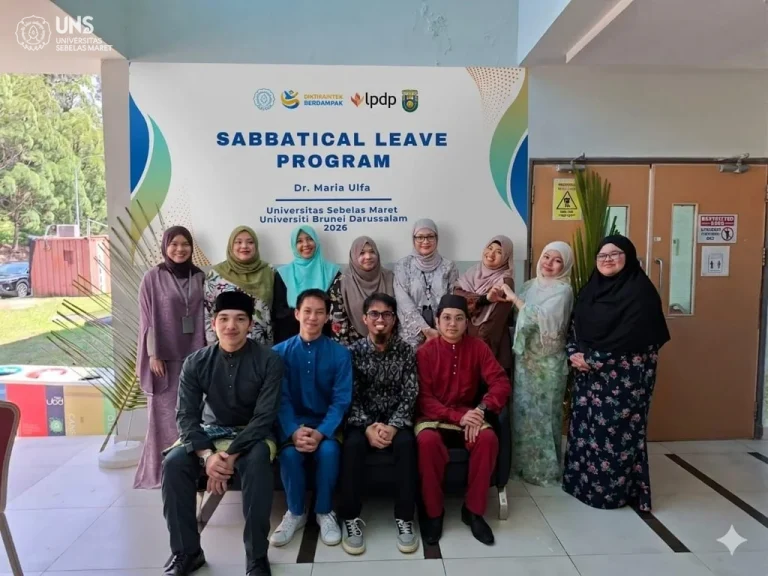
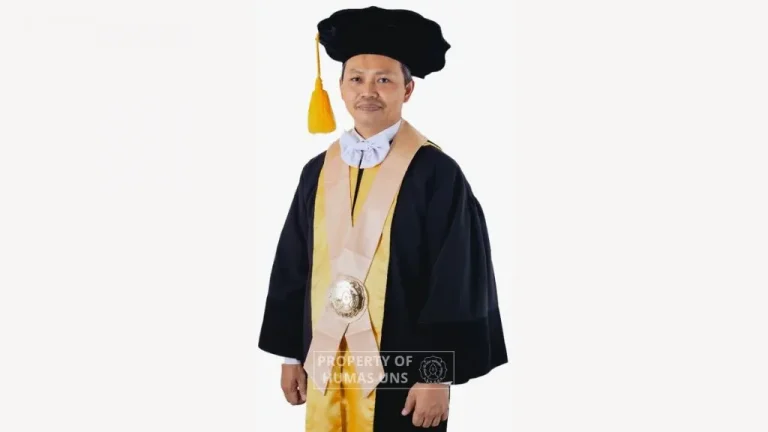
UNS — A lecturer and researcher from Universitas Sebelas Maret (UNS) Surakarta, Dr. Maria Ulfa, S.Si., M.Si., is undertaking a sabbatical leave program funded by LPDP through the Endowment Fund for Higher Education (DAPT) scheme from early April to June 2026. The program is being conducted at Universiti Brunei Darussalam (UBD), specifically at the Centre for Advanced Material and Energy Sciences (CAMES).
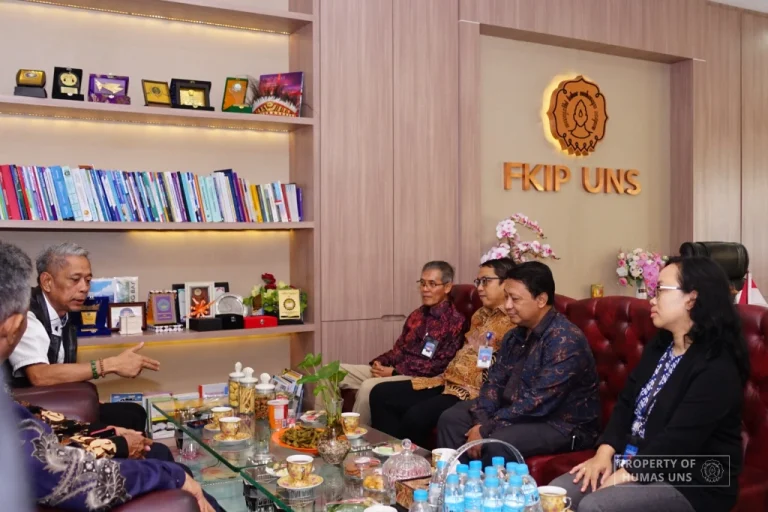
Upon her arrival, Dr. Maria Ulfa was officially welcomed at the CAMES office by the Head of CAMES, Dr. Malai Haniti Sheikh Abdul Hamid, accompanied by Dr. Hasliza Bahruji. During the occasion, Dr. Haniti introduced Dr. Maria Ulfa to the UBD academic community and integrated her into various institutional activities.
Throughout her sabbatical period, Dr. Maria Ulfa has actively participated in a range of academic and social activities within UBD. These include attending UBD’s Halalbihalal event, CAMES Halalbihalal, and an education visit involving high school teachers from across Brunei Darussalam on April 8, 2026.
In each of these engagements, Dr. Maria Ulfa was introduced as a visiting researcher contributing to the strengthening of international collaboration in the fields of advanced materials and energy. In addition to networking and academic involvement, the primary focus of this sabbatical is conducting collaborative research on the development of photocatalytic materials for the degradation of textile dye waste.
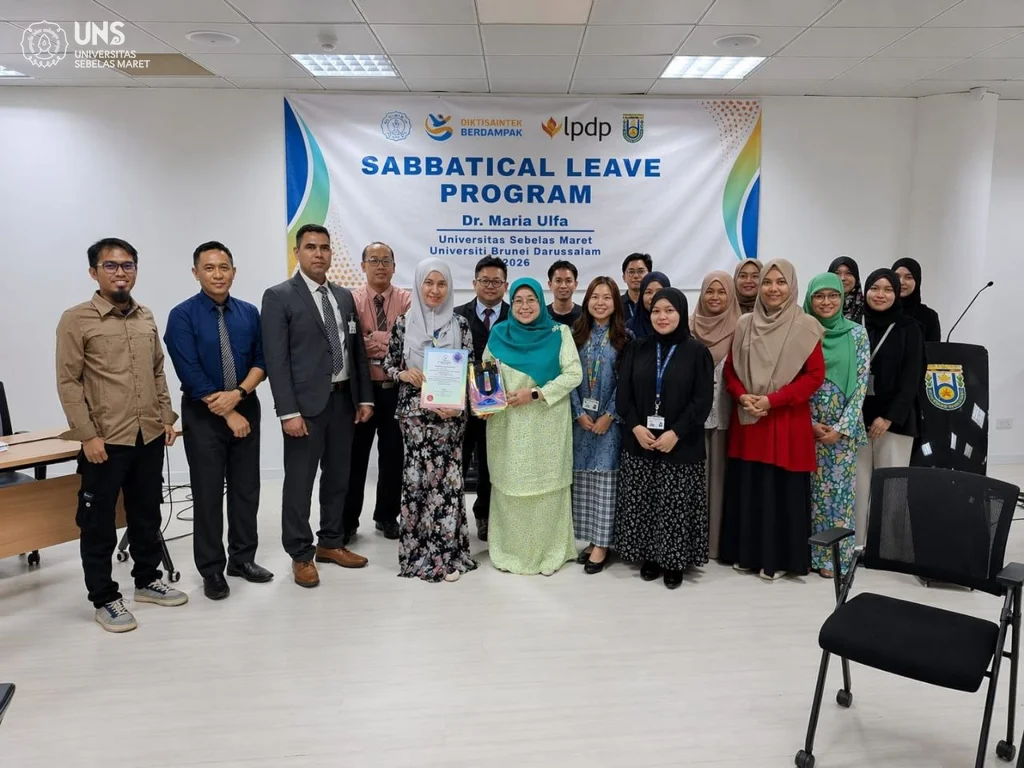
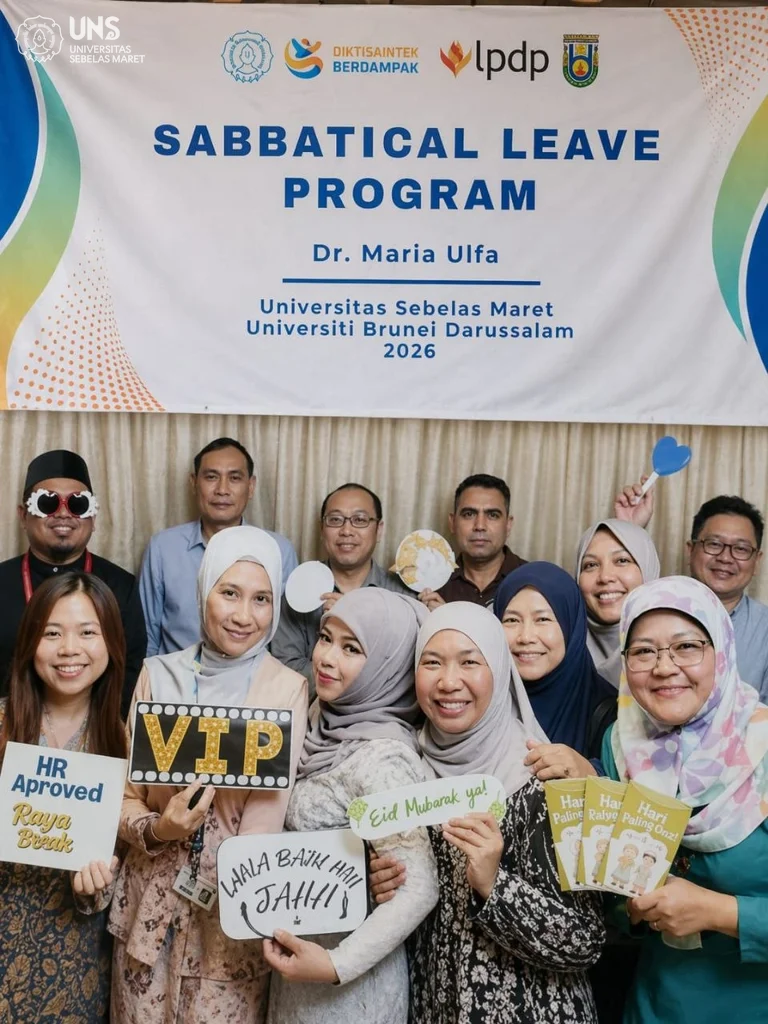
“This research aligns with global concerns regarding environmental pollution caused by textile industry waste, as well as efforts to develop environmentally friendly technologies based on advanced materials,” Dr. Maria Ulfa explained.
Through this program, it is expected that sustainable research collaboration will be established between institutions in Indonesia and Brunei Darussalam, particularly in the development of applicable photocatalysis technology for waste treatment and environmental sustainability.
This sabbatical leave program reflects a commitment to enhancing research quality and academic internationalization, while also strengthening the role of Indonesian scientists within the global research network.
HUMAS UNS