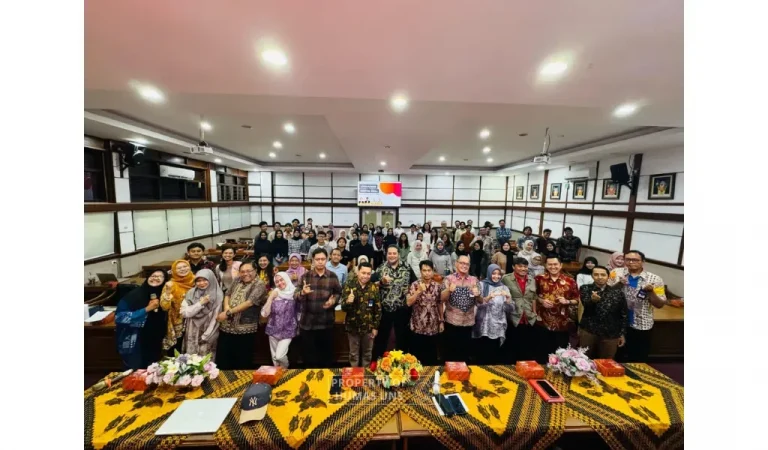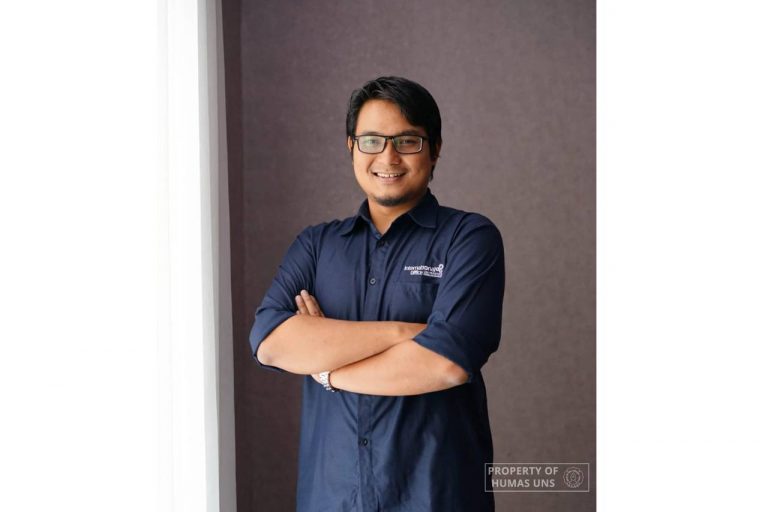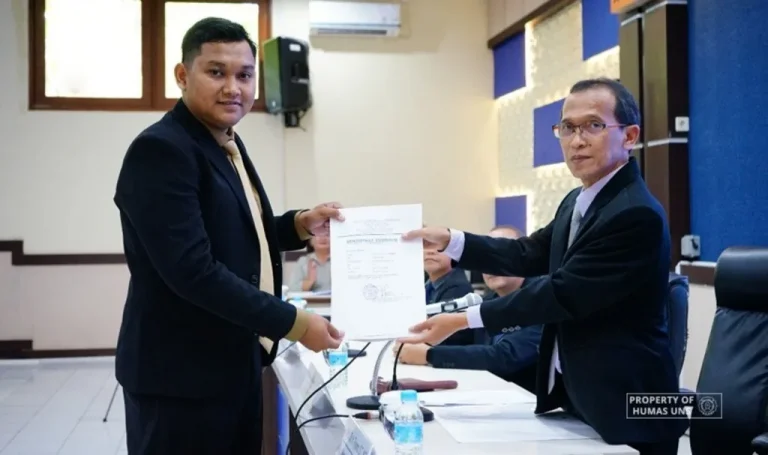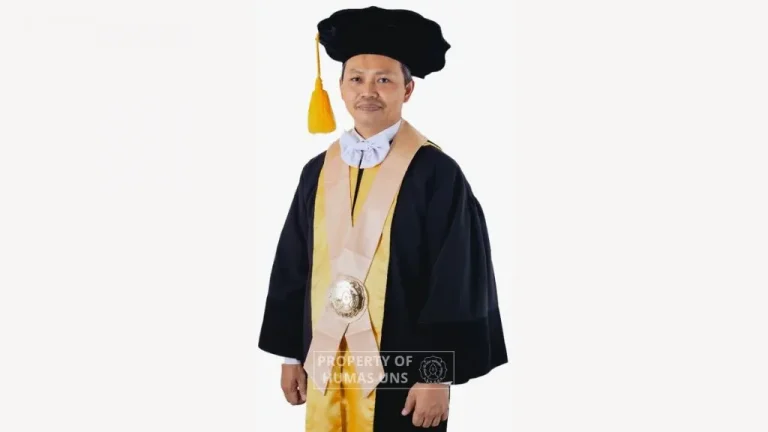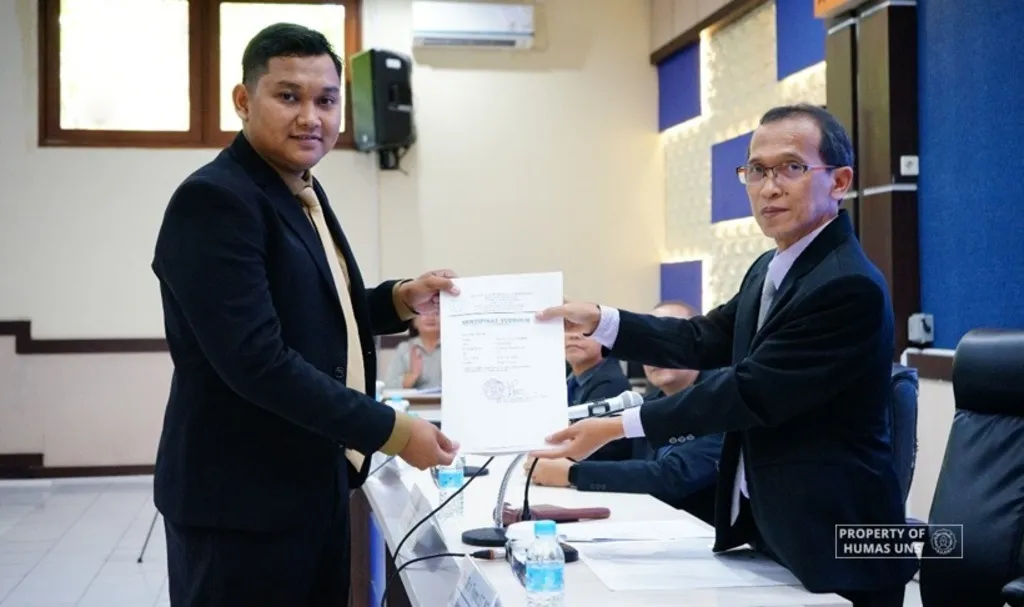
UNS – The Doctoral Program in Mechanical Engineering at the Faculty of Engineering (FT), Universitas Sebelas Maret (UNS) Surakarta, has added a new graduate to its roster. Ahmad Ilham Ramadhani successfully defended his dissertation during an open examination held at the FT UNS Multimedia Room on Thursday (9/1/2025). He earned his doctorate with the distinction Cum Laude and a perfect GPA of 4.0, following his groundbreaking research titled “Analysis of Lithium-Ion Battery Characteristics as an Energy Source for Electric Engines in Fishermen’s Electric Boat Prototypes.”
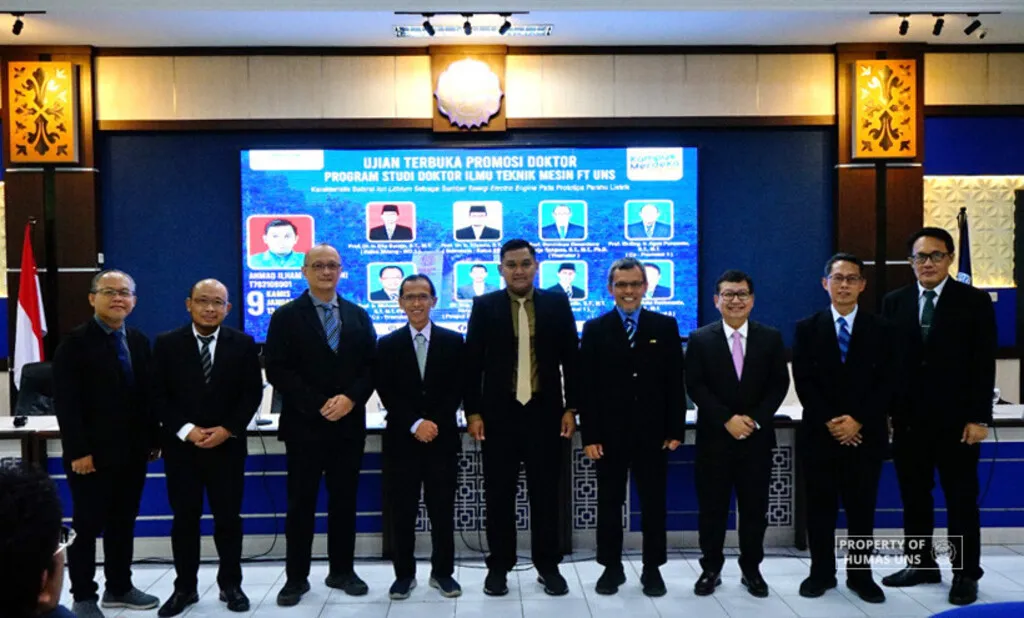
The open dissertation defense was led by Prof. Dr. Ir. Eko Surojo, S.T., M.T., as the head examiner, with Prof. Dr. Ir. Triyono, S.T., M.T., as the secretary. The supervisory team included Prof. Dominicus Danardono Dwi Prija Tjahjana, S.T., M.T., Ph.D. as the main supervisor, along with Prof. Dr. Eng. Ir. Agus Purwanto, S.T., M.T., and Prof. Ir. Muhammad Nizam, S.T., M.T., Ph.D., as co-supervisors. The internal examiners were Prof. Dr. Ir. Zainal Arifin, S.T., M.T., and Dr. Rendy Adhi Rachmanto, S.T., M.T., with external examiner Dr. Eng. Gunawan Dwi Haryadi, S.T., M.T., from Universitas Diponegoro.
During his doctoral studies, Ahmad Ilham conducted extensive research and participated in an international conference at Universitas Brawijaya, Malang. His research focused on innovating propulsion systems for fishing boats, which have traditionally relied on internal combustion engines (ICE) and hybrid engines. Ahmad proposed an electric engine solution powered by lithium-ion batteries to address challenges such as high emissions, low efficiency, and limited operational range.
In his presentation, Ahmad outlined the five stages of his research, which included observation and modeling simulations using Maxsurf Modeller, development and preliminary testing of the battery, torque testing using the Prony Brake method, no-load testing of the electric engine, and prototype performance testing in marine waters.
His findings revealed that a battery configuration based on Lithium Iron Phosphate (LFP) packs with a “15S12P” specification met the electric engine’s power needs. Simulations and testing also demonstrated enhanced boat performance when the battery placement was optimized for stability and propulsion system efficiency.
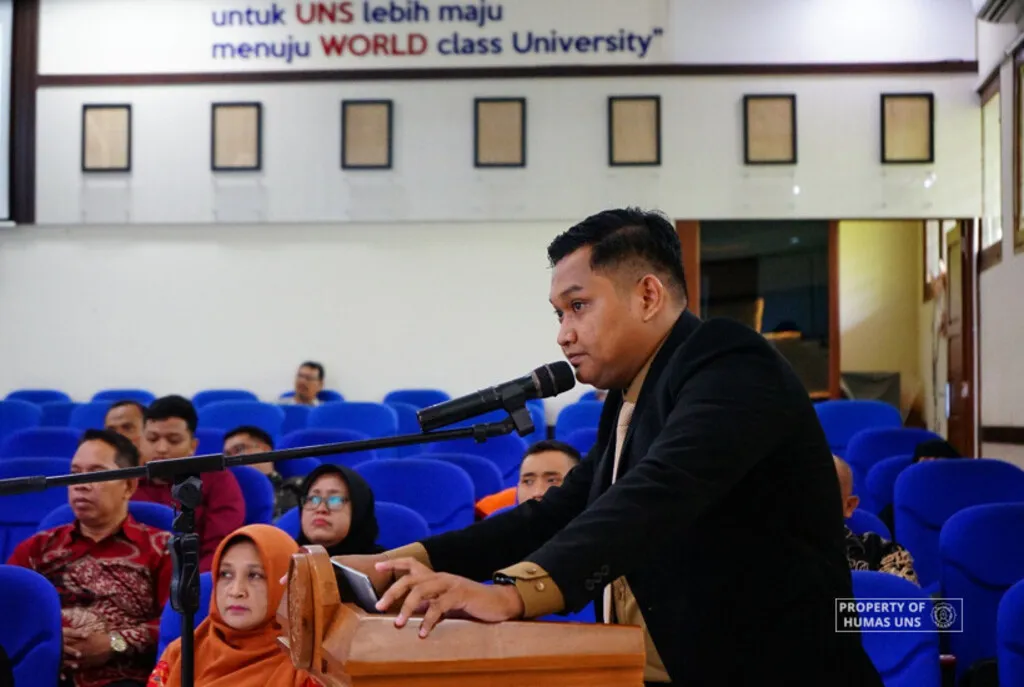
“This research significantly contributes to the transition toward zero emissions for marine vehicles. By converting mechanical propulsion systems to electric, this prototype improves efficiency and is environmentally friendly,” Ahmad explained during his presentation.
The research supervisor, Prof. Dominicus Danardono Dwi Prija Tjahjana, praised Ahmad’s achievement.
“We take full responsibility for the outcomes of Ahmad Ilham Ramadhani’s research. This study represents a major step forward in the use of renewable energy for marine transportation. With these results, we are optimistic that this concept can be further developed to support sustainable fisheries and transportation,” he stated.
Responding to a question from Prof. Dr. Zainal Arifin, S.T., M.T. regarding the economic feasibility of the innovation, Ahmad emphasized its cost-effectiveness. “Economically, the electric engine is more sustainable and affordable as it eliminates the need for frequent returns to the dock for refueling. However, there is an initial cost for the lithium battery,” Ahmad noted, as quoted from ft.uns.ac.id.
With his dissertation, Ahmad Ilham Ramadhani has positioned himself as a pioneer in the development of lithium-ion battery-powered electric boats. The Faculty of Engineering at UNS hopes this research will have a tangible impact on achieving environmentally friendly marine transportation and supporting the zero-emission agenda.
HUMAS UNS