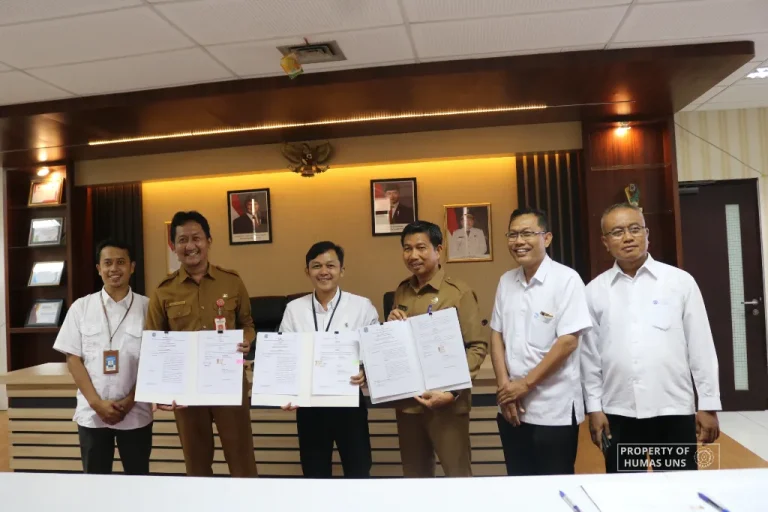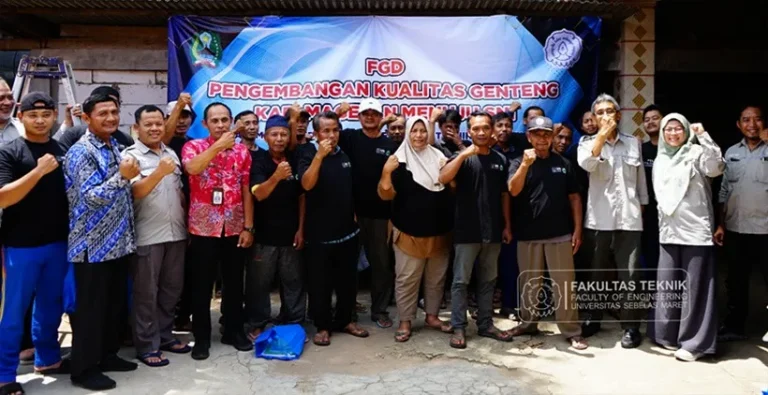
UNS – The Faculty of Engineering (FT) at Universitas Sebelas Maret (UNS) Surakarta has initiated a program to improve the quality of roof tile industries in Magetan Regency. Under the program “Enhancing the Quality of Roof Tiles in Magetan Regency Towards Indonesian National Standard (SNI),” FT UNS collaborates with various stakeholders to strengthen the competitiveness of local roof tiles in the national market.
The program ran for three months, from October to December 2024, led by Prof. Dr. Ir. Niken Silmi Surjandari, S.T., M.T., along with a team of experts, including Dr. Ir. Endah Safitri, S.T., M.T.; Dr. Ir. Fahkrina Fahma, S.TP., M.T.; Ir. Purwanto, M.T.; Ir. Setiono, S.T., M.Sc.; and Wibowo, S.T., DEA. The program also involved specialists from Bappeda Litbang (Regional Development and Research Agency) of Magetan Regency.
According to data from the Central Bureau of Statistics (BPS) of Magetan Regency in 2023, over 1.600 roof tile industries are concentrated primarily in Maospati and Bendo sub-districts. These industries employ over 4.000 workers and generate an annual production value of IDR 81,9 billion. Despite its rich history and access to high-quality raw materials, Magetan’s roof tile industry faces stiff competition from similar products outside the region.
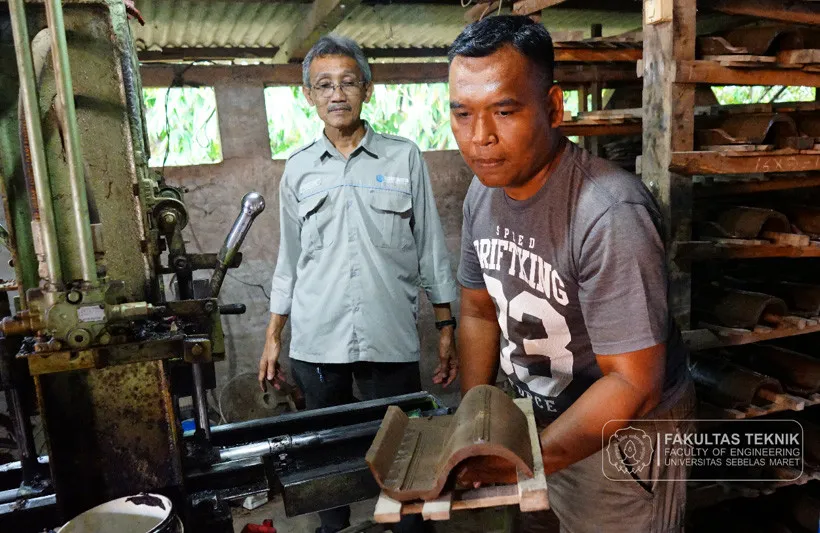

The quality enhancement program aims to identify factors affecting roof tile production in Magetan Regency. “We are also formulating methods to enhance quality towards SNI standards in terms of durability, aesthetics, and performance, as well as developing strategies for production and marketing to expand market share,” Prof. Niken explained, as quoted from ft.uns.ac.id on Wednesday (15/1/2025).
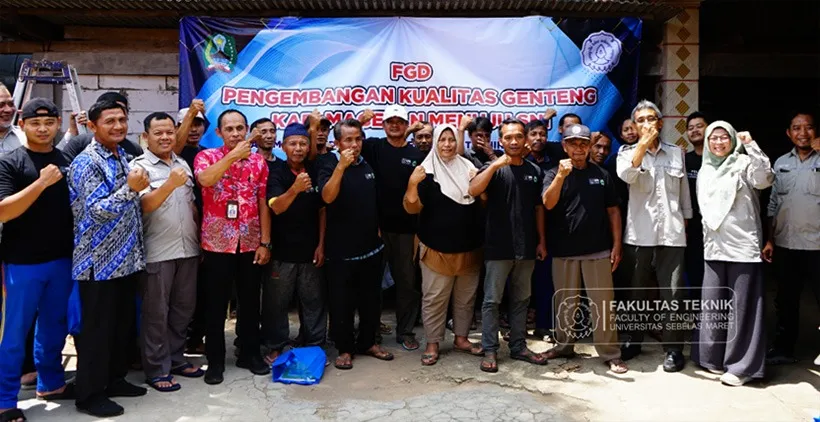
The program employed several approaches, including literature reviews to gather preliminary insights, field surveys to understand raw materials, production techniques, and equipment, and laboratory testing of clay to evaluate its quality. “The collected data was analyzed to determine techniques for improving tile quality. This was followed by training and mentoring tile craftsmen in Maospati and Bendo, along with preparing reports and strategic recommendations,” she added.
The initiative yielded several significant findings. First, the historical success of earlier generations of tile craftsmen highlights the potential for further development. Second, the high SiO₂ content of over 50% in local clay makes it suitable for producing high-quality roof tiles. However, challenges persist, including production processes that do not meet quality standards, inefficient firing equipment, a lack of awareness regarding SNI quality standards, and the absence of optimal raw material formulations.
Key recommendations from FT UNS include raising craftsmen’s awareness about the importance of quality standards, encouraging group investments in modern firing equipment, and formulating raw materials by mixing clay with sand and slaked lime to address the expansive properties of clay that cause cracking.
Laboratory tests conducted by FT UNS revealed that Magetan’s current roof tile production meets SNI criteria but at the lowest quality level. Improvements in strength and water resistance are needed to achieve higher quality standards.
“This program is expected to mark a new chapter for the roof tile industry in Magetan Regency, making it more competitive and capable of meeting national market demands with high-quality products. We hope this initiative will help Magetan’s roof tiles achieve SNI certification soon, increasing their market value,” Prof. Niken concluded.
HUMAS UNS