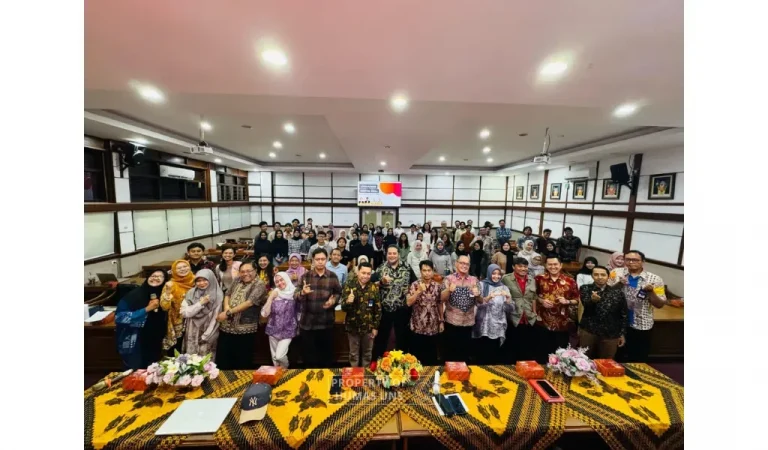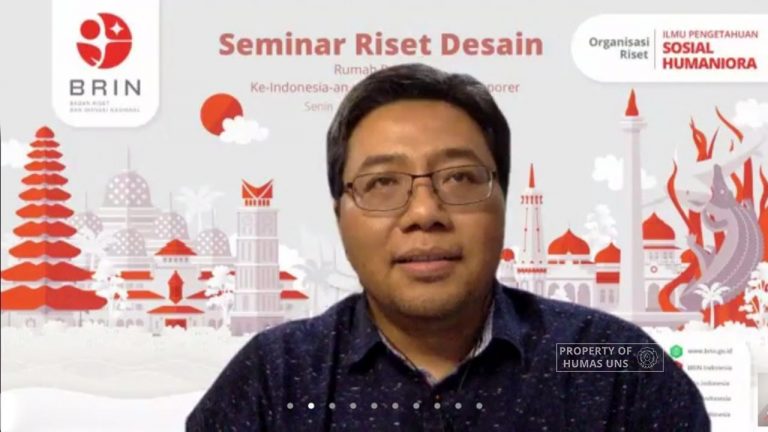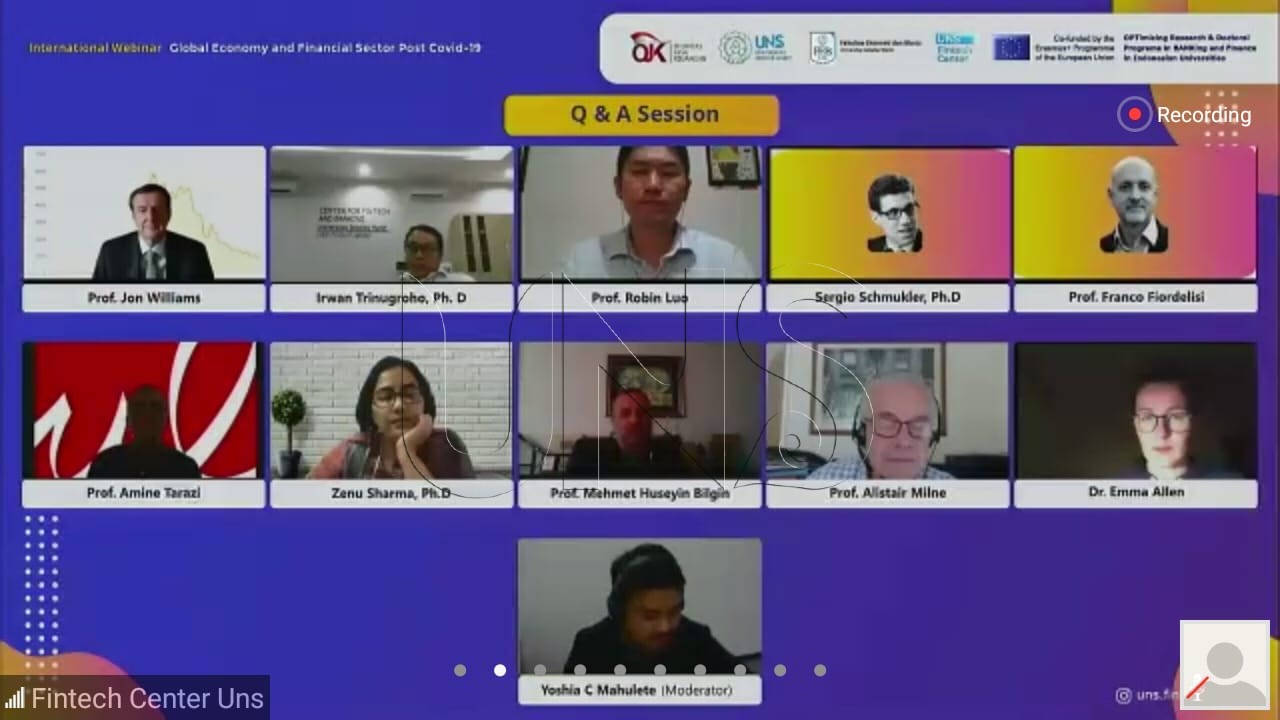
UNS – Another International Webinar is organized by the Universitas Sebelas Maret (UNS) Surakarta and the Center for Fintech and Banking Universitas Sebelas Maret (UNS Fintech Center) entitled Global Economy and Financial Sector Post COVID-19. The webinar organized in collaboration with the Indonesia Financial Authority Service (OJK) and is supported by Erasmus Optimizing Research & Doctoral Programs in Banking and Finance in Indonesia Universities (Erasmus OPTBANK), is held through the Zoom Cloud Meeting, YouTube Live Streaming in the UNS Youtube Channel, and live Instagram in UNS Fintech Center official account, on Monday (6/7/2020) evening. Many participants from various backgrounds attended the webinar and following the discussion enthusiastically.
The Vice Rector for Partnership and Planning Affairs, Prof. Dr. rer. nat Sajidan, M.Si., delivers an opening remarks on the behalf of the Rector of UNS, Jamal Wiwoho. In his remarks, Prof. Sajidan thanks the speakers and participants who are attending the webinar and hopes that the event can be useful for the community, especially during the ongoing COVID-19 pandemic.
Led by Yoshia Christian Mahulete as Moderator, the event presents one keynote speaker and ten speakers from various universities across the world. The first speaker, Prof. Wimboh Santoso, the Chairman of the Board of Commissioner OJK RI, delivers a keynote speech on Policy Responses in the Financial Sector to Accelerate Economic Recovery.
On the occasion, Prof. Wimboh Santoso mentioned how the global economic growth during the ongoing COVID-19 pandemic, while stating that the effect of this pandemic is significant to the global economic condition. Surveys by world economy organizations, currently there is a decrease that reaches below-average level. “It is not important to discuss the impact on the economic growth, how to mitigate is more important now,” Prof. Wimboh Santoso stated on Monday.
Each country has a different style to minimize the impact, this is due to the different factors affecting the state’s condition. In Indonesia, big cities are facing the biggest effect, while in rural areas economic activity still went normally. The activity restriction that was once implemented is considered as one of the factors that hamper economic activity. The government of the Republic of Indonesia seeks to implement several policies such as providing incentives and leniency in paying credit.
Furthermore, there was a decline in Indonesia’s economics during the first quarter, which may continue during the second quarter. However, as Prof. Wimboh Santoso mentioned, Indonesia’s economy is expected to have positive growth. Domestic demand becomes one of the key for this growth.
Following the keynote speech, the other speakers from various international universities and institutions deliver their material consecutively. The speakers are, in consecutive order, Sergio Schmukler, Ph.D. (Lead Economist World Bank), Prof. Franco Fiordelisi (University Rome III, Italy/ University of Essex, UK), Dr. Emma Allen (Country Specialist Asian Development Bank-ADB), Prof. Alistair Milne (Loughborough University, UK), Prof. Amine Tarazi (University of Limoges, France), Prof. Jon Williams (Bangor University), Prof. Robin Luo (Xihua University, China), Prof. Mahmet Huseyin Bilgin (Istanbul Madeniyet University, Turkey), Zenu Sharma, Ph.D. (St. John’s University, USA), and the last Irwan Trinugroho, Ph.D. (Universitas Sebelas Maret, Indonesia).
The first three materials presented are entitled ‘Financing Firm in Hibernation during the Covid-19 Pandemic by Sergio Schmukler Ph.D., followed by Prof. Franco Fiordelisi who presents material on ‘Social Capital and Black Swan Events: International Evidence from the Covid-19’, and Dr. Emma Allen who delivers information regarding the ‘Asian Development Outlook Supplement: Lockdown, Loosening and Asia’s Growth Prospect’. Afterward, in consecutive manners, there is Prof. Alistair Milne presenting material entitled ‘Insuring the Next Pandemic’, Prof. Amine Tarazi who delivers a speech entitled ‘On Regulatory Responses to Covid-19 and Bank Stability’, Prof. Jon Williams delivering ‘Global Economy and Financial Sector Post Covid-19: Perspective from UK Banking’, and followed by Prof. Robin Luo on ‘Fintech and Alternative Data Post Covid-19’.
The last three materials are delivered by Prof. Mehmet Huseyin Bilgin entitled ‘The Global Economy After the Covid-19 Pandemic: A Changing World’, Dr. Zenu Sharma with the ‘Impact of Covid-19 on Corporate Debt Structure: Cross Country Evidence’, and finally Dr. Irwan Trinugroho discussing the ‘Covid-19 and Financial Sector’.
After the material presentation, the participants are given the opportunity to further discuss the material through a question submitted through the comment section. There were more than 1,500 active participants on this event, joining through Zoom Cloud Meeting, YouTube Live Streaming, and Live Instagram. Enthusiasm can be felt through the number of questions submitted for all speakers. HUMAS UNS
Reporter: Ratri Hapsari
Editor: Dwi Hastuti