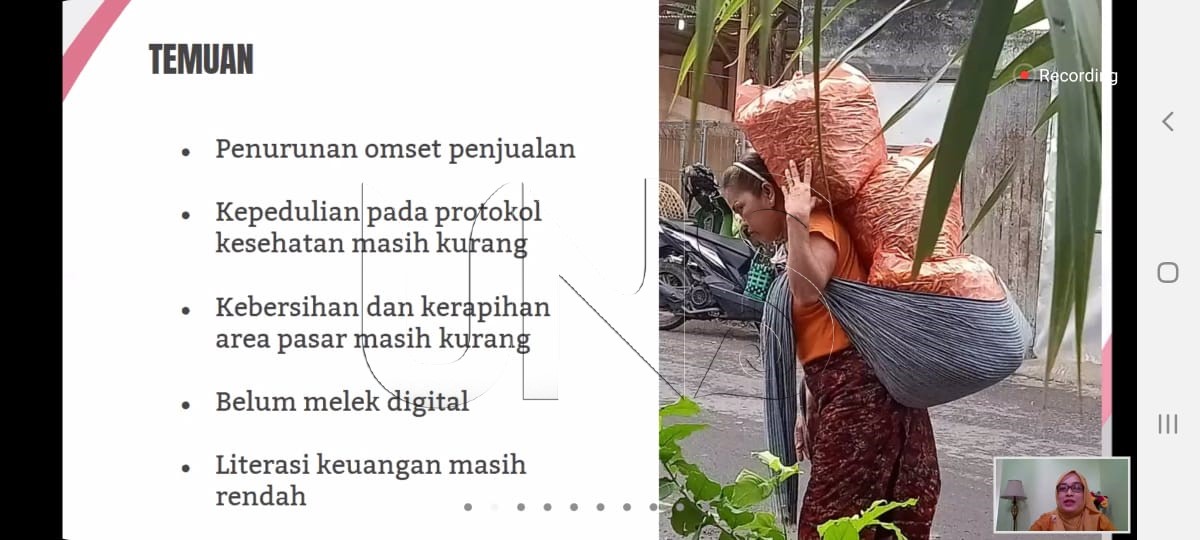
UNS – Social distancing applied since early March 2020 due to the Covid-19 pandemic resulted in the decline in the economic transactions. Many traders, especially those in traditional markets cannot fulfill their daily needs because of their income dropped dramatically. The data from the Trade Office of Solo in May 2020 shows that the transactions in Solo keep declining between 30% to 90% depends on the commodity types. This condition is the background for Research Team from Universitas Sebelas Maret (UNS) Surakarta lead by Dr. Sutanto and Prof. Jamal Wiwoho with members of Dr. Intan Novela Qurrotul Aini, Dr. Isharyanto, and Tonang Dwi Ardyanto, Ph.D. to find an alternative of solutions to reduce impact.
The team formulates ideas and implement the barter system, trading system by exchanging goods. The fundamental of this concept is when transaction declines due to Covid-19 crisis and the number of the money supply is constant, thus, to avoid inflation, the government needs to reduce the velocity of the money supply. The means to reduce the velocity is by creating a barter system in the traditional market in which traders can exchange their commodity with staple foods.
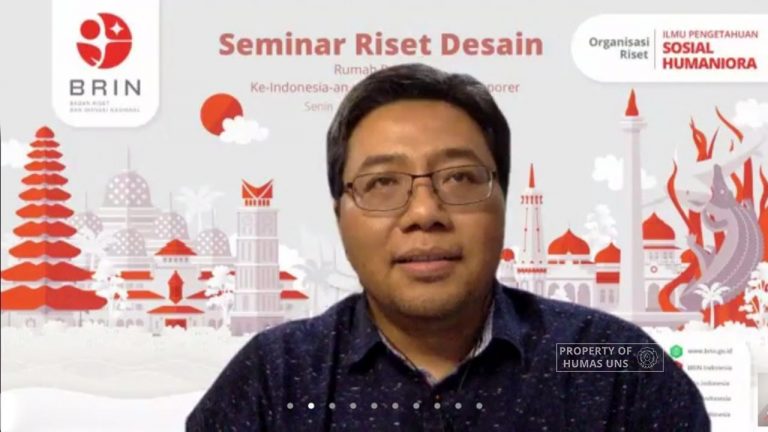
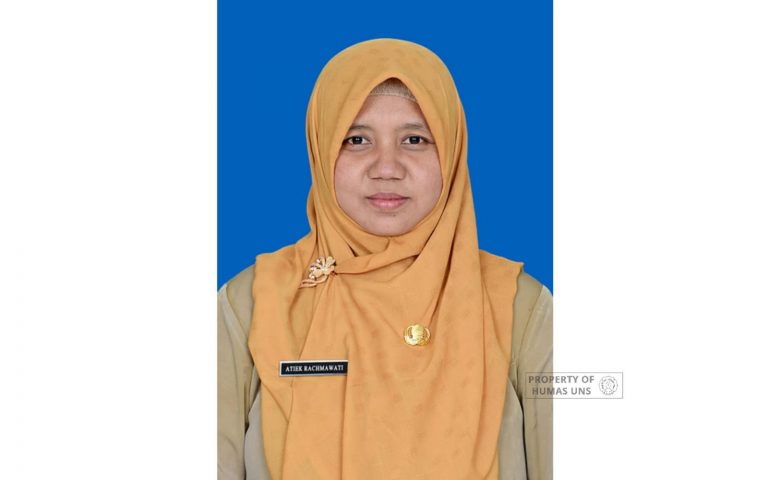
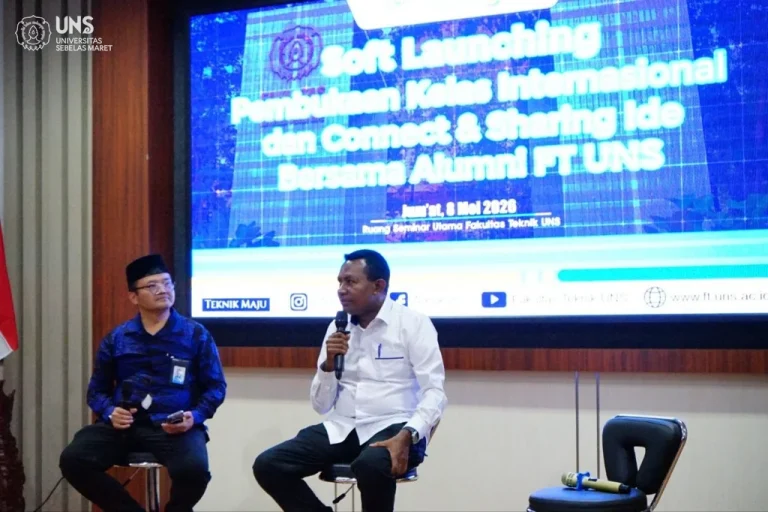
This information was shared by Dr. Intan Novela Qurrotul Aini, S.E., M.Si. A Faculty Member of the Faculty of Economics and Business (FEB) UNS, as a member of the research team in an Online Research Seminar, Thursday (16/7/2020). This concept was implemented from April-May 2020 to traders in Pasar Legi Solo. Traders were enthusiastic because they did not generate income due to a very drastic decrease in sales turnover. The initial funds obtained by the team from national and foreign donors were used to buy groceries and traders barter with their merchandise, including bananas, fruit, vegetables, herbs and so forth.
“When traders have accumulated enough merchandise during May-June 2020, the team has formalized the concept of barter, bartered goods from traders were sorted for its quality, given price instructions and sold online through WA Business, Facebook, Instagram and other applications. Entering the new normal, barter activities started to decline but online market sales are getting wider, traders took benefits from online sales. Customer’s order increased and not limited to the goods in Pasar Legi but also goods sold at other markets such as fish, chicken, and other goods,” she explained.
Dr. Intan continued that the focus of the concept is not limited to supporting the trader’s life but also educate them about health protocol. In the process of exchanging goods, traders are required to follow the health protocol, washing hands, wearing a mask, and distancing. In implementing the concept, the team faced limitations in socializing the program and lack of trust from traders considering that the concept is relatively new for them. Only a few traders are willing to join and collaborate in the program. Most of the traders are women older than 30 years old, graduated from Senior High School, and has traded for more than 10 years. Another limitation is many traders are not tech-savvy so they are less motivated to get involved.
The research team is optimistic that the online trading system will grow in the traditional market environment because digitalization era is inevitable. To ensure that the concept can be implemented well, traders need more education and efforts to give them comprehension on digital mindset. Intensive collaboration with various parties is required to improve the quality of Human Resource and partnership in the aspect of digitalization and funding. The government also need to regulate the process of barter and the provision of incentive to encourage online sales in traditional markets.
Several benefits of barter system implemented by traditional market traders are expanding market network by creating a collective online market place. Another benefit is traders have barter commodity that can be sold online. The commodity and the price list will provide an opportunity to create an online trading system in which the stocks of commodity remain in trader’s stalls.
At the end of her explanation, Dr. Intan conveyed that moving to the new normal is the right momentum to rebranding traditional market from shabby, untidy and uncomfortable image to the clean, tidy, and applying health protocol with its distinct excellence and uniqueness. The market is not just a place where the seller meets buyer, but also a place that provides comfort as a tourism destination and Edu-tourism for the new normal. Humas UNS
Reporter: Dwi Hastuti