UNS — Student Creativity Program (PKM) of Natural Science Research (RE) Universitas Sebelas Maret (UNS) Surakarta Team studied digestive friendly cow’s milk. The finding of this study will help lactose-intolerant people to ensure their safety in consuming milk.
Supervised by Dr. agr. Ir. Muhammad Cahyadi, S.Pt., M.Biotech., IPM, the Team members are Mohammad Ilham Dhiaurridho, Firmansyah Tristadika Prakosa, Firna Fauziatul Karimah, Salsabilla Ramadhana, and Ine Febriantama. They are Animal Science Program students of the Faculty of Agriculture (FP) UNS. The study was initiated because of the high report of lactose-intolerant people in Indonesia. The team tried to study the cause of intolerance and found that the A1 variant that contains proline amino acid in the polypeptide chain beta-casein is one of the causes. The team leader, Mohammad Ilham Dhiaurridho, explained that this milk variant contains polypeptide BCM-7 that affects the production and activity of lactose enzymes that causes digestive problems such as abdominal pain, bloating, and diarrhea.
“Our concern was the Indonesian community did not meet their nutritional needs because they are reluctant to consume milk due to diarrhea that occurs after consuming milk. Therefore we conducted a study and found that Friesian Holsten (FH) Indonesia cow that could produce A2 variant and ready to be developed as the producer of digestive-friendly milk,” Ilham explained on Monday (18/10/2021).
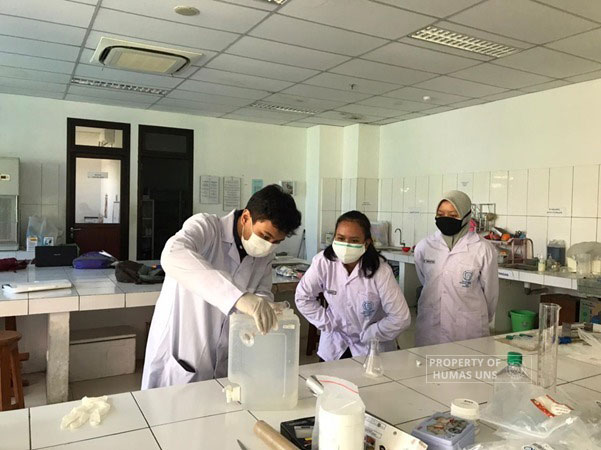
The UNS PKM Team analyzed the beta-casein gene in 12 Friesien Holstein (FH) Indonesia cows and found the mutations in exon 7 of the beta-casein gene using DNA sequencing techniques. This mutation caused adenine to change into cytosine, thereby changing the amino acid composition of the beta-casein gene (CSN2) from histidine to proline.
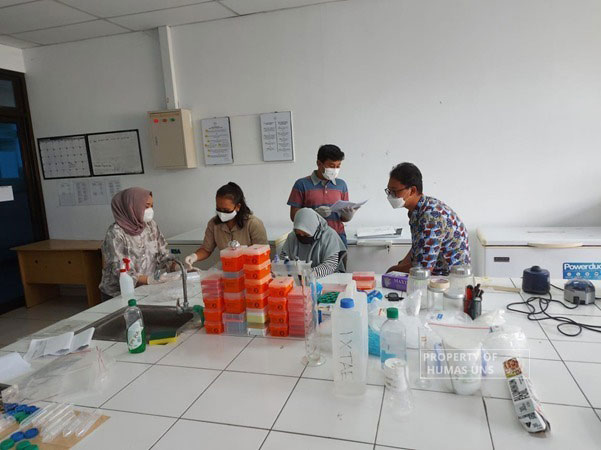
This finding showed that the majority of FH cows in Indonesia bring an A1 variant alel of 0.417 (41.7%) and have a high probability of causing digestive issues. This study also found that 33% of FH cows in Indonesia produced an A2 milk variant that is friendly from people with lactose intolerance because it does not contain the BCM-7 compound and does not cause problems for a digestive system such as diarrhea.
This finding can be used as a factual basis in improving the genetic quality of FH cows in Indonesia that could produce a digestive-friendly A2 milk variant. Dairy farmers, industries, and the government could utilize this research finding in developing FH cows to produce A2 milk variants. Various benefits are projected from this product, such as reducing lactose intolerant cases, increasing community milk consumption, and fulfilling people’s nutritional needs. This condition will have a positive effect on maintaining the immune system amid the pandemic. Humas UNS
Reporter: Rangga Pangestu Adji
Editor: Dwi Hastuti