UNS — The realization of the national electric vehicles program is no longer a discourse. However, the challenge is how to build the ecosystem, thus, electric vehicles are ready for use. The Center of Excellence in Science and Technology (PUI) Lithium Battery, Universitas Sebelas Maret (UNS) Surakarta, plays an essential role in electric vehicles development, especially in terms of energy storage research.
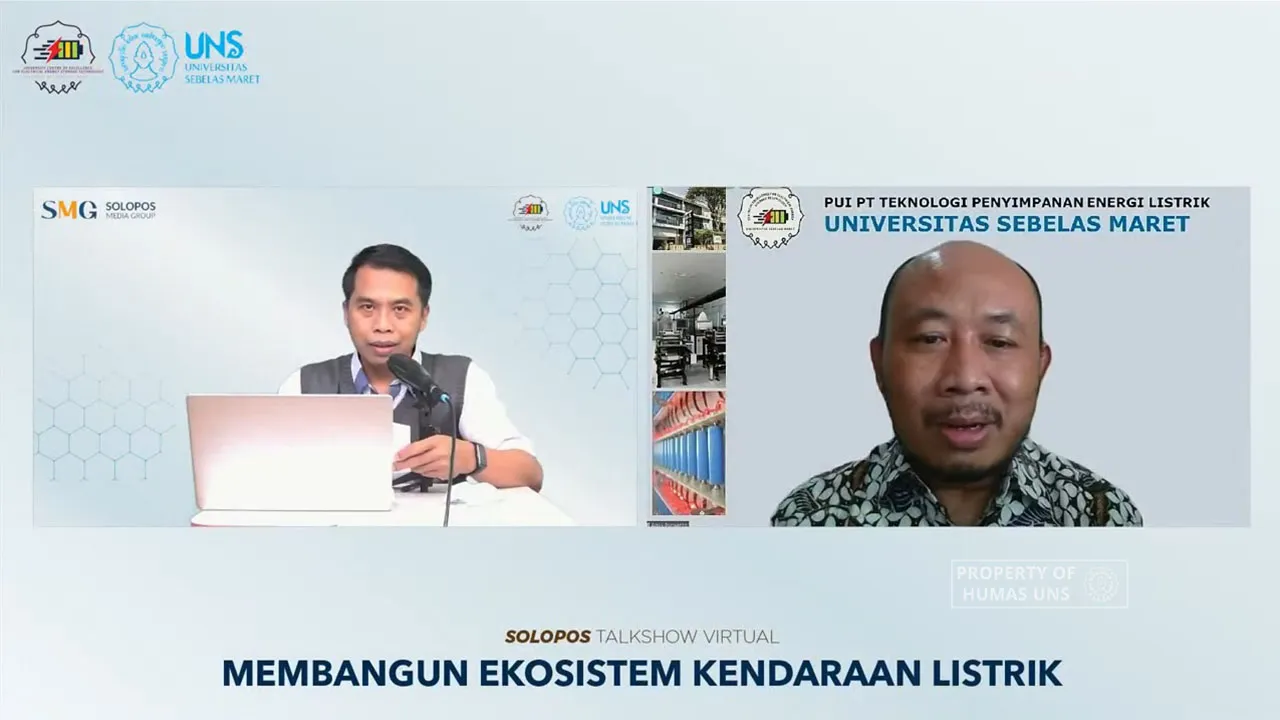
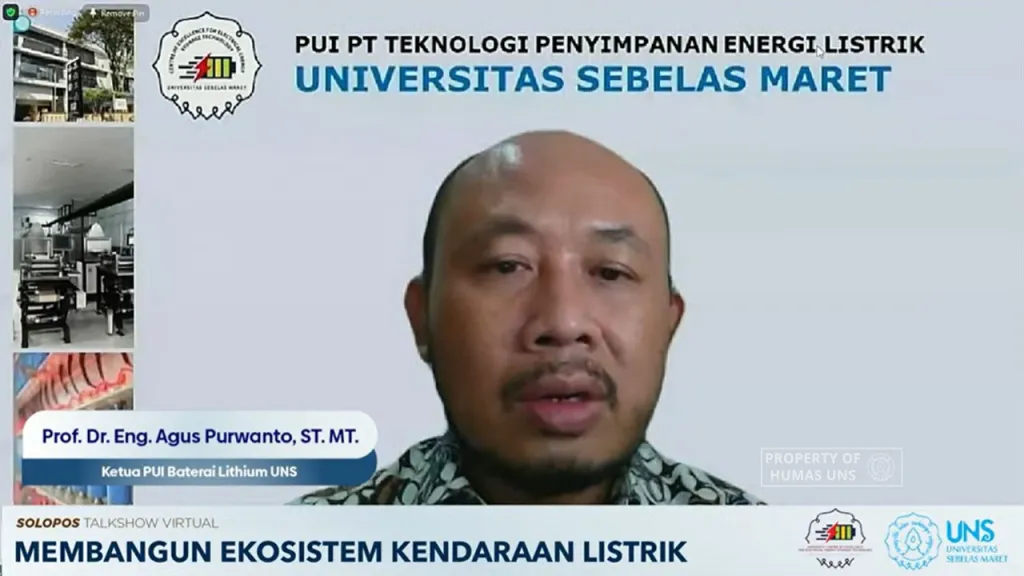
Reported from Solopos TV YouTube on Tuesday (1/3/2022), the Chairman of UNS Lithium Battery PUI, Prof. Dr. Eng Agus Purwanto, S.T., M.T., presented research related to the construction of an electric vehicle ecosystem in battery research.
As is known today, electric vehicles have become one of the vehicles that may be difficult to return to conventional, given a large number of automotive manufacturers interested in such electric vehicles. As a builder of the electric vehicle ecosystem, full Battery Electric Vehicles (BEVs) are expected to minimize the combustion engines in electric vehicles, thus, reducing transportation emissions.
Batteries, as one of the key components in an electric vehicle, have an important role in the process of electric vehicle adoption because nowadays, they are relatively expensive compared to other electric vehicle components. Therefore, batteries become an optimization point in the production process to reduce the selling price of electric vehicles. “For a rapid electric vehicles adoption process, the electric vehicle price must be the same or even cheaper than ICE vehicles, which are currently widely circulated in the community,” explained Prof. Agus
It is a long process to reduce the battery price or battery development process, starting from raw materials such as nickel, lithium, cobalt, aluminum, iron, and many others will certainly affect the battery product price. “Surely, at a time when electric vehicles are growing more and more well-known, we must think about the recycling process,” stated Prof. Agus
The most expensive material in Lithium-ion batteries is the cathode. Actually, the focus on making low-cost cathode materials is also important in developing batteries for electric vehicles. In addition to developing low-cost battery components, it can also make high-performance batteries. One of the common goals from 2021 to 2025 is to make vehicles with a 1,000 km battery range using bipolar solid-state Li battery.
In terms of research, lithium batteries are not the only batteries type to be developed because the material price started to rise. Thus, other alternatives are sought according to the level of material availability. For example, sodium ion and aluminum ion batteries. Humas UNS
Reporter: Erliska Yuniar Purbayani
Editor: Dwi Hastuti