UNS– Students from Universitas Sebelas Maret (UNS) Surakarta have developed a special emotion detection device for children with autism. Named EMOKIDS, this innovation comes from the UNS Program Kreativitas Mahasiswa (PKM) Karsa Cipta (KC) team. The device is designed to assist parents and teachers in understanding the emotional states of children with autism.
EMOKIDS was developed by Ananda Putra Kanieza from the Electrical Engineering Study Program, Faculty of Engineering (FT); Siti Nurohmahwati from the Physics Education Study Program, Faculty of Teacher Training and Education (FKIP); and Ade Rifky Setiawan from the D-3 Informatics Engineering Study Program, Vocational School (SV).
The development of this tool stemmed from the UNS students’ concern about the difficulties faced by children with autism in expressing emotions. With their background in education and technology, they decided to create an innovative solution.
“Our main goal is to help educators in special schools identify and respond to the emotions of autistic children more efficiently. EMOKIDS is specifically designed to support the learning process and social interaction of autistic children. Educators can provide better attention and support according to their special needs,” Ananda, the team leader, said to uns.ac.id on Thursday (25/7/2024).
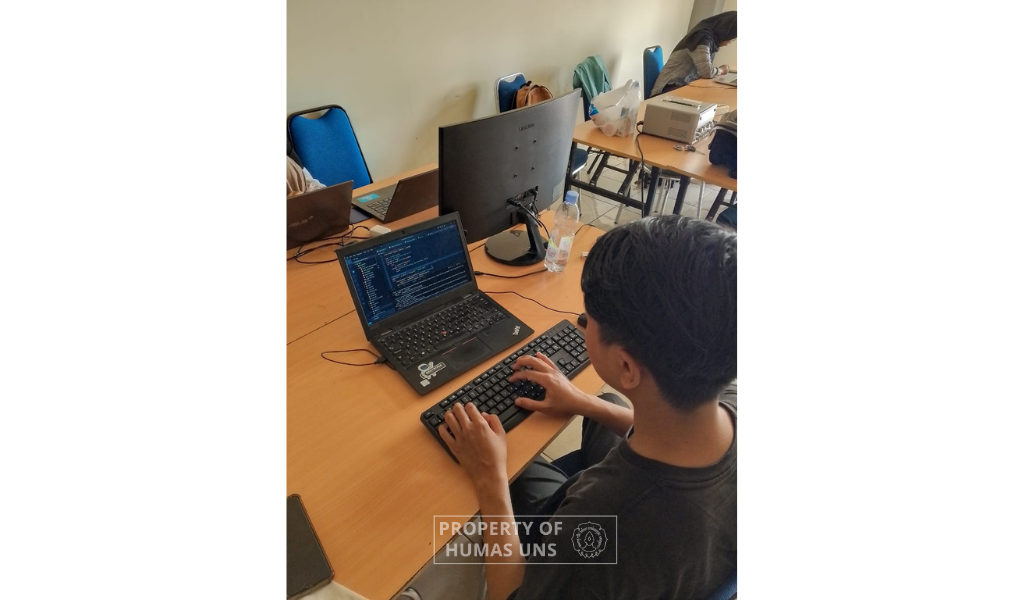


Under the guidance of Dr. Eng. Faisal Rahutomo, S.T., M.Kom., EMOKIDS is designed to identify and monitor the emotions of children with autism in real-time. The device uses a combination of image processing and voice recognition technologies.
“There is a machine learning algorithm to detect changes in facial movements, eye expressions, and body language of children with autism related to various emotions. The obtained data is then processed and displayed through a mobile application that is easy for parents and educators to use,” Ananda added.
The advantage of this tool lies not only in detection and alerts but also in its preventive approach. EMOKIDS helps educators plan appropriate interventions. Educators can create a conducive learning environment for autistic children. Additionally, this technology has been integrated into a single prototype, making it more affordable. The device also supports the development of technology tailored to the needs of autistic children in educational settings.
Their success is proof that technological innovation can make a real contribution to the field of education, especially in Special Education (PLB). They hope that the research and development of EMOKIDS can continue to grow and provide even greater benefits to society.
Humas UNS
Reporter: R. P. Adji
Editor: Dwi Hastuti