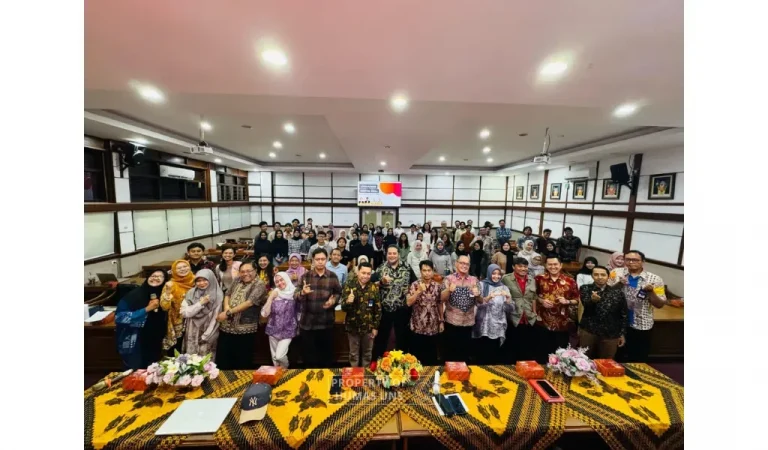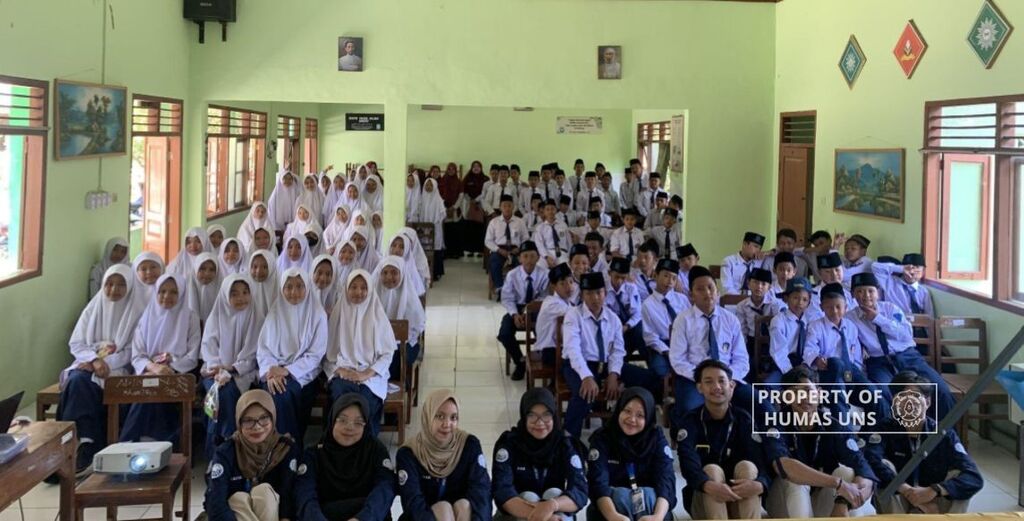
UNS – The Student Community Service Program (KKN) Group 137 of Universitas Sebelas Maret (UNS) Surakarta implemented an innovative project titled “Smart Dustbin” at Madrasah Tsanawiyah (MTs) Muhammadiyah Program Khusus Bayat, located in Krakitan Village, Bayat Sub-district, Klaten Regency. This program aims to introduce sensor-based technology for waste management using Arduino Nano and ultrasonic sensors.
KKN Group 137 is led by Dimas Rama Wijaya, a student from the Informatics and Computer Engineering Education Program, and nine other members: Irfan Fadlani from the Building Engineering Education Program, Amanda Alya Kamilla and Salmaa Anisah Rodhiyah from the Physics Education Program, Ricky Jatmiko from the Mechanical Engineering Education Program, Ayu Bunga Mutiara Sari, Fitri Handayani, and Zivana Erishinta Syaharani from the Javanese Language Education Program, and Dyah Ayu Syafinah and Rastika Erning Bidari from the Economics Education Program. The group was supervised by Tya Resta Fitriana, S.Pd., M.Pd., as their field advisor.
The “Smart Dustbin” project is an initiative that integrates modern technology to create an automatic sensor-based trash bin.
“As part of the introduction, we explained how the ultrasonic sensor works, detecting waste by measuring the distance between the sensor and an object. When the object is within a certain range, the Arduino Nano sends a signal to the servo motor to automatically open the trash bin lid,” KKN 137 Leader, Dimas Rama Wijaya, explained to uns.ac.id on Tuesday (10/9/2024).
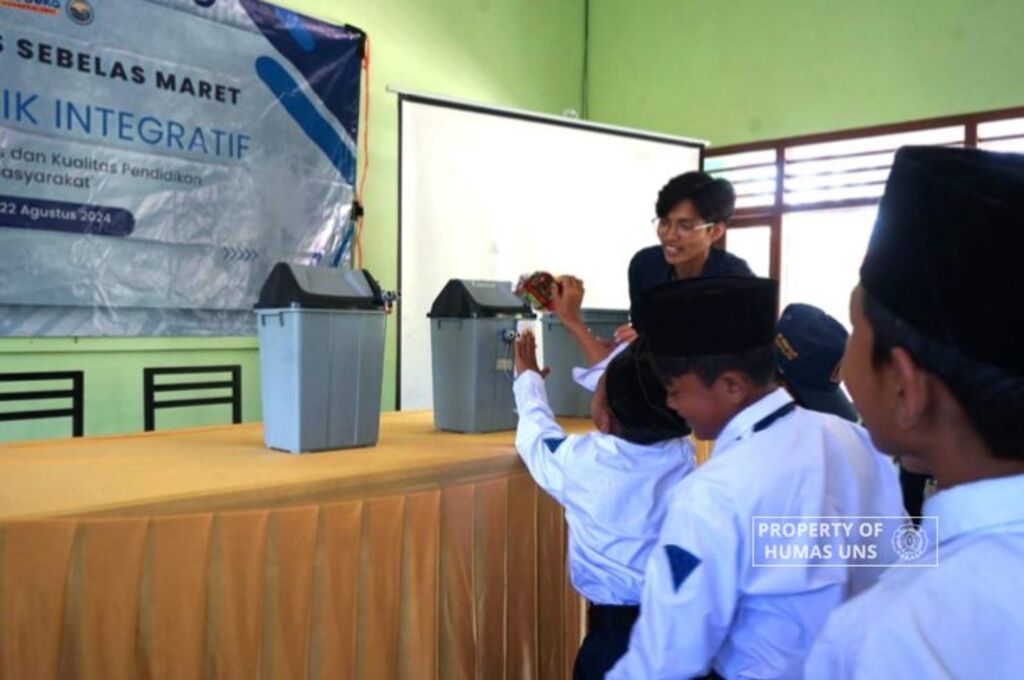
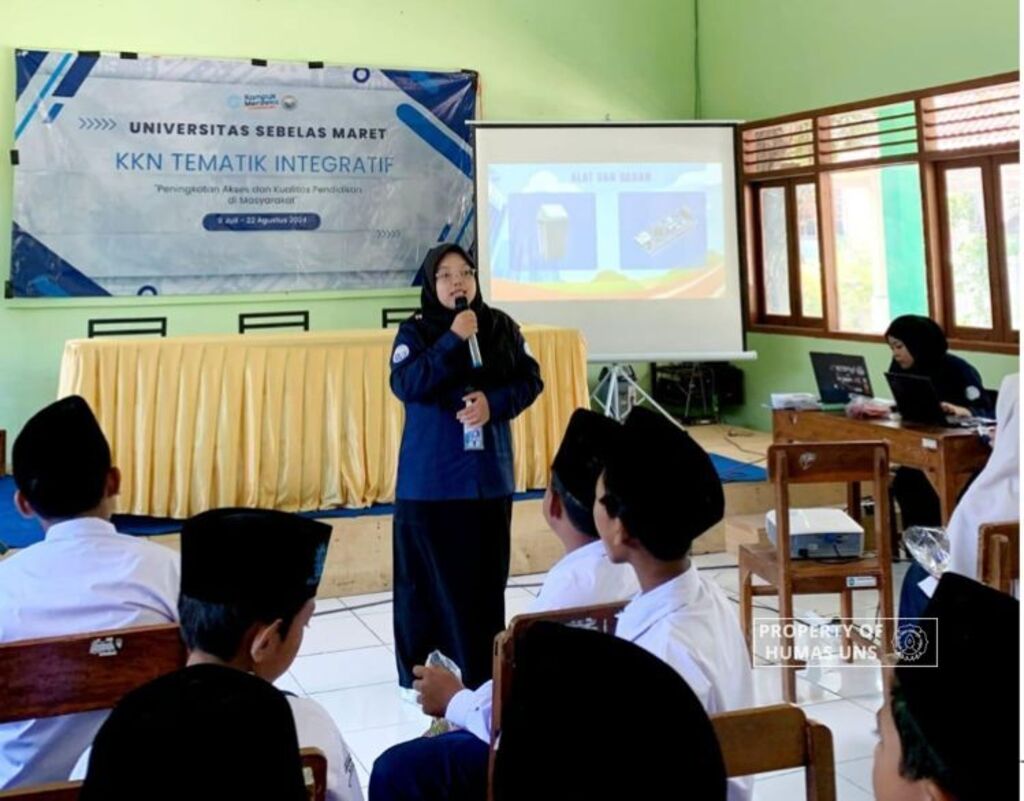
He added that in addition to opening the trash bin lid when waste is detected, the technology can close it automatically after a few seconds.
“This technology is expected to maintain cleanliness and reduce the risk of disease transmission through direct contact,” Dimas added.
The construction of the “Smart Dustbin” involved assembling components such as Arduino Nano, ultrasonic sensors, and servo motors, and writing a program code to manage the system’s functionality. The program aims to enhance waste management efficiency and cleanliness by providing a hygienic and practical solution through technology.
“This innovation is also expected to raise awareness of the importance of applying technology in daily life, particularly in waste management,” Dimas said.
The “Smart Dustbin” program involved all 7th, 8th, and 9th-grade students at MTs Muhammadiyah Program Khusus Bayat. With the successful implementation of this project, it is hoped that students will gain a deeper understanding of the importance of maintaining environmental cleanliness and be inspired to innovate further in using technology for the greater good.
HUMAS UNS
Reporter: Annisa Fakhira
Editor: Dwi Hastuti