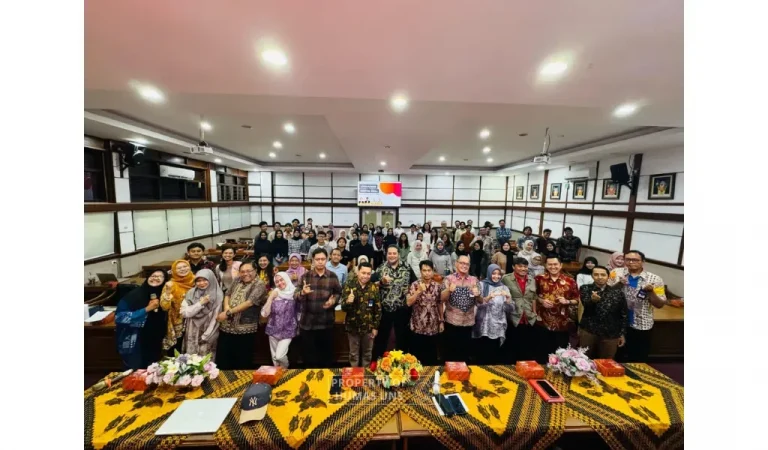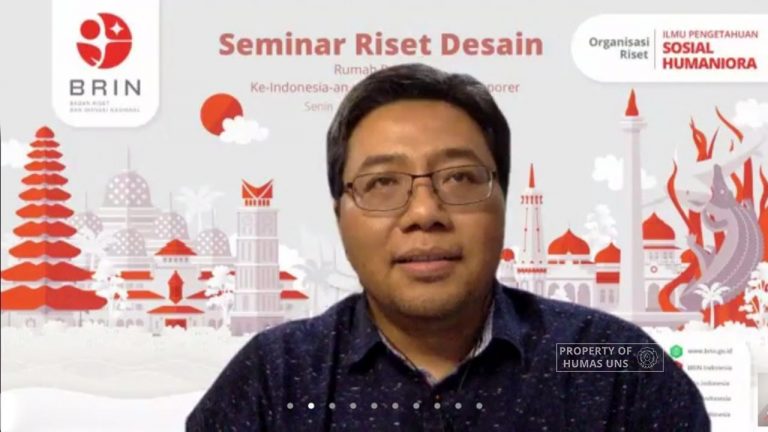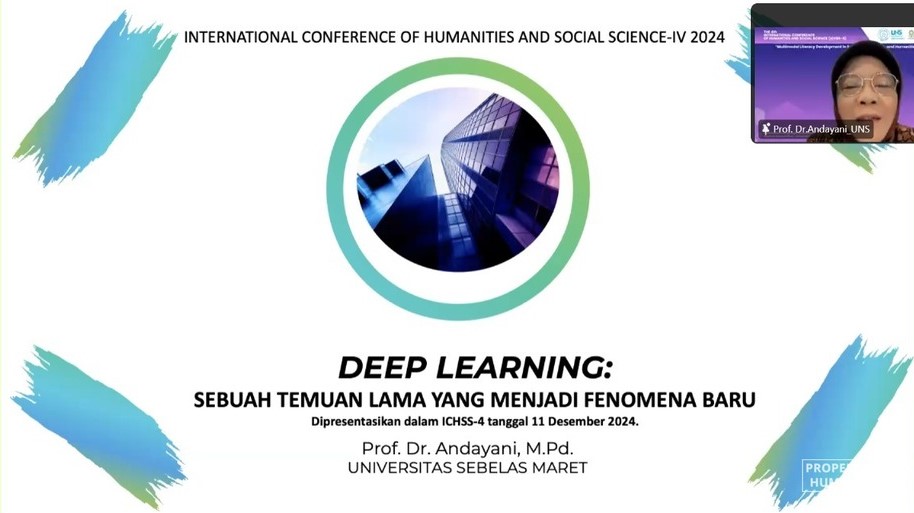
UNS – The Alumni Association of the Doctoral Program (S-3) in Indonesian Language Education at the Faculty of Teacher Training and Education (FKIP), Universitas Sebelas Maret (UNS) Surakarta, successfully hosted the 4th International Conference on Humanities and Social Sciences (ICHSS). The “Multimodal Literacy Development in Social, Arts, Science, and Humanities Contexts” conference was held virtually on Wednesday (11/12/2024).
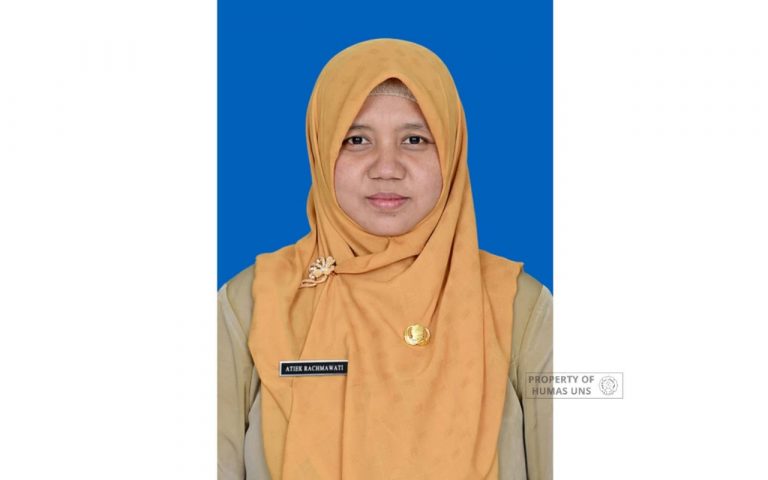
The event featured keynote speaker Prof. Dr. Andayani, M.Pd., from Universitas Sebelas Maret, alongside renowned speakers, including Dr. Aninditya Sri Nugraheni, M.Pd. (UIN Sunan Kalijaga, Indonesia), Ass. Prof. Ummu Hani, Ph.D. (Hankuk University, South Korea), Prof. Dr. Suyoto, M.Pd. (University of International Studies, Japan), and Prof. Dr. Siti Isnaniah, M.Pd. (UIN Raden Mas Said Surakarta).
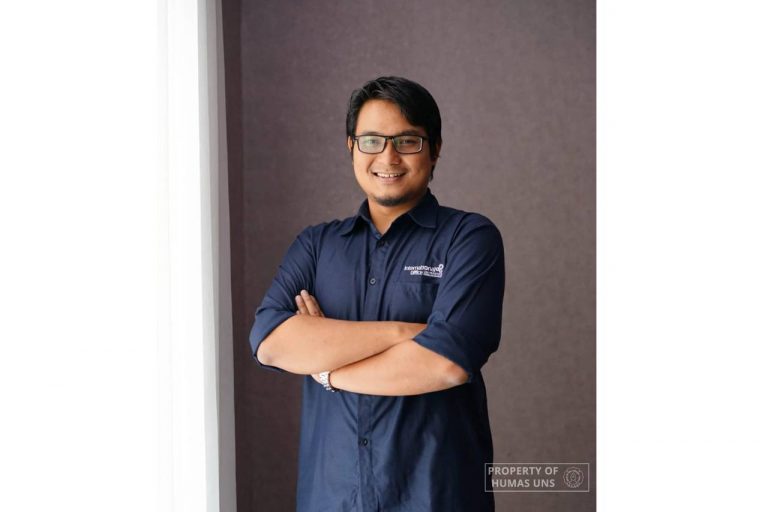
Dr. Heru Kurniawan, M.A., from UIN Prof. Dr. K.H. Saifuddin Zuhri, who chaired the ICHSS 2024 organizing committee, announced that this year’s conference attracted 372 participants. These included 50 paper presenters publishing through EUDL proceedings, 153 presenters contributing to international e-proceedings, and 169 non-presenting participants.
The conference was officially opened by FKIP UNS Dean Dr. Imam Sujadi, M.Si., who highlighted the event’s commitment to advancing academic foundations to benefit education and the broader society.
“This conference has been consistently held for four years, and the number of participants continues to grow. The 4th ICHSS is expected to strengthen our scientific foundation for future-oriented knowledge. It also fosters academic enthusiasm, benefits society, and enhances the education sector,” Dr. Imam said.
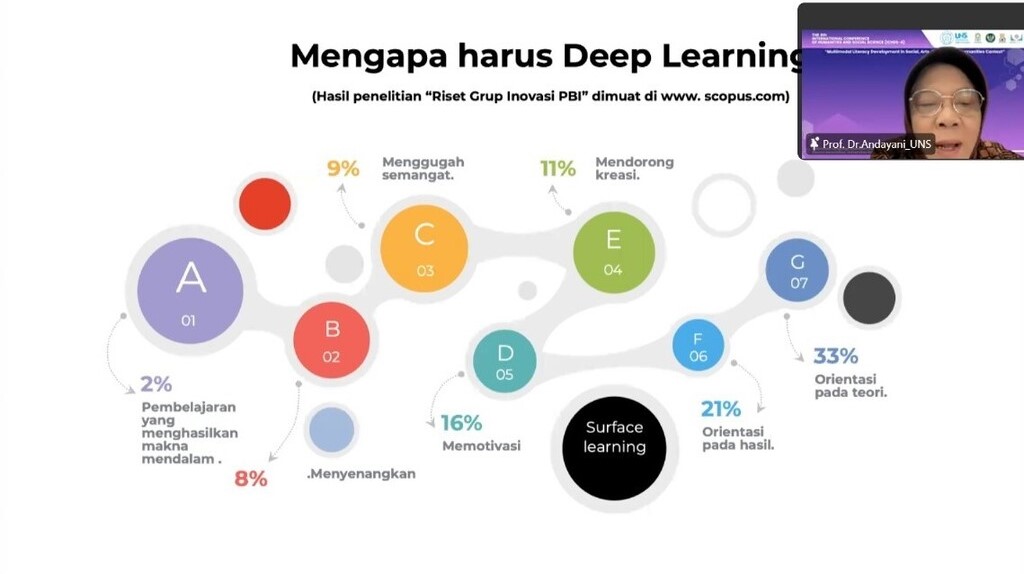
The keynote speech was delivered by Prof. Dr. Andayani, M.Pd., on the topic, “Deep Learning: An Old Concept, Now a New Phenomenon.”
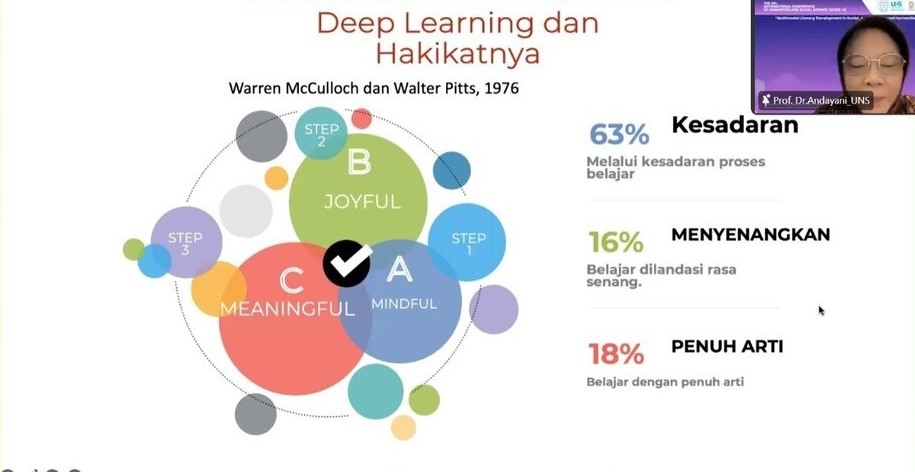
“The concept of deep learning was first introduced in 1976 in Sweden. It emphasizes learning through a process involving 63% awareness of the learning process, 16% enjoyment in learning, and 18% meaningful learning,” Prof. Andayani explained.
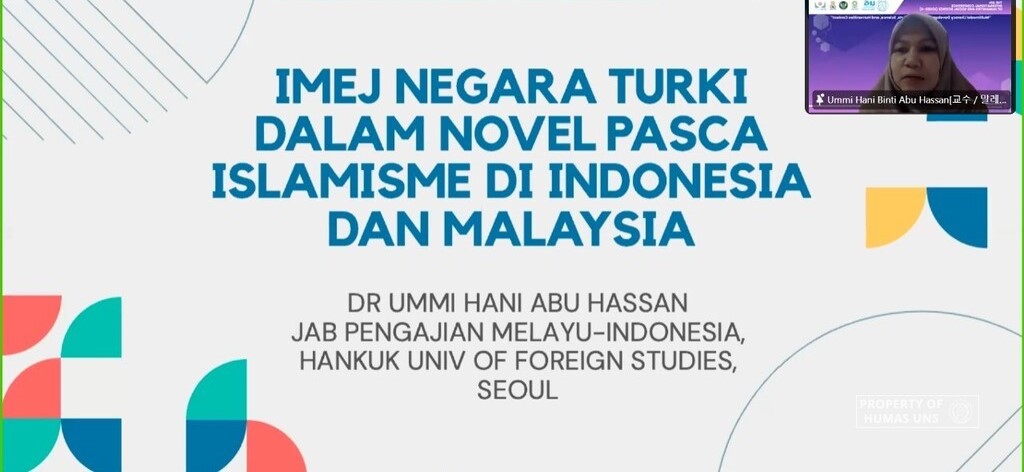
The presentation continued with Assoc. Prof. Ummi Hani Abu Hassan, Ph.D., delivered a talk titled “The Image of Turkey in Post-Islamism Novels in Indonesia and Malaysia.”
“Post-Islamism novels from Indonesia and Malaysia reflect an Islamic political ideology that has integrated into various aspects of Muslim life. Their portrayal is more aligned with the current social context. This continues to evolve and adapt to the dynamics of societal development,” Assoc. Prof. Ummi explained.
The third presentation was delivered by Dr. Aninditya Sri Nugraheni, M.Pd., who discussed “Implementing Joyful Learning for Neurolinguistic Activities in Language Education.”
“Neurolinguistic activities involve complex brain processes in understanding, producing, and analyzing language. Experience-based learning can stimulate brain areas associated with linguistic abilities,” Dr. Aninditya explained.
The presentation continued with Pr. Dr. Suyoto, M.Pd., represented by Prof. Dr. Imroatus Solikhah, M.Pd., delivered material on the development of the Indonesian Language for Foreign Speakers (BIPA) in Japan.
“In Japan, the development of the Indonesian language is progressing well. Various universities offer Indonesian language instruction, whether as elective courses, mandatory courses, or even as full-fledged departments,” Prof. Imroatus explained.
The final presentation was delivered by Prof. Dr. Siti Isnaniah, M.Pd., with material titled “Strengthening GLS through (Multimodal) Literacy in Indonesian Language Learning.”
“In the era of Society 5.0, literacy competence is an essential component for students to possess. Literate students will be able to critically understand information, such as identifying false information (hoaxes). The concept of multimodal literacy inherently involves various media, including print/written, visual, audio, audiovisual, digital, and kinesthetic formats. It is crucial to continuously teach this to ensure students grow into literate individuals,” Prof. Dr. Siti Isnaniah concluded.
This conference represents the alumni’s contribution to achieving SDG 4: Quality Education by providing presenters a platform to share creative ideas through published research. It also aligns with SDG 17: Partnerships for the Goals.
HUMAS UNS