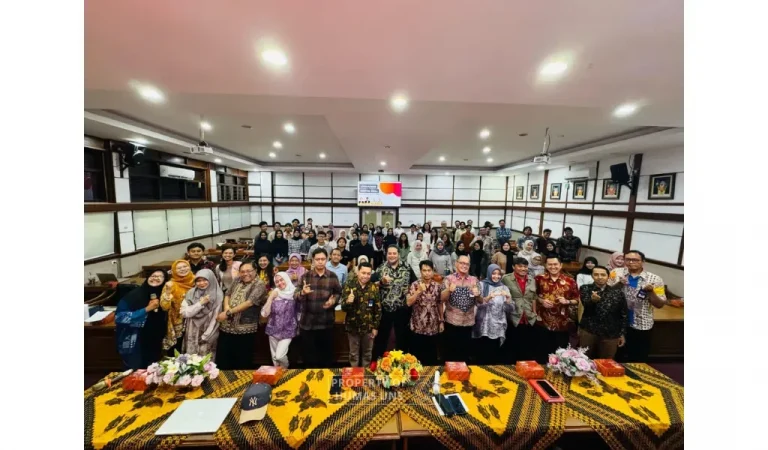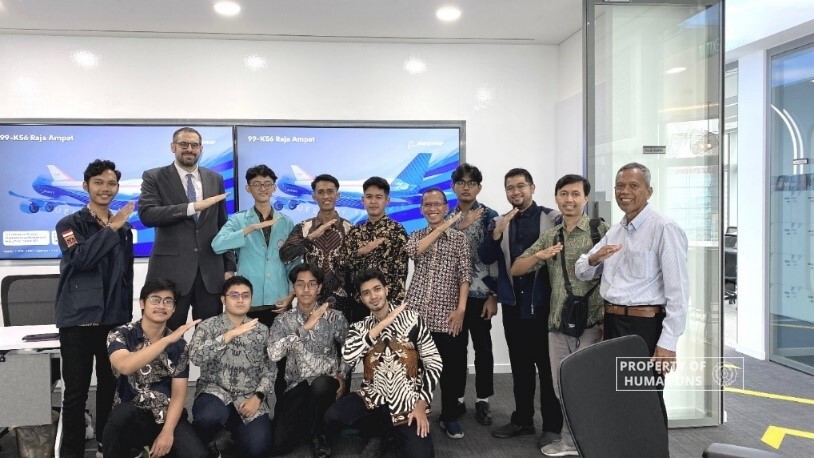
UNS – Nine students from the Faculty of Engineering (FT) Universitas Sebelas Maret (UNS) Surakarta showcased their skills in the prestigious Global Multidisciplinary Design Course (GMDC). This program is part of the United States Agency for International Development (USAID) Higher Education Partnership Initiative (HEPI) Project, which aims to connect students from various universities, countries, and disciplines. The event brought together students from UNS, Arizona State University (ASU), and Institut Teknologi Bandung (ITB) to collaborate on multidisciplinary projects, challenging them to create innovations in electric aircraft design.
The nine UNS students—Abdur Rahman, Arya Yudha Girindra, Arya Dewangga, Brilliano Wahyu, Gilang Alfiandi, Nahemia Herbert, Abdee Ridho, Hegel Duta Anodya, and Moja Obaiman Amien—are from the Mechanical Engineering and Electrical Engineering programs. They were mentored by Prof. Dr. Eko Surojo, S.T., M.T., Dr. Eng. Aditya Rio Prabowo, S.T., M.T., M.Eng., and Dr. Eng. Iwan Istanto, S.T., M.Eng. Collaborating with aviation engineering students from ASU and ITB, the UNS team formed an international group focused on two main projects: the Airplane Landing Gear Design and the Airplane Battery-Propulsion System. Over four months, the participants honed their technical skills while enhancing teamwork, innovation, and cross-cultural communication—key competencies in today’s globalized world.
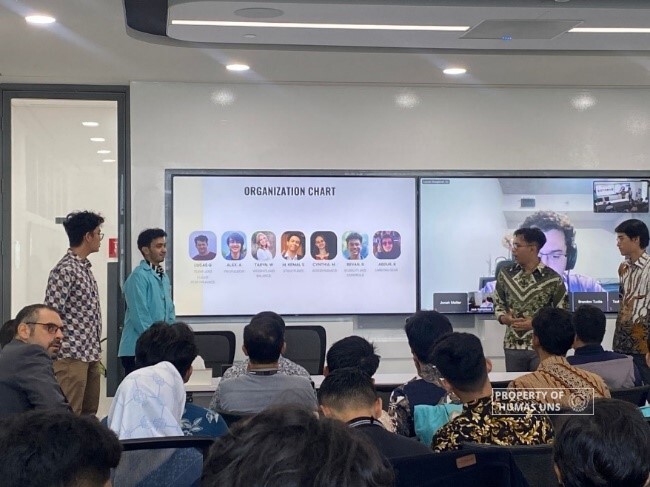
The program’s culmination took place on Wednesday (11/12/2024) at the PT Boeing Indonesia office in ASTRA Tower, Jakarta. The event began with opening remarks from Boeing Country Managing Director, Mr. Zaid Alami, which was followed by project design presentations from each group. The teams presented their ideas and solutions to an expert panel, including Zaid Alami, ASU GMDC Supervisor Dr. Jack Rutherford, and USAID HEPI Country Director Abdul Rahman, Ph.D.
The presentations served not only as the final evaluation of the projects but also provided valuable insights for students about the standards and expectations of the global aviation industry. The panelists offered constructive feedback, motivating the students to further develop their skills in aviation engineering and system design.
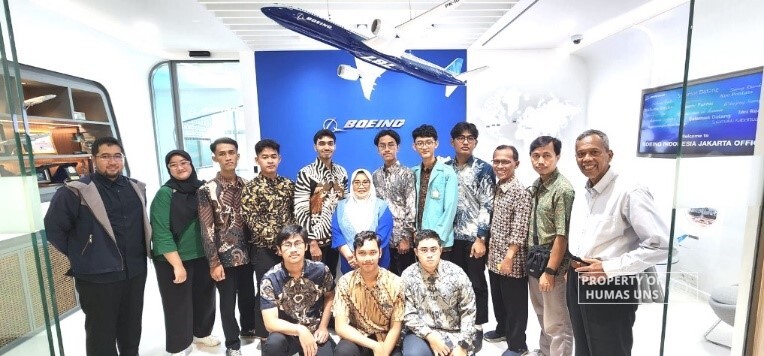
For the FT UNS students, the program was a highly enriching experience. In addition to attending lectures in English by ASU professors for a full semester, the students gained deep cultural insights through international interactions. One of the most memorable moments was the opportunity to sign the meeting room wall at the Boeing Indonesia office, a tradition symbolizing participation in prestigious activities. The supervising lecturers from UNS also signed the wall, leaving their mark alongside the students.
“We are thrilled to participate in this program. Besides gaining knowledge and experience in aircraft design, we also learned how to communicate effectively with students from other countries. Presenting our designs to Boeing and experiencing unique traditions like signing the wall at Boeing made this an unforgettable moment,” Abdur Rahman, one of the UNS student representatives in GMDC, said.
The GMDC program not only allowed students to innovate but also helped them build international networks with renowned institutions like ASU and PT Boeing Indonesia. This collaboration is expected to open doors to global career opportunities in the future. Prof. Eko Surojo and Dr. Aditya Rio expressed their appreciation for the achievements of the UNS students. They conveyed pride and full support for similar programs in the future, believing such initiatives can unlock more opportunities and deliver positive impacts for students and the institution.
Through this program, FT UNS students have proven their ability to compete and contribute to complex, large-scale global engineering projects. GMDC stands as a testament to the power of synergy between universities, industry, and international institutions in developing a generation of highly competitive young engineers.
This achievement aligns with UNS’s efforts to support the Sustainable Development Goals (SDGs), particularly Goal 4: Quality Education, by providing extensive learning opportunities for students, and Goal 9: Industry, Innovation, and Infrastructure, which focuses on building resilient infrastructure, promoting inclusive and sustainable industrialization, and fostering innovation.
HUMAS UNS