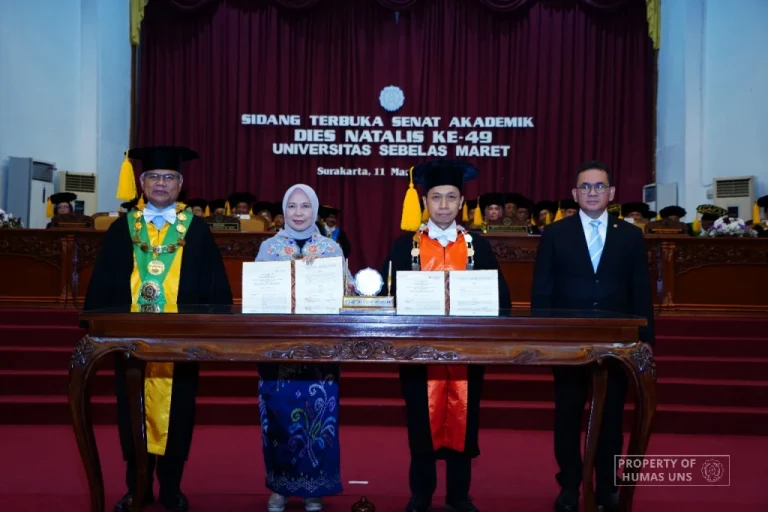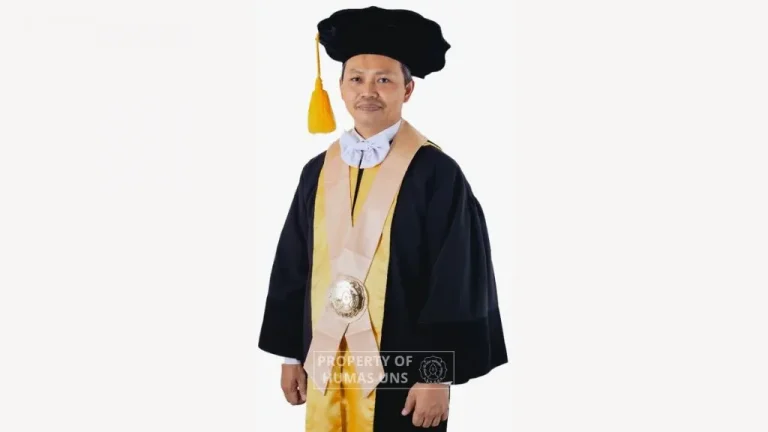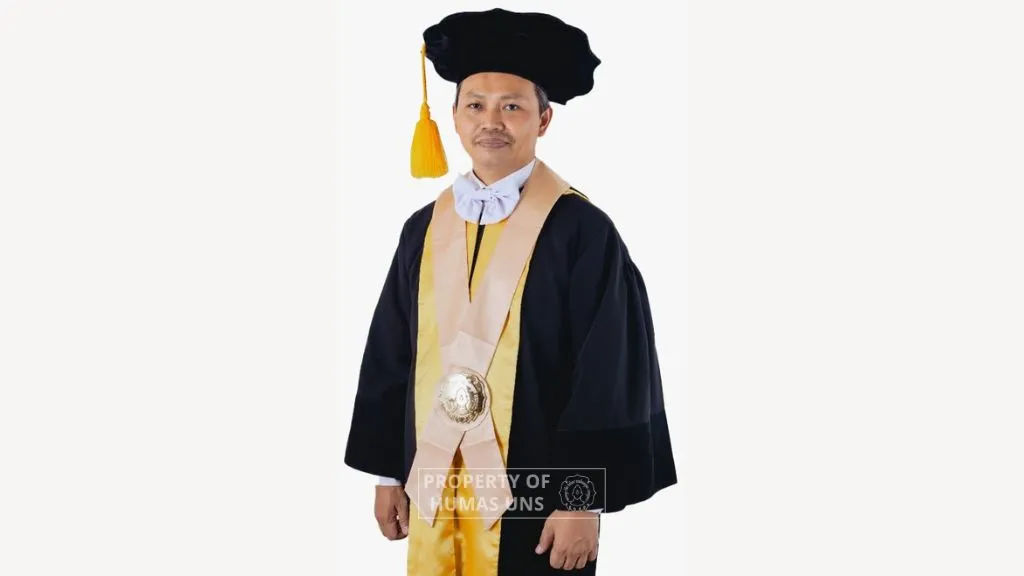
UNS—The Faculty of Information Technology and Data Science (Fatisda) at Universitas Sebelas Maret (UNS) Surakarta has welcomed its second professor, Prof. Dr. Wiharto, S.T., M.Kom., with a specialization in Biomedical Computation.
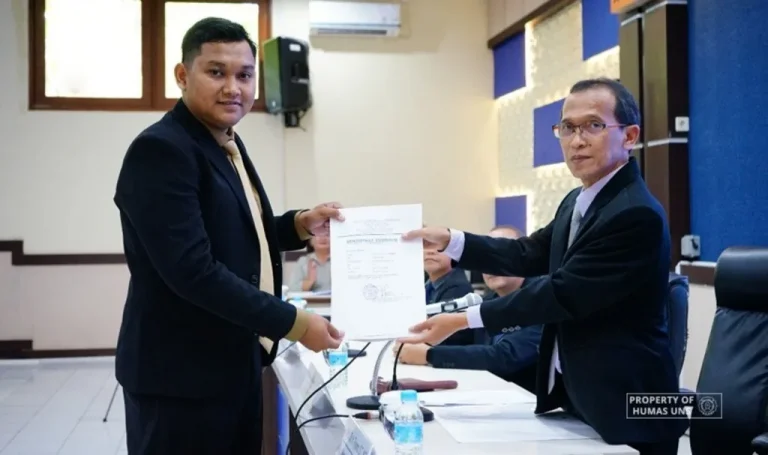
Prof. Wiharto was officially inaugurated by UNS Rector Prof. Dr. Hartono, dr., M.Si., in an Open Senate Session held on Friday (20/12/2024) at the G.P.H. Haryo Mataram Auditorium. His inaugural speech was titled “Biomedical Data Computation Based on Explainable Artificial Intelligence.”
As UNS’s 329th professor, Prof. Wiharto emphasized the critical role of biomedical data in healthcare. Such data provides in-depth insights into individual and population health, supports the development of precise treatments, and enhances disease prevention efforts. Examples include laboratory test results, medical imaging, and physiological signals. Utilizing this data enables early disease detection, leading to faster and more effective treatments.
Prof. Wiharto employs a cutting-edge field within Artificial Intelligence (AI) known as Explainable Artificial Intelligence (XAI). This innovation improves upon traditional Machine Learning (ML) and Deep Learning (DL) methods by making the decision-making process of AI models transparent. XAI techniques, such as Shapley Additive Explanations (SHAP) and Gradient-weighted Class Activation Mapping (grad-CAM), are pivotal. SHAP explains the contribution of each input feature to the model’s predictions, while grad-CAM highlights areas within images that significantly influence the model’s decisions.
“One example of an XAI-based model I’ve developed is an intelligent system for predicting coronary heart disease (CHD) based on various clinical and physiological assessments. This model helps perform feature selection, identifying key factors for CHD prediction,” Prof. Wiharto explained.
By utilizing minimal feature selection, the model achieves effective CHD detection. Additionally, SHAP ensures that the system provides interpretable explanations for its predictions, demonstrating the robustness and reliability of these innovations.
XAI techniques also extend to detecting pneumonia and COVID-19. These detections utilize Convolutional Neural Networks (CNN) applied to biomedical X-ray and chest MRI data. Using grad-CAM, specific areas of X-ray and MRI images are identified as critical indicators of pneumonia or COVID-19.
Furthermore, Prof. Wiharto has integrated grad-CAM into image segmentation models for applications such as skin lesions and polyp imaging. A notable innovation is the development of the Efficient Comprehensive Attention Network (ECA-Net) for skin lesion segmentation. For polyp segmentation, a double U-Net model using Depthwise Separable Convolution (DSC) and Convolutional Block Attention Module (CBAM) has been introduced.
“The integration of XAI into classification and segmentation models, both for image and non-image data, allows each stage of the model’s process to be explainable. This transparency enhances user trust in the system,” he stated.
Prof. Wiharto’s contributions hold significant promise for advancing scientific knowledge. UNS Rector Prof. Hartono, in his remarks, reaffirmed UNS’s commitment to excellence in education, research, and community service. “With achievements like these, we are optimistic about UNS’s future, both nationally and globally. We aspire for UNS to make even greater contributions in addressing societal, national, and international challenges,” Prof. Hartono concluded.
Humas UNS