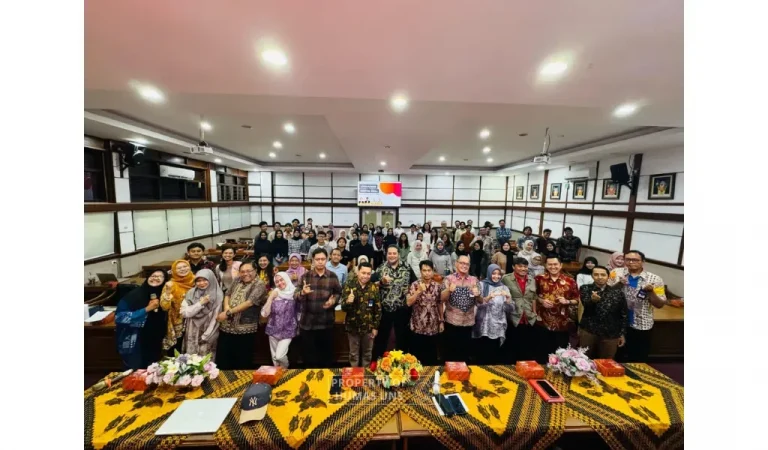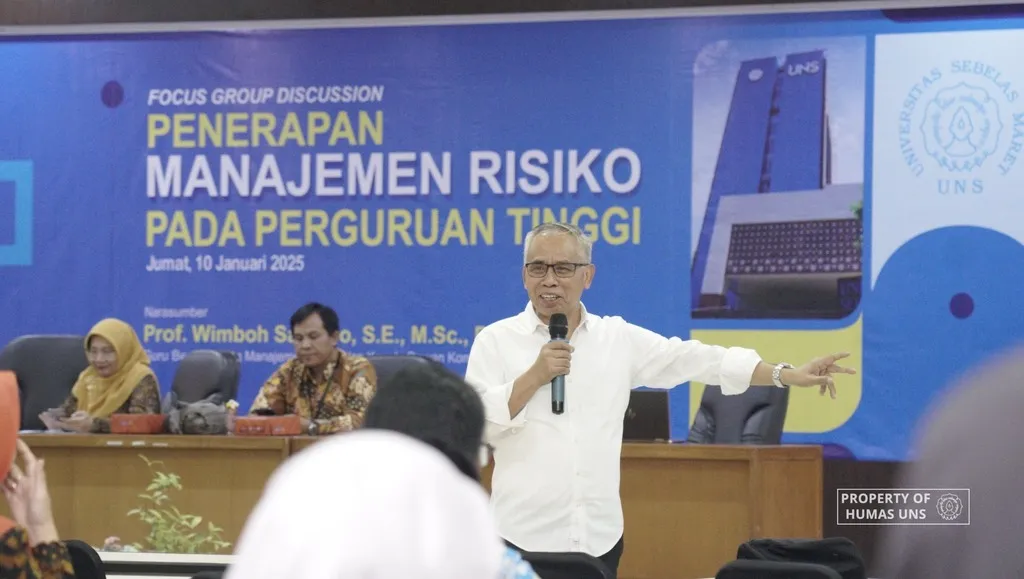
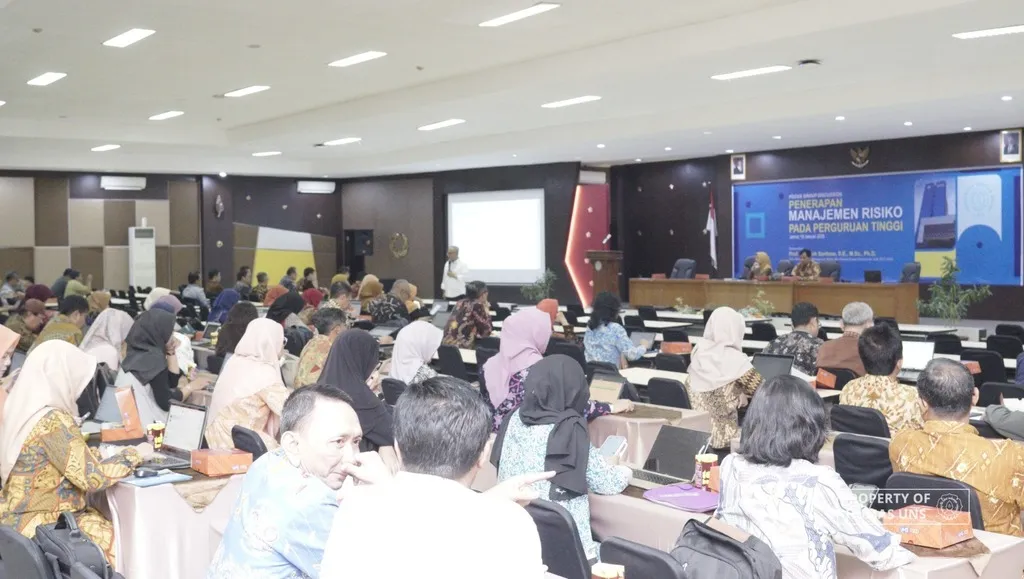
UNS – Universitas Sebelas Maret (UNS) Surakarta organized a focus group discussion (FGD) on the Implementation of Risk Management in Higher Education. The event took place in person at UNS Inn on Friday afternoon (10/1/2025), with Prof. Wimboh Santoso, M.Sc., Ph.D., as the keynote speaker.
The Vice Rector for Planning, Cooperation, Internationalization, and Information at UNS, Prof. Irwan Trinugroho, S.E., M.Sc., Ph.D., attended and officially opened the FGD. In his opening remarks, he highlighted the relevance of the theme to the current conditions and needs of higher education institutions. He emphasized that universities must effectively manage various challenges and risks in an increasingly dynamic environment.
“We know that universities are not just educational institutions. They are also centers for the development of science, technology, and innovation. In fulfilling these roles, we face numerous risks, including operational, strategic, financial, and governance-related risks. Therefore, the implementation of integrated risk management is essential to ensure institutional sustainability and accountability,” Prof. Irwan stated.
Risk management in universities, according to Prof. Wimboh, should begin with several key steps. In his presentation, he recommended adjusting the organizational structure to include a dedicated unit for risk management. He also emphasized the importance of establishing risk management policies that bind all units within the university.
Establishing a timeline and setting specific priorities are crucial in implementing risk management processes. Prof. Wimboh stressed the need to identify potential risks at UNS to develop strategies to minimize or mitigate them. These strategies can then be formalized into a comprehensive risk management framework that applies to all organizational units at UNS.
“Integrate risk management processes into various aspects of the university’s operations to identify potential risks. Then, determine mitigation efforts to address those risks,” Prof. Wimboh explained.
Effective risk management in an organization requires a supportive ecosystem. Prof. Wimboh outlined several key elements necessary for success, including an organization that reflects good governance and general control mechanisms in financial compliance and project management; governance standards set by policy stakeholders; risk management policies and guidelines; a code of ethics and behavior, along with the establishment of an ethics committee; a dedicated risk management committee; and the use of information technology.
Humas UNS