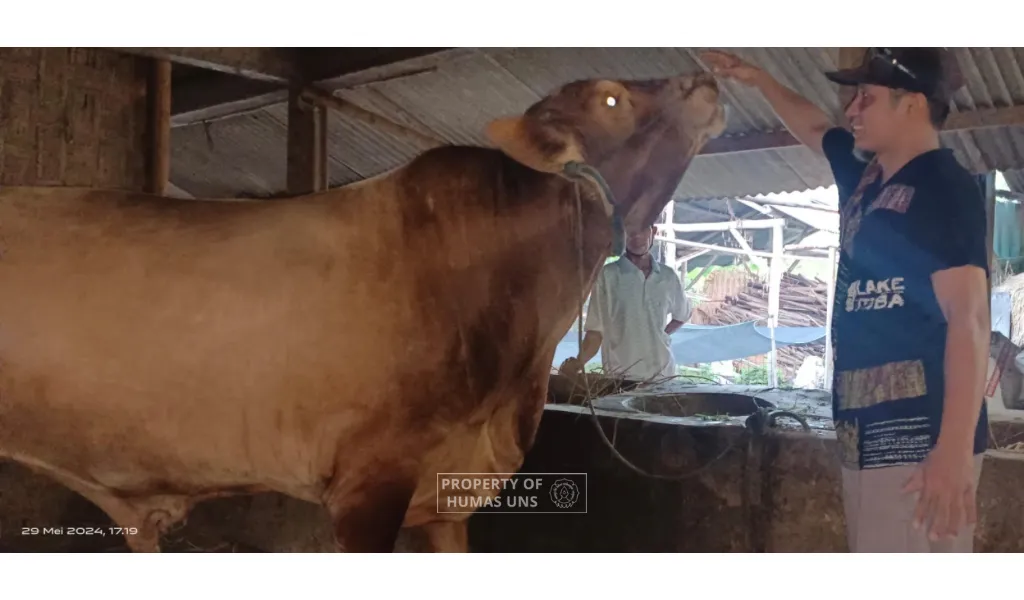
UNS – Foot-and-mouth disease (FMD) has once again drawn attention in several regions across Indonesia. This highly contagious viral disease affects cloven-hoofed livestock and has significantly impacted their health and productivity. Dr. Sulistyo, S. T., M. Si., an educational laboratory specialist from Universitas Sebelas Maret (UNS) Surakarta, explained the recent developments.
Dr. Sulistyo stated that FMD is characterized by lesions on the mouth, tongue, and gums, often accompanied by excessive salivation. “Other symptoms include reduced appetite, fever, and a decline in milk production in dairy cattle,” he explained.
Transmission and Risk Factors
Dr. Sulistyo noted that FMD spreads through direct contact between infected and healthy livestock. Humans can also unknowingly act as carriers after interacting with infected animals. Risk factors exacerbating the outbreak include poor pen hygiene, unmonitored livestock mobility, and inadequate vaccination coverage.
“This situation requires serious attention because, aside from reducing livestock weight and productivity, FMD can lead to livestock fatalities if not managed properly,” Dr. Sulistyo emphasized on Tuesday (14/1/2025).
Management Tips and Mitigation Measures
Dr. Sulistyo suggested several actions to manage FMD. Farmers can spray affected animals’ mouths with citric acid to alleviate lesions, as the acid’s properties are unfavorable to the virus. Providing soft bedding, such as sawdust, can also help relieve pain in the animals’ hooves.
He recommended giving livestock multivitamins to boost their immune systems and routinely disinfecting the pens. Isolating infected animals is another effective step to mitigate transmission.
Dr. Sulistyo also emphasized the importance of mitigation measures such as mass vaccination campaigns, strict biosecurity implementation, and regular cleaning of animal pens. The government has introduced policies such as call center services and rapid measures like livestock market lockdowns in affected areas.
Preventing Recurrence
To prevent future FMD outbreaks, Dr. Sulistyo emphasized the need for strengthening national vaccination programs, improving inter-agency coordination, and fostering collective awareness among stakeholders, including farmers. Through proper education and preventive measures, the recurrence of FMD outbreaks can be minimized, reducing its impact on the national livestock sector.
“Awareness and synergy between the government, academics, and the public are the keys to controlling and preventing FMD spread in the future,” he concluded.
Humas UNS