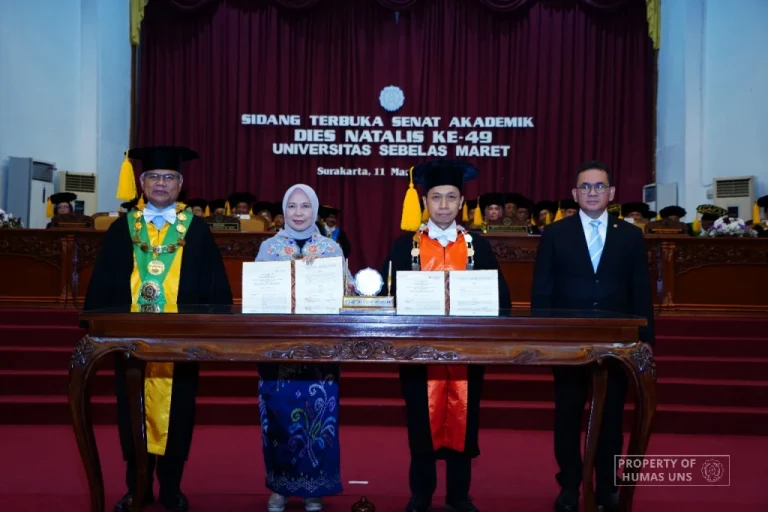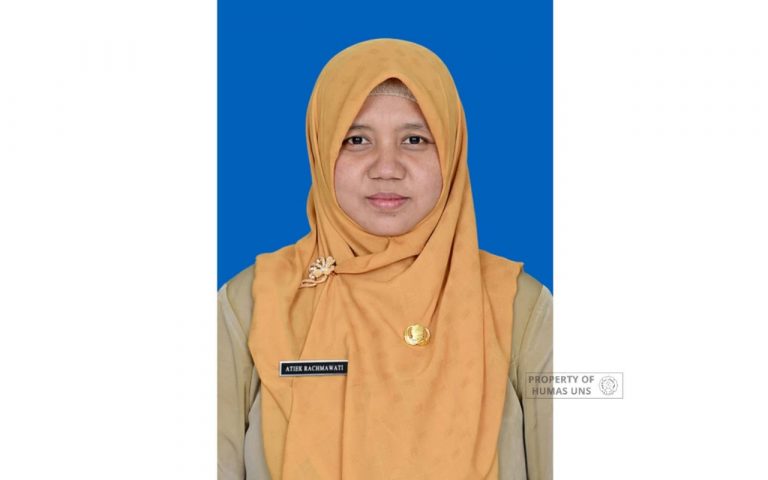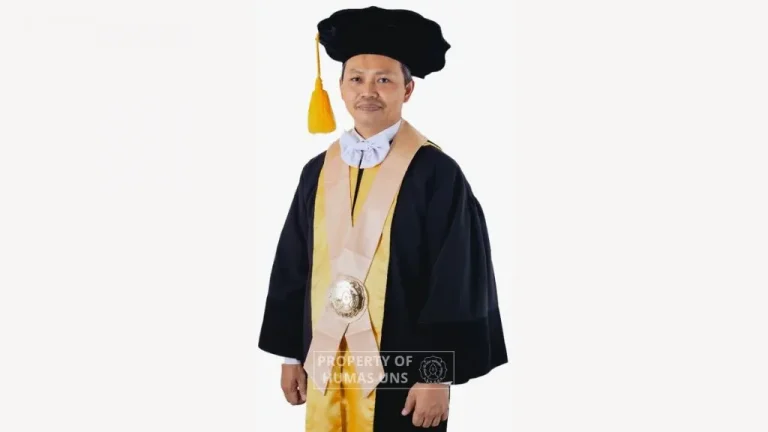
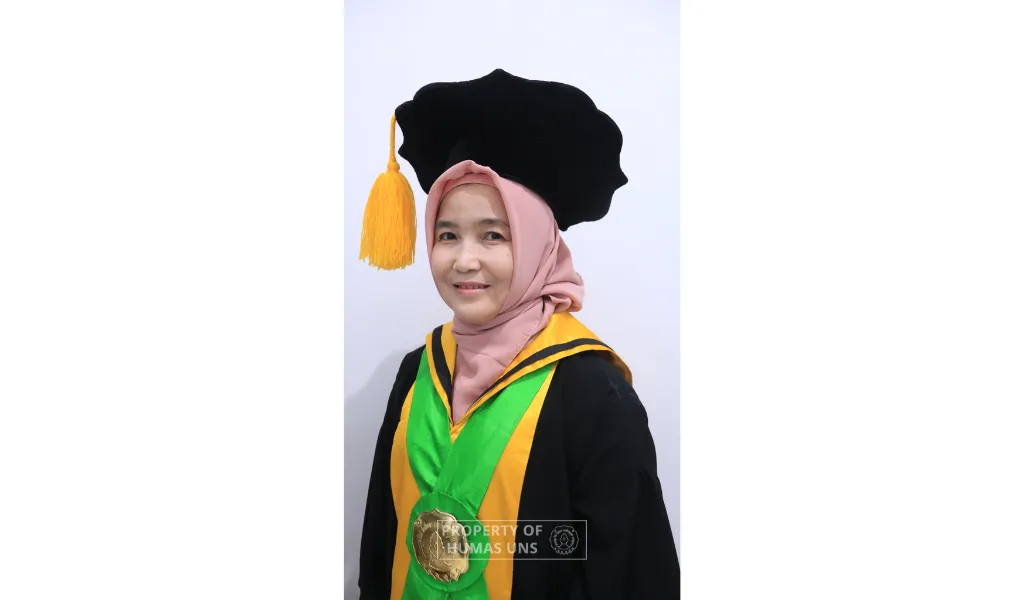
UNS – The university officially appointed Prof. Dr. Ir. Minar Ferichani, M.P., as a Professor of Agricultural Economics. In her inauguration speech, Prof. Minar presented her research titled “Economic Review of the SRI (System of Rice Intensification) Method as a Solution for Food Self-Sufficiency in Indonesia.”
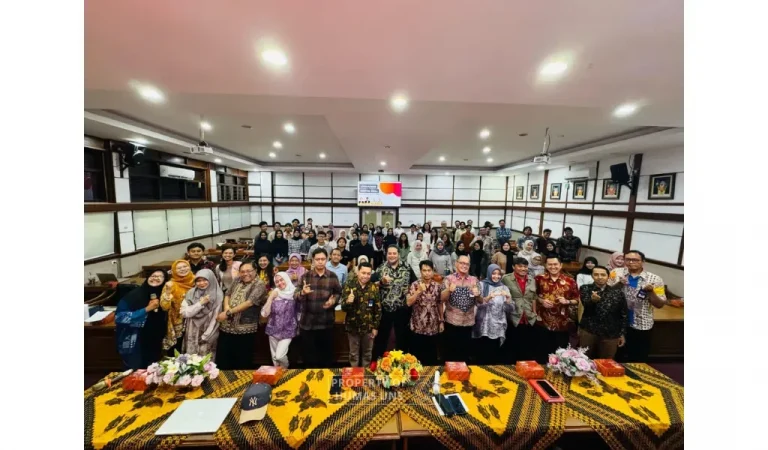
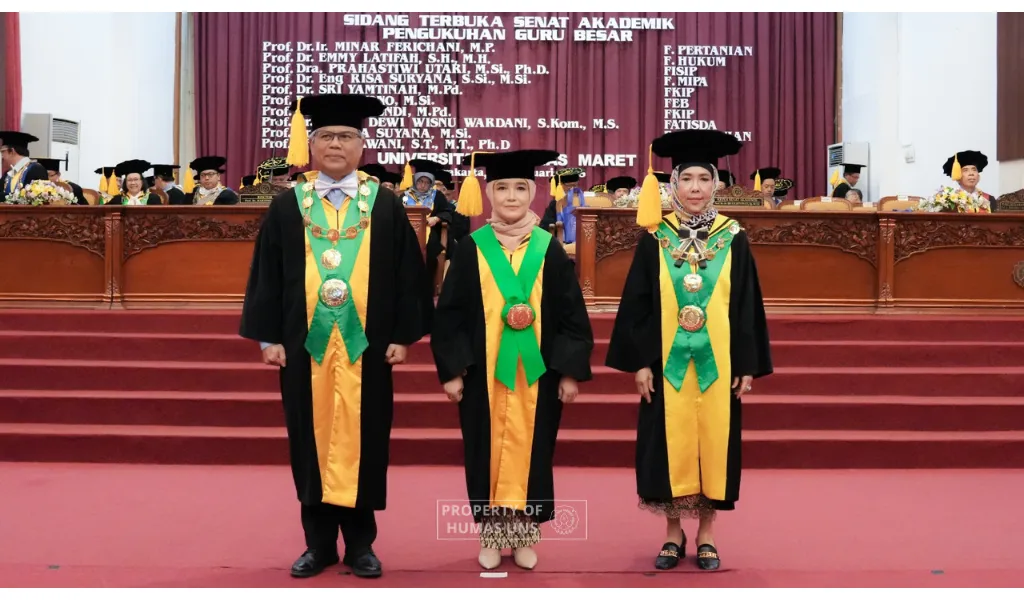
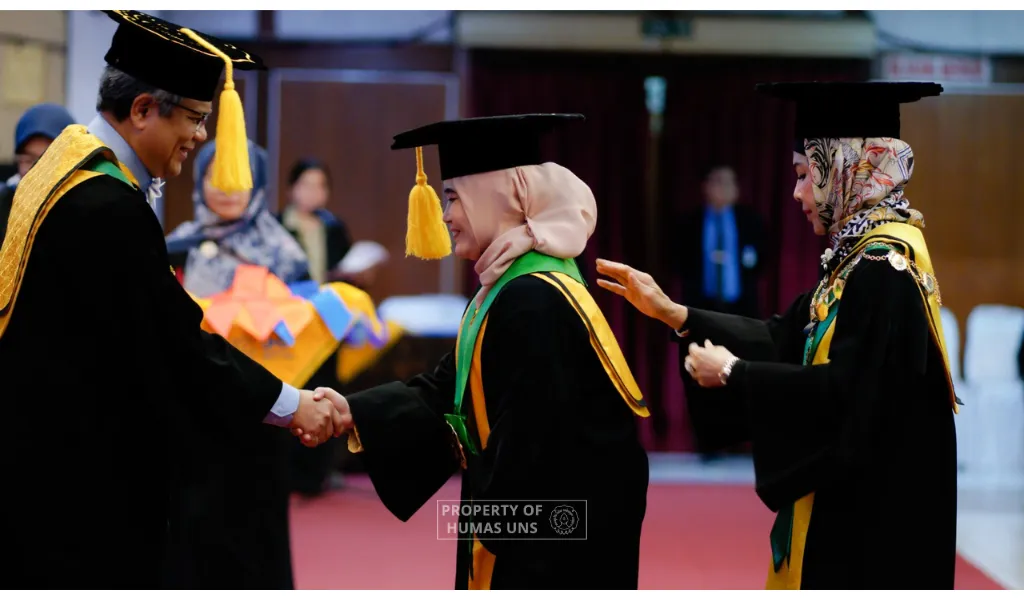
The Rector of Universitas Sebelas Maret (UNS) Surakarta, Prof. Dr. Hartono, dr., M.Si., personally inaugurated Prof. Minar. The inauguration occurred at the Open Session of the Academic Senate on Tuesday (11/2/2025). It took place at the G.P.H. Haryo Mataram Auditorium at UNS. Prof. Minar now holds the position of the 50th Professor at the Faculty of Agriculture (FP) and the 342nd Professor at UNS.
In her speech, Prof. Minar emphasized that Indonesia’s strategic location on the equator provides it with abundant natural resources (SDA). These resources support Indonesia’s potential for food self-sufficiency, allowing the country to meet its food needs. Despite this, Indonesia remains one of the world’s largest food importers. To address this issue, Prof. Minar introduced an innovative agricultural method aimed at boosting domestic agricultural productivity.
Introducing the SRI Method for Improved Agricultural Productivity
“I will present an innovation in rice cultivation known as SRI (System of Rice Intensification). It offers a solution to achieve food self-sufficiency in Indonesia. This method is highly productive, adaptive, water-efficient, and environmentally friendly, as it optimizes the potential of agroecosystems. By applying SRI, production can increase by 3 to 4 times per planting hole,” Prof. Minar said.
Research Findings Support the SRI Method’s Economic Benefits
Prof. Minar shared significant research findings on the SRI method, which highlights its economic advantages. Studies conducted in Bantul, Sleman, and brackish water-affected lands in Segara Anakan, Nusa Kambangan, show substantial increases in the R/C ratio. SRI practices help reduce variable costs by up to 40% and increase production per unit of land. Research from Eastern Indonesia reveals that SRI can thrive in areas with limited irrigation. It boosts yields by up to 3,3 tons/ha. SRI also cuts water usage by 40%, reduces synthetic fertilizer use by 50%, and lowers production costs by 20%.
Moreover, Prof. Minar presented international research on the SRI method. In Andhra Pradesh, India, studies found that SRI had a higher benefit-cost ratio of 1,76. This was compared to 1,25 for conventional methods, resulting in a 31% increase in crop yields. Research in Korea showed that SRI can reduce water usage by 55,6%. It also decreases irrigation needs and lowers non-point source pollution (NPS) from rainfall or melting snow. However, the main challenge of the SRI method is its management and maintenance.
The SRI Method: A Solution for Food Self-Sufficiency
“The research results demonstrate that the SRI method, combined with modified irrigation practices, is versatile. It can be applied in diverse environments such as desert regions, brackish water-affected lands, and dry or marginal lands. SRI enhances soil texture, biodiversity, and increases rice tiller numbers, leaf area index, and crop yields. It also reduces irrigation water needs and production costs. These factors provide significant economic advantages compared to conventional methods. Therefore, the SRI method is a promising solution for achieving food self-sufficiency in Indonesia,” Prof. Minar concluded.
Humas UNS
Reporter: Dikky Yudi Pradana
Editor: Dwi Hastuti