UNS – Universitas Sebelas Maret (UNS) Surakarta continues to enhance its role in educational innovation through the AppliedHE Xchange 2025 event. A panel discussion titled “Rankings & Ratings for Industry-Relevant Skills” was part of the program. It explored how universities and industries can collaborate to produce graduates who meet global market demands.
Insights from the Panel Discussion
On Tuesday (25/2/2025), the third-panel discussion featured Zeba Salman as the moderator. The panelists included:
- Ibrahim Fatwa Wijaya, S.E., M.Sc., Ph.D. – Director of Planning, Partnerships, Internationalization, and Reputation at UNS, Indonesia.
- Dian Ekowati, S.E., M.Si., M.AppCom(OrgCh)., Ph.D. – Head of Planning and Development at Universitas Airlangga, Indonesia.
- Prof. Sibrand Poppema – President of Sunway University, Malaysia.
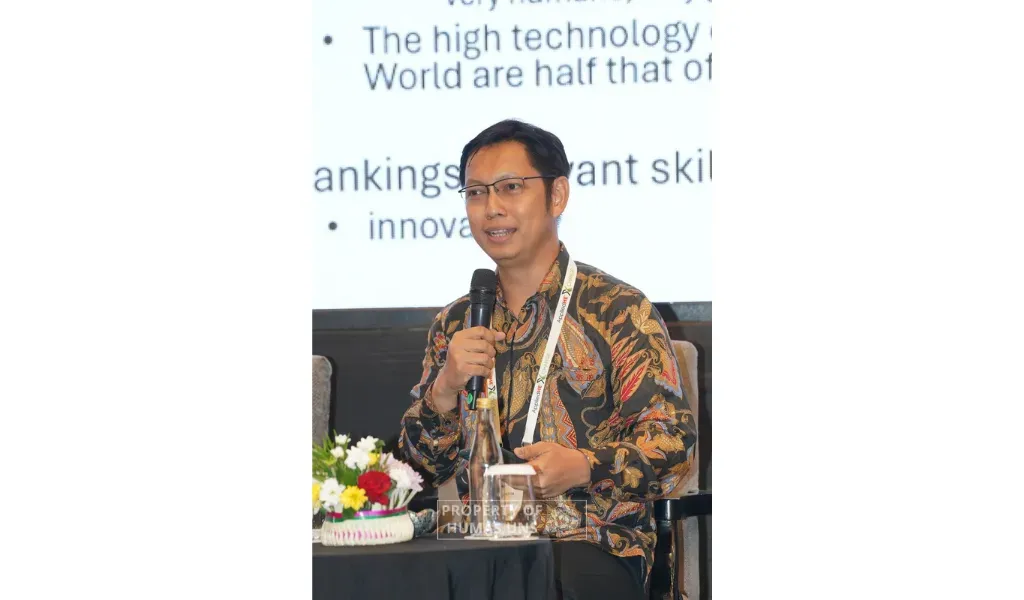
The discussion focused on the relationship between rankings and employability in education. Representing UNS, Ibrahim emphasized that universities should go beyond rankings and prioritize critical thinking and problem-solving skills. He linked this idea to the Islamic world’s historical contributions to innovation, urging modern universities to rekindle this spirit.
“Rankings should serve as a tool to assess an institution’s strengths and weaknesses rather than just a competition,” Ibrahim stated.
Meanwhile, Dian Ekowati stressed that universities play a crucial role in bridging the skills gap in the workforce. She pointed out that ranking systems increasingly assess graduate employability—focusing on how well graduates meet labor market demands.
“We must ensure that our graduates possess not only technical expertise but also soft skills. These include creative thinking, collaboration, and innovation,” she explained.
Adding to the discussion, Prof. Sibrand Poppema noted that rankings often prioritize research and reputation over employability. However, employability is gaining recognition as a key metric.
“Graduates stand out when they combine technical expertise, soft skills, and strong values. In the long run, critical thinking and an entrepreneurial mindset are more valuable than technical knowledge alone,” he affirmed.
The Importance of Industry Collaboration
Dian also highlighted the urgency for universities to adapt to rapid industry changes.
“Close collaboration with industry is essential for producing job-ready graduates. Strategic integration of insights into university performance indicators also plays a crucial role,” she stated.
The discussion directly supports Sustainable Development Goal (SDG) 17: Partnerships for the Goals. The speakers agreed that strong university-industry collaboration is vital to producing graduates who meet market needs.
As the host, UNS reaffirmed its commitment to strengthening the link between education and industry. “Reinforcing partnerships between higher education and industry helps produce competitive graduates. It also contributes to societal development,” Ibrahim concluded.
HUMAS UNS