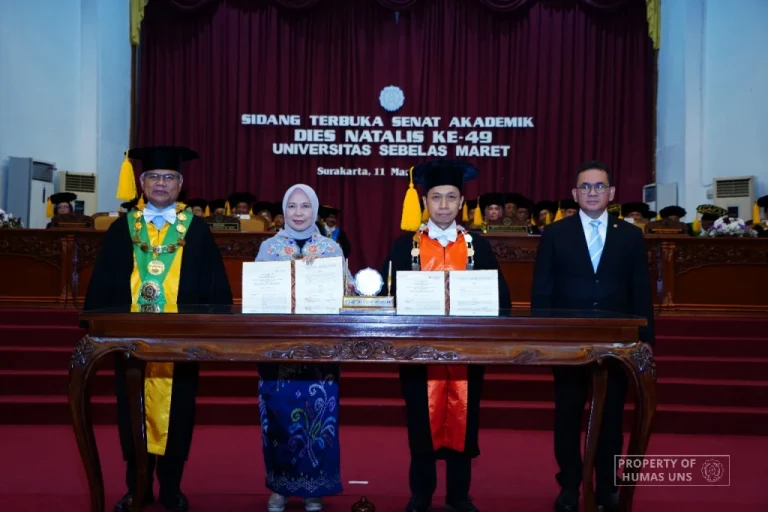
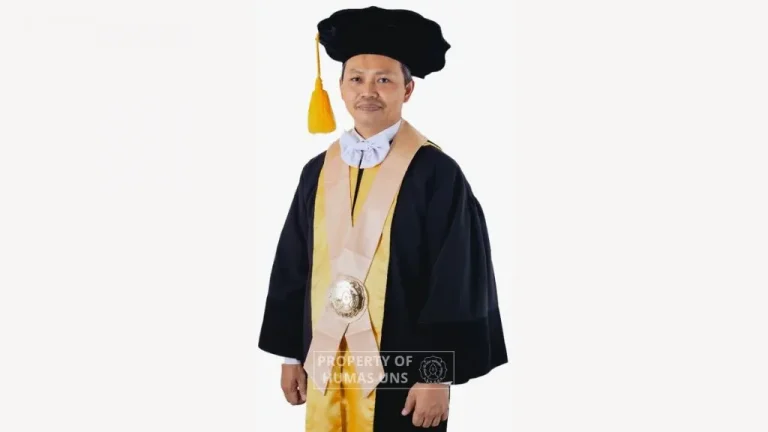
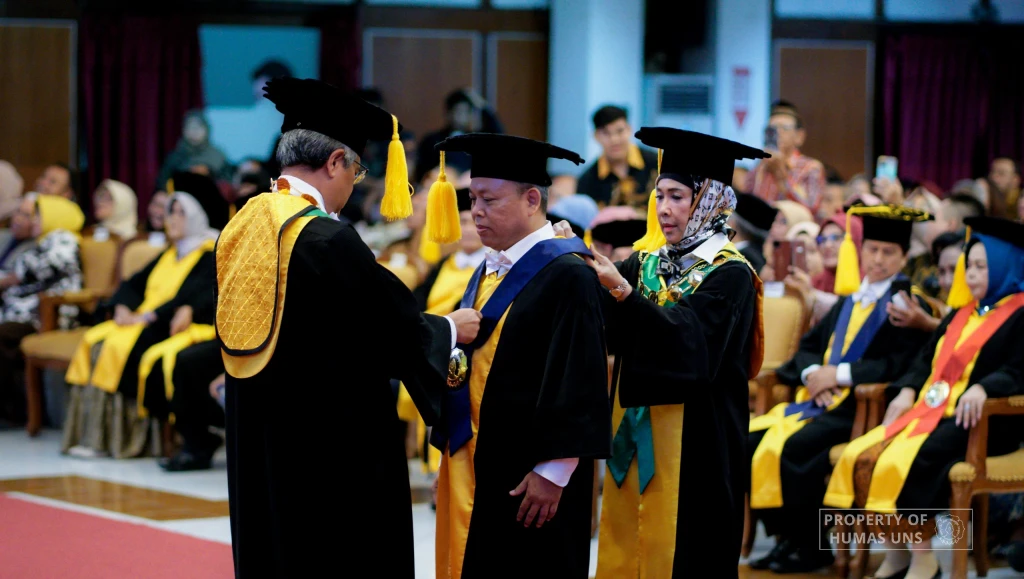
UNS – Universitas Sebelas Maret (UNS) Surakarta has appointed Prof. Dr. Ir. Wijang Wisnu Raharjo, M.T., as a professor. He specializes in Advanced Material Engineering Technology. His inauguration marks him as the 38th professor at the Faculty of Engineering (FT) and the 354th professor at UNS.
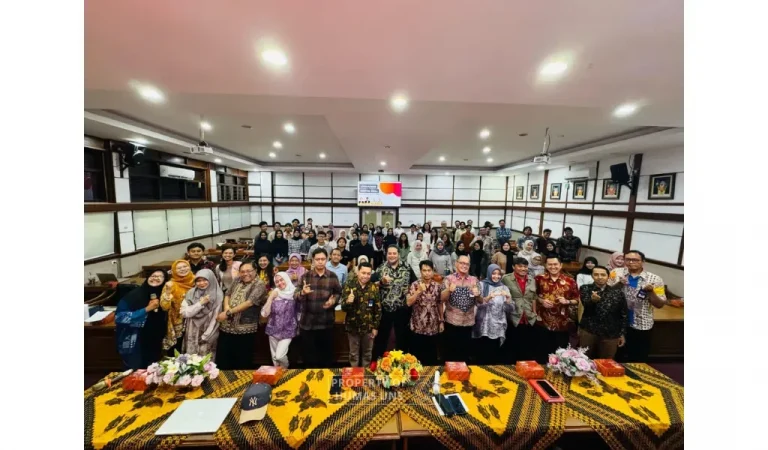
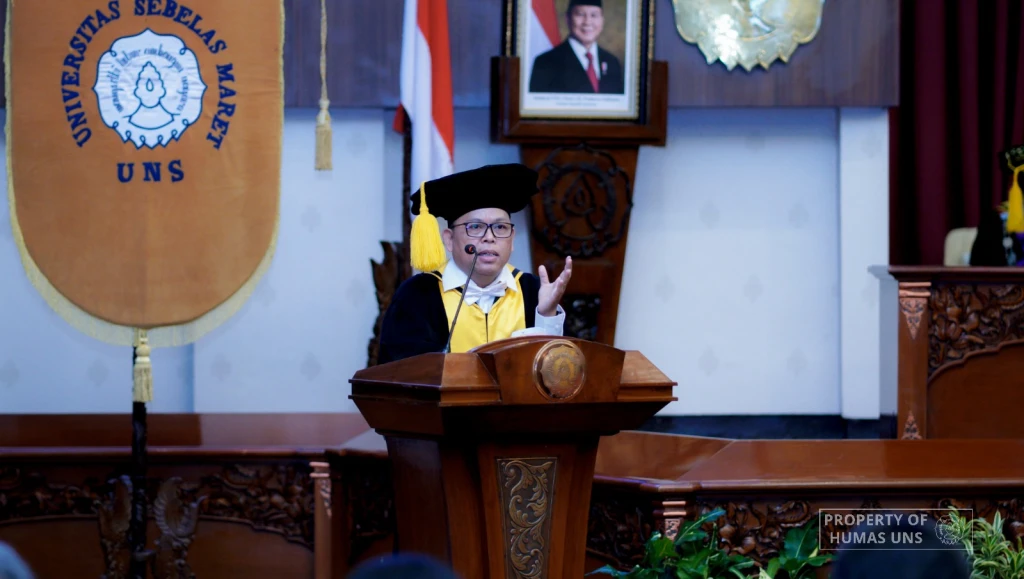
University leaders, lecturers, and guests attended the inauguration ceremony at the G.P.H. Haryo Mataram Auditorium. During the event, Prof. Wijang delivered his inaugural speech titled “Nature-Based Advanced Materials: A New Hope for Sustainability.”
Academic and Professional Background
Born in Surakarta, Prof. Wijang has a distinguished academic career. The P2I and Pertamina Scholarships funded his studies. He earned his Bachelor’s degree from Universitas Gadjah Mada (UGM) between 1987 and 1993. He pursued his Master’s studies at UGM from 2000 to 2003 with support from the DIKTI Postgraduate Scholarship. He then completed his Doctoral studies at UGM from 2013 to 2018 through the same program.
His professional journey began in the industrial sector, working at PT Astra Agro Niaga (1993-1995) and PT Pison Agung (1995-1999). In 1999, he joined UNS as a lecturer at the Faculty of Engineering and has remained dedicated to academia. Since 2024, he has served as the Head of the Master’s Program in Mechanical Engineering at FT UNS.
Advancing Sustainable Materials
In his speech, Prof. Wijang addressed pressing global environmental challenges, including air pollution, water contamination, global warming, and resource depletion. He emphasized the urgent need for eco-friendly materials to mitigate environmental damage.
One promising solution is natural fiber composites. These materials blend plant fibers such as bamboo, sisal, and water hyacinth with polymer matrices. These materials are biodegradable and require less production energy. They offer an environmentally friendly alternative to synthetic fibers like glass or carbon fiber.
However, challenges remain. Natural fiber composites exhibit variations in mechanical properties, high moisture absorption, and low compatibility with polymer matrices. To enhance their quality, researchers are modifying fiber surfaces through chemical and physical treatments. They are also integrating nanomaterials, such as nanocellulose and carbon nanotubes, to strengthen composite structures and improve durability. Additionally, researchers are exploring bio-based matrices like polylactic acid (PLA) as alternatives to non-biodegradable polymers.
Industry Applications and Economic Potential
Natural fiber composites have gained traction across various industries, including:
- Automotive: Used for interior panels and sound insulation to reduce vehicle weight and carbon footprint.
- Construction: Contributing to energy-efficient buildings.
- Healthcare: Applied in biodegradable medical implants and devices.
Indonesia can develop natural fiber composites by leveraging its abundant natural resources. However, researchers and industries must address challenges such as fiber quality variations and inefficient production technology. Prof. Wijang urged the government, industry, and academia to collaborate. He emphasized that their partnership is crucial for advancing the development and utilization of these materials.
A Sustainable Future
“Natural fiber composites offer a promising solution to environmental challenges while unlocking new economic opportunities,” Prof. Wijang stated. “Support from the government and industry is essential to expand these innovations.”
With strong collaboration, researchers and industries can use these sustainable materials to contribute to a greener future. As a professor, Prof. Wijang will drive research and innovation in nature-based advanced materials, benefiting both society and industry in Indonesia.
Humas UNS
Reporter: R. P. Adji
Editor: Dwi Hastuti