UNS – Universitas Sebelas Maret (UNS) Hospital recently held a “Live Healthy Dialogue Event,” an educational program discussing kidney transplantation. The hospital streamed the session, titled “Must Kidney Donors Come from Family?”, live on its YouTube channel. It was also shared on the hospital’s social media platforms.
Expert Insights on Kidney Transplantation
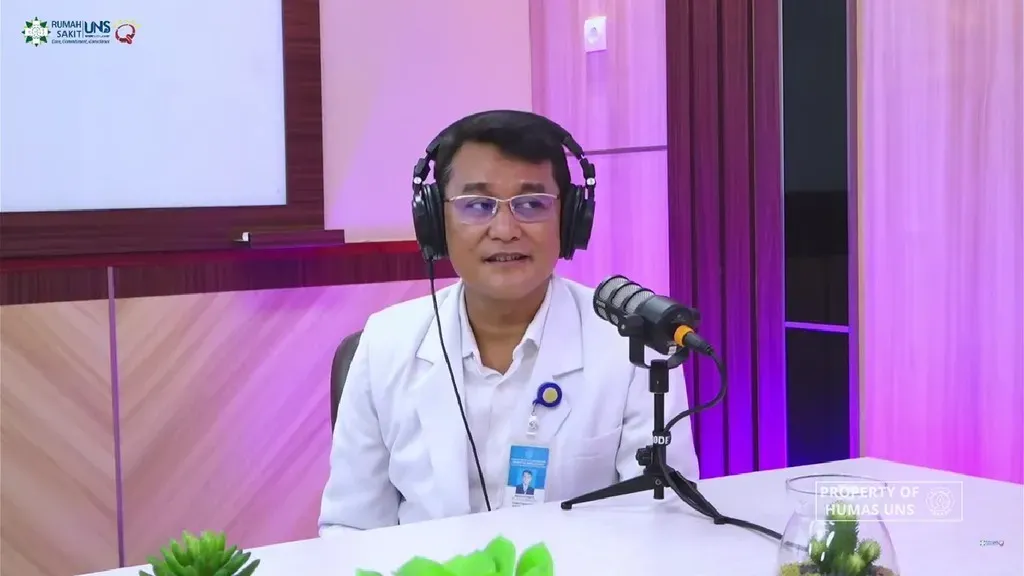
dr. Evi Liliek Wulandari, Sp.PD., M.Kes., a medical practitioner at UNS Hospital, led the discussion. Dr. Wachid Putranto, dr., Sp.PD-KGH.FINASIM, an internal medicine specialist and kidney consultant from the Faculty of Medicine UNS, joined her.
dr. Evi opened the discussion by highlighting the high prevalence of kidney failure cases in Indonesia, particularly in Solo Raya. Dr. Wachid supported this with data. He stated that Solo has 35 hemodialysis service units, most of which have long waiting lists.
“This reflects the rising number of kidney failure patients and the urgent need for effective treatments. Kidney transplantation is not just an alternative but the best solution to improve patients’ quality of life,” he explained.
Understanding Kidney Transplantation
Dr. Wachid explained that kidney transplantation involves transferring a donor’s kidney to a recipient. This procedure offers a better quality of life compared to dialysis.
Unlike dialysis, which requires frequent hospital visits and long-term treatment, a successful kidney transplant offers a better alternative. It allows patients to regain much of their normal daily activities. This therapy enables them to work, travel, and engage in physical activities with fewer restrictions compared to dialysis-dependent individuals.
“Kidney transplantation serves as the ideal treatment for chronic kidney failure patients. Living individuals or deceased donors under specific conditions can donate kidneys. However, in Indonesia, deceased organ donation is still in its early stages due to various challenges,” he said.

Kidney Donation: Does It Have to Be from Family?
Many believe that kidney donors must be family members, but this is a misconception. Friends or even unrelated individuals can donate a kidney.
Dr. Wachid referenced the case of Selena Gomez, who received a kidney from her best friend. However, he emphasized that donors must meet specific criteria. These include blood type compatibility and cross-match test results to reduce rejection risks.
“In advanced medical centers, surgeons can perform transplants across different blood types by following transfusion guidelines. Medical professionals also conduct cross-match tests. A lower cross-match value indicates a lower rejection risk,” he explained.
Additionally, medical professionals do not impose a strict age limit on kidney donors as long as they are in good health. However, they prefer donors under 60 to minimize complications.
How Kidney Transplantation Works
Kidney transplantation is a complex procedure requiring thorough preparation. The surgery typically lasts five to six hours. During the procedure, doctors ensure the new kidney functions properly.
Recovery time varies for each patient. Typically, kidney donors can resume normal activities within a few weeks. Recipients, however, may need a longer recovery period with close monitoring to ensure the organ functions optimally. Post-surgery, patients must follow strict medication schedules to prevent rejection.
Certain conditions, such as autoimmune diseases like granulomatosis with polyangiitis, may disqualify a patient from receiving a transplant.
Is Kidney Donation Safe?
Dr. Wachid reassured that long-term risks for kidney donors are minimal.
“People can live normally with one kidney, provided they maintain a healthy lifestyle and undergo regular check-ups,” he said.
For recipients, the biggest risk is non-compliance with post-operative medication, which can lead to transplant failure.
To improve transplant success rates, medical teams provide patients with personalized post-operative care. This includes scheduled check-ups, dietary recommendations, and lifestyle guidance. This ensures that recipients can sustain their health while adapting to life after transplantation.
Does BPJS Kesehatan Cover Kidney Transplants?
A participant asked whether BPJS Kesehatan—Indonesia’s national health insurance—covers kidney transplants.
“Yes, BPJS Kesehatan covers kidney transplant costs, including surgery for both donors and recipients. However, some preliminary tests may not be fully covered,” Dr. Wachid explained.
Additionally, BPJS covers essential post-transplant medications, such as tacrolimus and mycophenolate mofetil, reducing financial concerns for patients.
Despite the financial assistance, awareness about kidney transplantation remains limited. Many Indonesians are still hesitant due to cultural beliefs and misinformation. Public education programs play a crucial role in addressing these concerns. Initiatives like UNS Hospital’s health dialogue encourage more people to consider organ donation.
UNS Hospital’s Vision for Kidney Transplant Services
UNS Hospital is developing its facilities to become a kidney transplant center in Solo Raya. Besides modern hemodialysis units, it plans to introduce kidney biopsy services for early disease detection.
“We are working on pre- and post-transplant consultation services. With the knowledge and experience I’ve gained, I believe UNS Hospital has great potential. It can become a leading kidney transplant center in the region,” Dr. Wachid said.
The Importance of Early Detection
Dr. Wachid emphasized that chronic kidney disease (CKD) is rising, even among younger individuals.
“Uncontrolled diabetes and hypertension are the leading causes. To prevent them, individuals should focus on early detection, maintaining a healthy lifestyle, and attending regular check-ups. Taking preventive measures is always better than seeking a cure,” he concluded.
He advised the public to adopt healthier dietary habits, exercise regularly, and monitor blood pressure and blood sugar levels. These preventive measures can significantly reduce the risk of kidney disease and improve overall well-being. The session ended with prayers and optimism for UNS Hospital’s goal of providing comprehensive kidney transplant services. Through education and collaboration, the hospital remains committed to offering the best healthcare for kidney patients in Indonesia.
HUMAS UNS