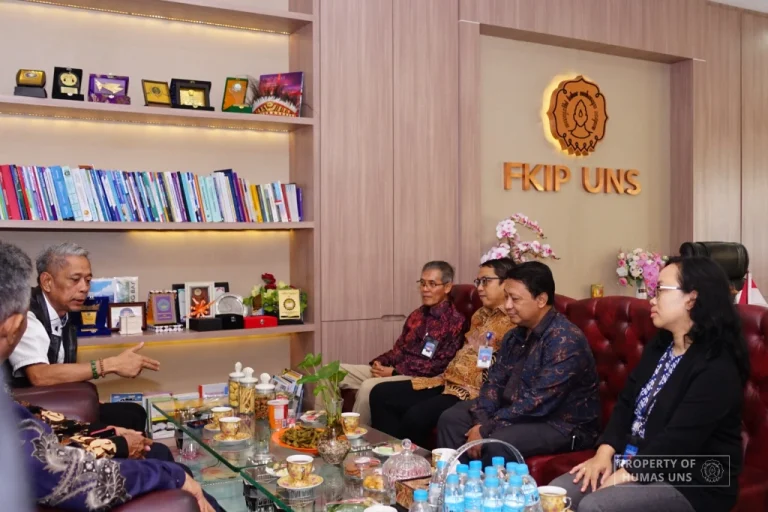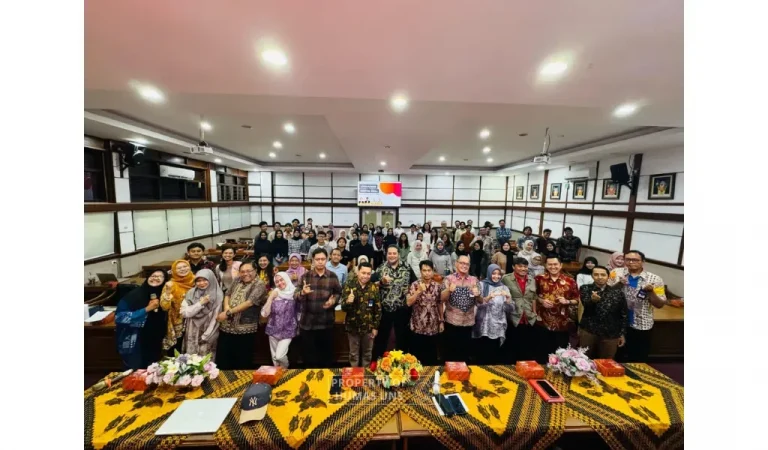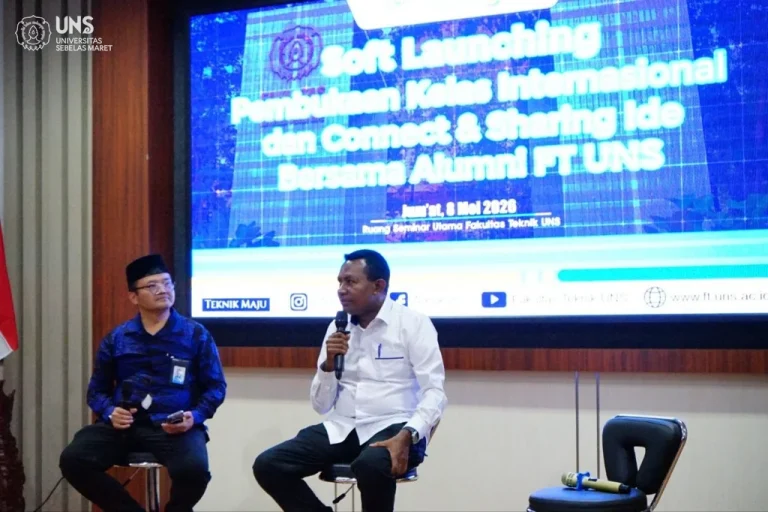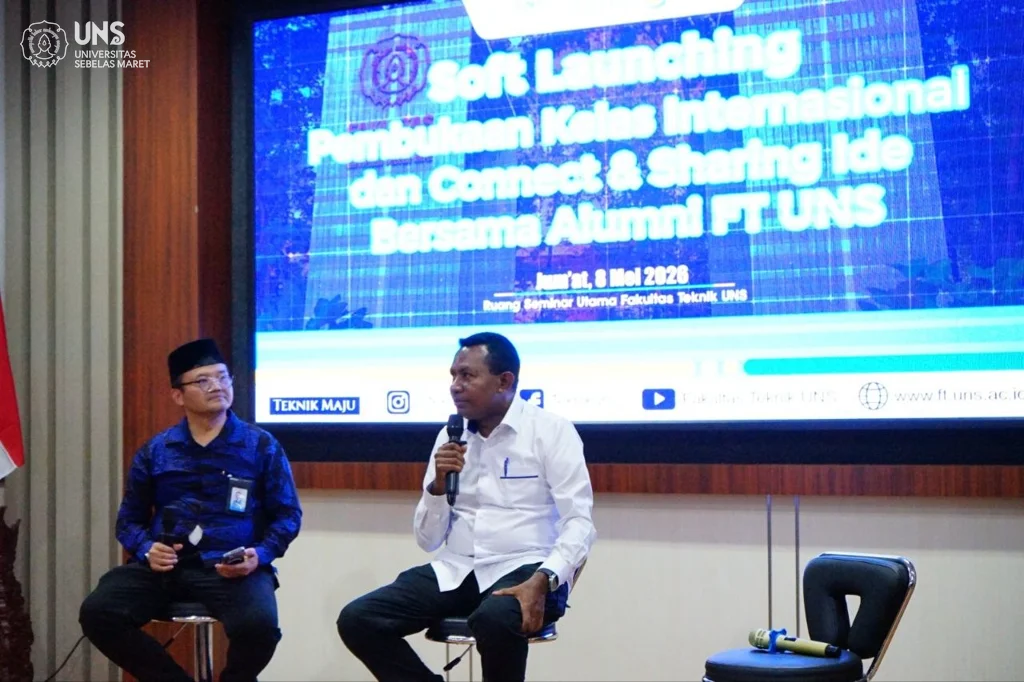
UNS — The Faculty of Engineering (FT) of Universitas Sebelas Maret (UNS) Surakarta held a special Connect and Sharing with Alumni session featuring one of its distinguished alumni, Thomas Eppe Safanpo, who currently serves as the Regent of Asmat Regency in South Papua Province. Thomas is an Alumnus of the Architecture Study Program at UNS, class of 1996.
Dean of the Faculty of Engineering UNS, Wahyudi Sutopo, explained that the Connect and Sharing with Alumni initiative is part of the faculty’s ongoing effort to strengthen alumni networks while presenting real-world inspiration for students. According to him, FT UNS alumni have made remarkable contributions across various sectors, including government, industry, and society.
“Through this program, students can directly learn from the experiences of alumni who have successfully contributed at both national and regional levels. We hope the spirit of leadership and public service demonstrated by our alumni will inspire FT UNS students,” Prof. Wahyudi stated during the event held at the FT UNS Seminar Room on Friday (8/5/2026).
During the discussion session, Regent of Asmat, Thomas Eppe Safanpo, encouraged students to continuously develop their competencies, adaptability, and dedication to community service. He emphasized that engineering graduates are expected not only to possess strong academic capabilities, but also social sensitivity and leadership skills.
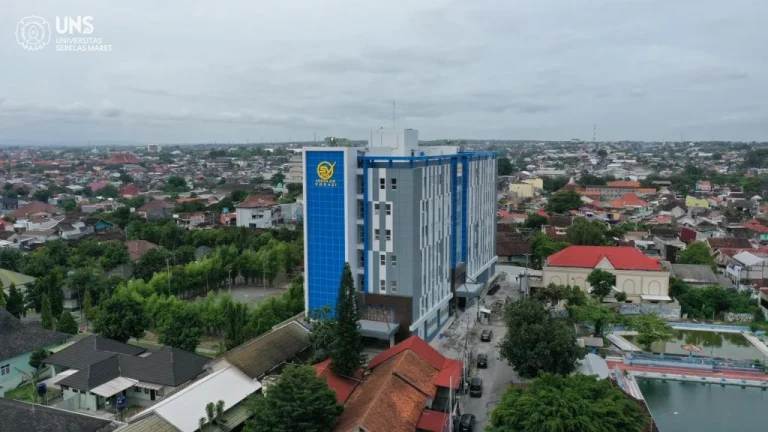
Thomas expressed his happiness at returning to FT UNS after nearly three decades. According to him, the faculty has undergone significant transformation and growth since his years as a student.
“I feel truly delighted to return to this place. After nearly 30 years, I can see tremendous progress and development within FT UNS. Back in our time, the faculty only had three departments: Civil Engineering, Architecture, and Mathematics. Today, it has expanded with many new study programs and continues to grow remarkably,” said Thomas, who in 2026 received the Outstanding Alumni Award from UNS.
On the occasion, the Regent of Asmat also recalled the long-standing educational partnership between UNS and the government in Papua, dating back to the era when the region was still known as Irian Jaya. Each year, approximately five to ten Papuan students were sent to pursue higher education at UNS across various faculties, particularly in science-related fields such as Medicine, Agriculture, Engineering, and Education.
“I was one of the students given the opportunity to study at UNS, and I personally experienced how valuable that education has been for the people of Papua,” he remarked.
He also conveyed his appreciation to UNS, its lecturers, and the entire academic community for the opportunities and guidance provided throughout his educational journey.
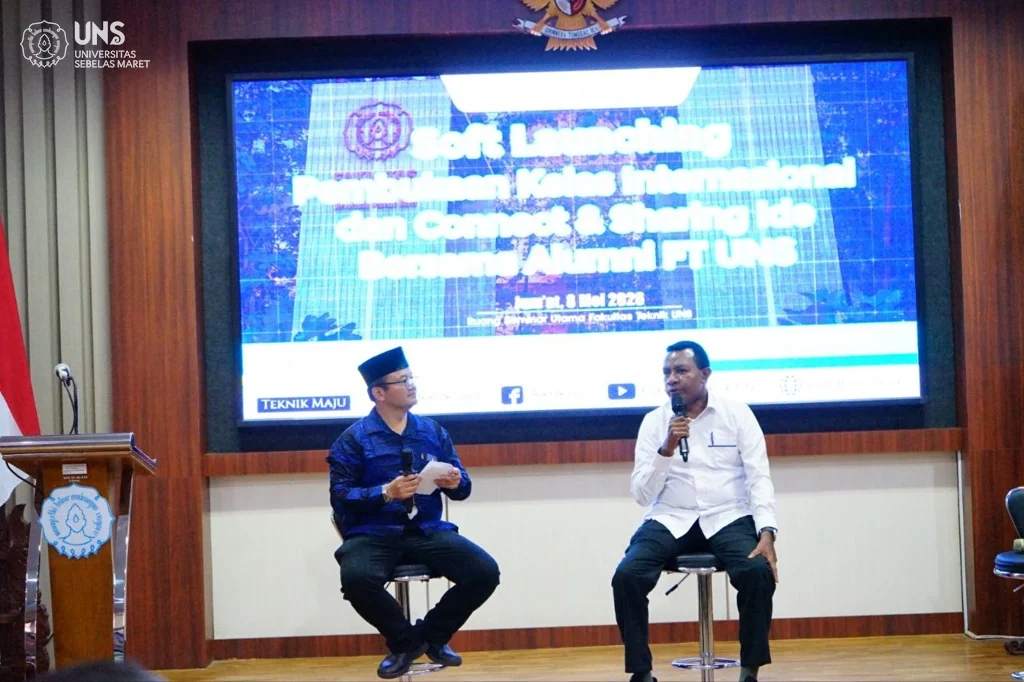
Looking ahead, Thomas expressed hope that educational cooperation between UNS and the government of South Papua could be further strengthened, including the reopening of special classes for Papuan students similar to programs previously implemented. According to him, such initiatives are essential for advancing human resource development in Indonesia, particularly in Papua.
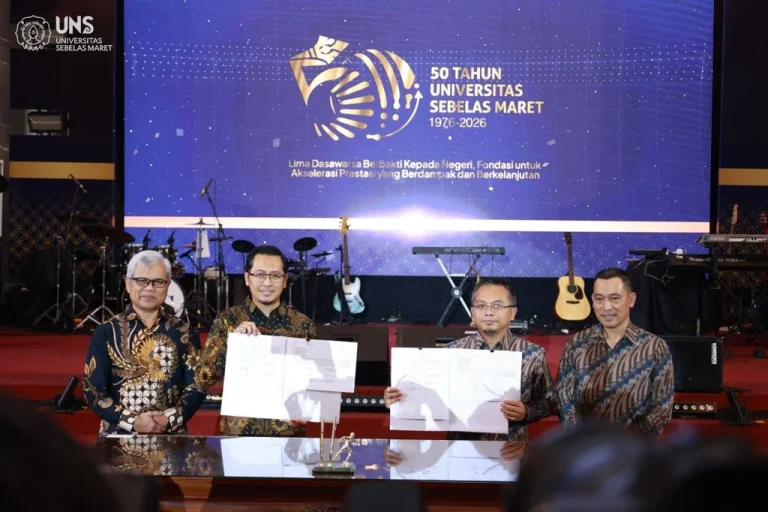
In addition to educational collaboration, UNS and the Government of South Papua Province previously signed a memorandum of understanding on 17 April 2026. The partnership covers various sectors, including education, research, and technological development.
Through this collaboration, FT UNS is expected to contribute to strategic studies and development initiatives, including coastal area development, sea embankment projects, and seawater treatment technology to provide clean water for local communities.
These initiatives are considered highly relevant given South Papua’s vast coastal region and its strategic location bordering Australia, which holds enormous development potential.
Furthermore, opportunities are also being explored for student community service programs (Kuliah Kerja Nyata / KKN) in South Papua, tailored to regional development priorities, including energy, environmental sustainability, and infrastructure sectors.
The forum also highlighted that the development of Papuan human resources should not focus solely on formal education, but also on character building, mindset development, and the ability to adapt within multicultural environments.
Therefore, Papuan students studying at UNS are encouraged to interact and collaborate with students from diverse regions across Indonesia in order to gain broader social experiences and stronger national perspectives.
“We want Papuan students not only to acquire academic knowledge, but also to grow within an environment that nurtures social competence, adaptability, and a strong sense of nationalism,” he concluded.
HUMAS