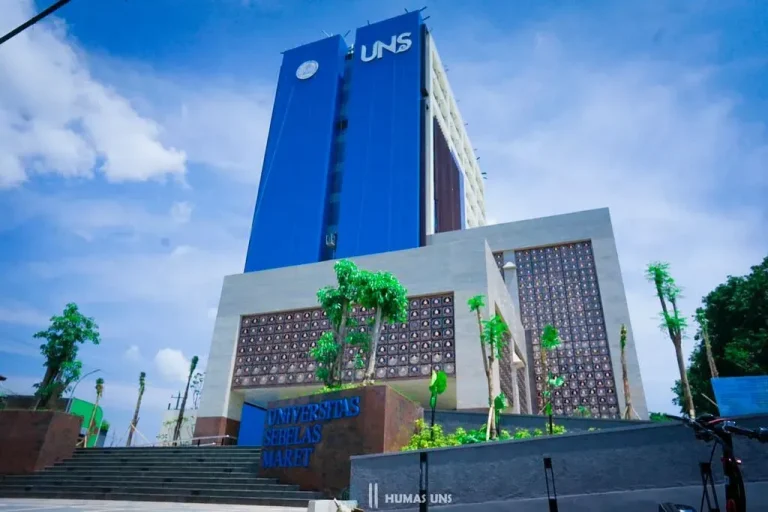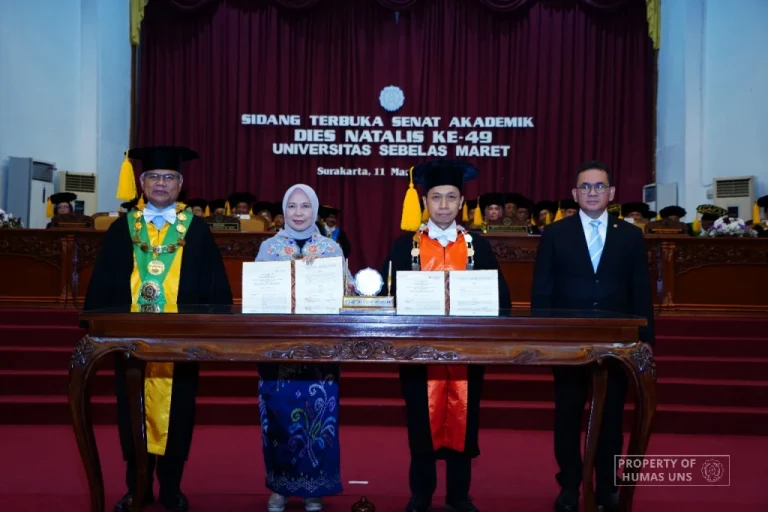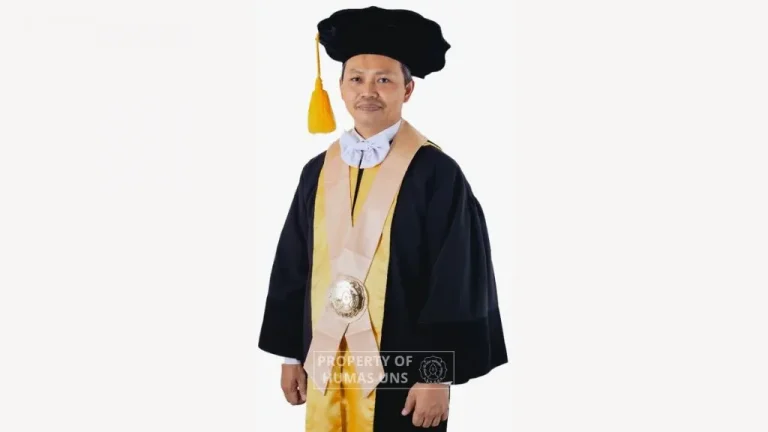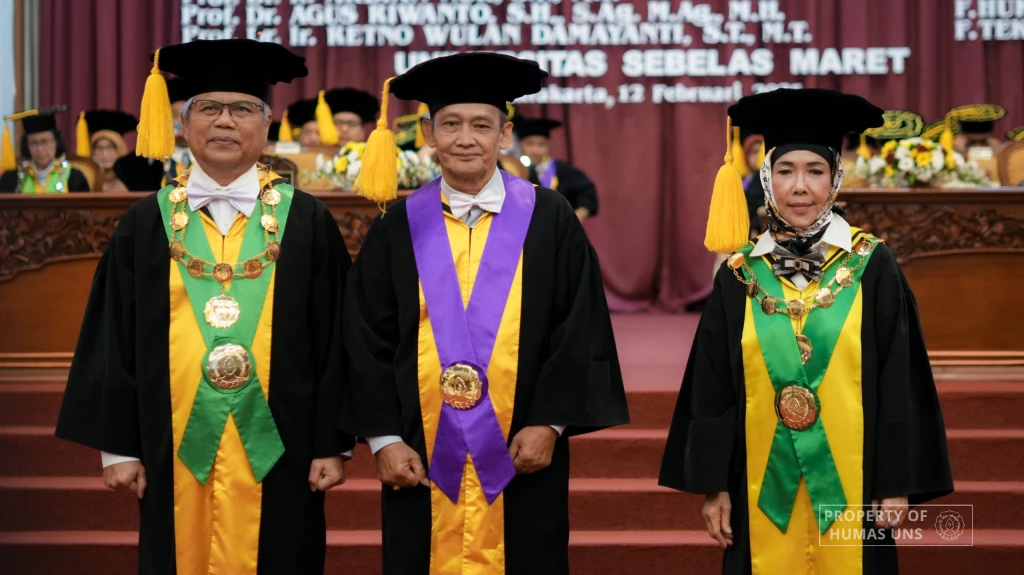
UNS – Universitas Sebelas Maret (UNS) Surakarta has once again conferred the title of Professor, this time in Pragmatics in Fine Arts. Prof. Dr. Slamet Supriyadi, M.Pd. serves as a lecturer at the Faculty of Teacher Training and Education (FKIP). The inauguration took place during an Open Senate Session on Wednesday (12/2/2025) at the G.P.H. Haryo Mataram Auditorium, UNS. Prof. Dr. Hartono, dr., M.Si., the Rector of UNS, officiated the ceremony.
Prof. Slamet is the 92nd professor at FKIP and the 357th at UNS. In his inaugural speech, he introduced the topic “Pragmatics as a New Approach in Analyzing Fine Arts.” He highlighted that linguistic studies often emphasize discourse analysis, making them feel somewhat limited. A pragmatic approach, however, extends the analysis to non-verbal aspects of language, going beyond mere discourse.
Pragmatics in Fine Arts
During his speech, Prof. Slamet pointed out that many linguists still focus on language errors and sentence structures. He noted that they primarily analyze language from a structural perspective. However, he emphasized that language evolves dynamically within society. Pragmatics, as a linguistic study, examines how speakers use language in everyday life, beyond its grammatical structures.
“In this speech, I will discuss three key points. They are pragmatic in analyzing caricature artworks, ornamental wood carvings, and traditional batik art. When analyzing fine arts, we must consider the ‘pragmatic phenomenon,’ which includes inference, reference, presupposition, implicature, and pragmatic force. Additionally, we must always relate these elements to context. Pragmatics relies on context and emphasizes ‘speaker meaning.’ Researchers can analyze fine arts based on their creation context, implicature, and pragmatic force,” Prof. Slamet explained.
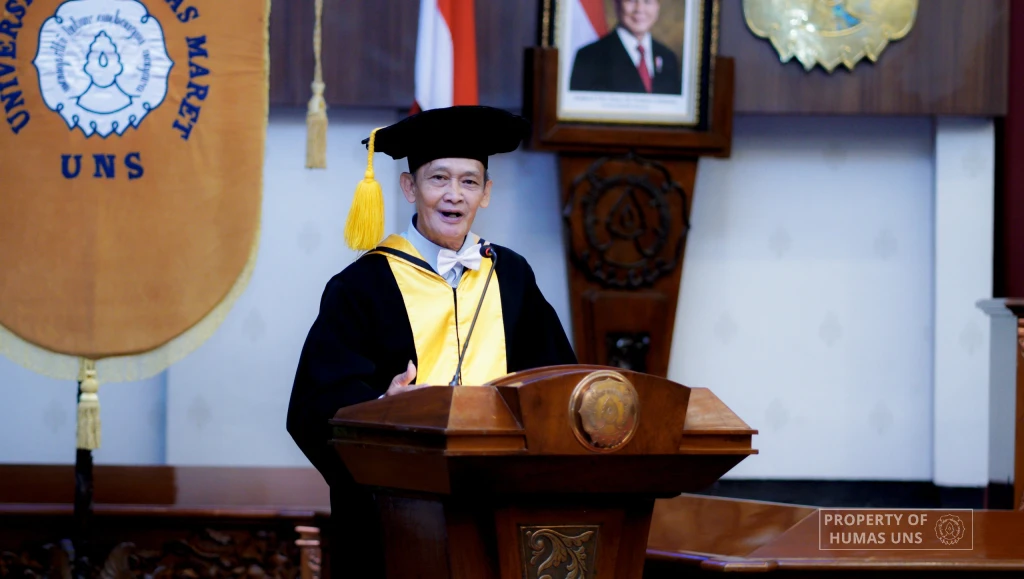
Researchers can apply pragmatics to various disciplines, including fine arts, to uncover codes, symbols, and philosophies within artistic works. Prof. Slamet stated that his research consistently employs a pragmatic approach. He uses this approach to analyze fine arts, such as caricatures, ornamental wood carvings, batik art, and paintings. As a linguistic study, pragmatics explores the relationship between language and its context.
Examples of Pragmatics in Fine Arts
One example of pragmatics in fine arts is caricature. “Caricatures serve as both entertainment and criticism. For instance, the caricature Send Me Back to My Mother or My Grandfather conveys satire that emotionally moves readers. It also delivers criticism, particularly during the New Order era,” he elaborated.
Another example is the wood carving motif of monkeys and birds. “The implicature of this motif symbolizes virtue and greed. Its pragmatic force influences people to adopt the bird’s philosophy rather than the greedy behavior of the monkey,” Prof. Slamet explained.
In traditional batik art, classic batik designs carry deep meanings within their motifs. “By analyzing these patterns, we can examine their context, references, implicatures, and pragmatic force,” he added.
The Broader Impact of Pragmatics
In conclusion, Prof. Slamet emphasized that pragmatics applies to various disciplines, including law, economics, and fine arts. “In ornamental wood carvings, pragmatics helps society appreciate the embedded meanings. In traditional batik art, it enables the interpretation of the meanings behind legendary patterns,” he concluded.
Humas UNS