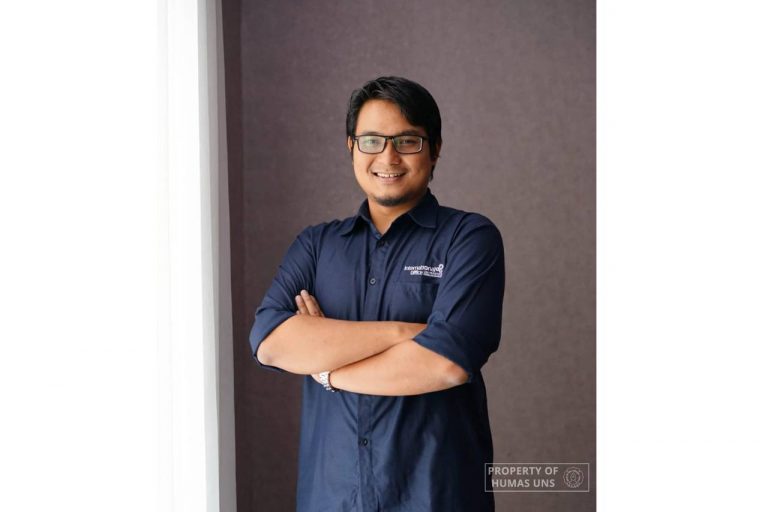
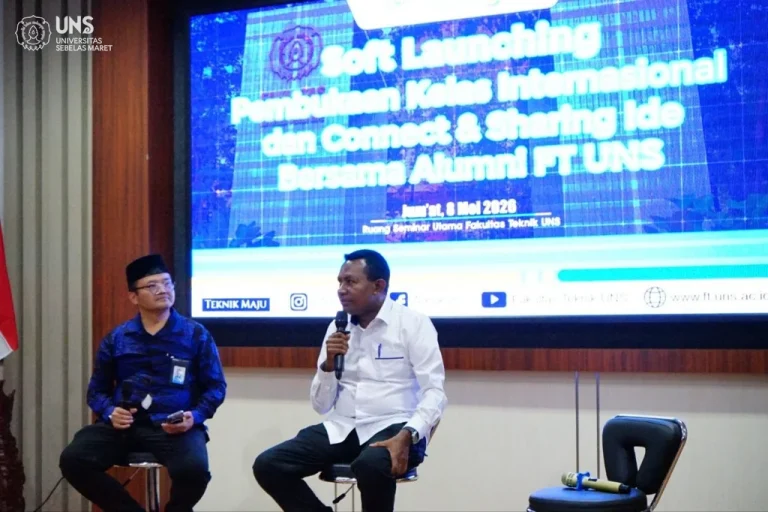
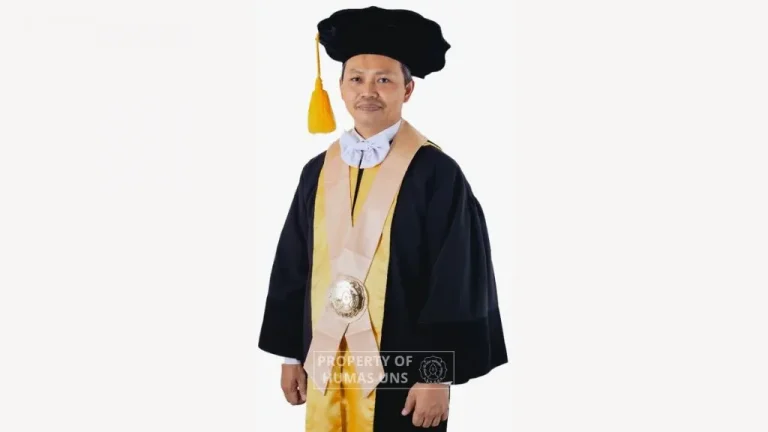
UNS –Dr. Sapta Kunta Purnama, M.Pd., a professor of the Sports Science study program at the Faculty of Sports (FKOR) at Universitas Sebelas Maret (UNS) Surakarta, discussed the state of disability sports in Indonesia. Speaking at a press conference titled “Government Commitment to Equal Opportunities in Sports Achievements” on Thursday (10/10/2024), Prof. Kunta, who also serves as the Head of Athlete Development for the National Paralympic Committee (NPC) Indonesia, shared insights on NPC Indonesia’s roadmap to prepare athletes for the Paralympics.
NPC Indonesia is the primary agency responsible for recruiting, developing, training, and nurturing top-tier international disability athletes. It also coordinates disability sports activities at regional, national, and international levels.
“The NPC Indonesia is the dedicated agency managing elite-level sports, with the ultimate aim being participation in the Paralympics,” Prof. Kunta said.

The recently concluded XVII National Paralympic Week (Peparnas) in Solo, Central Java, served as a recruitment ground for new talent. We positioned talent scouts across various sports venues, as few national competitions offer a comparable platform for talent identification.
“This Peparnas also serves as a talent-scouting event. We monitor potential athletes at each venue. For example, in para-athletics, 16 athletes have shown promising potential for development. In para-archery, two athletes delivered outstanding performances, marking them for further growth,” he explained.
In the short term, the Peparnas XVII also aids in selecting athletes for the 2026 ASEAN Para Games (APG) in Thailand. NPC Indonesia has outlined a strategic approach, leveraging Peparnas as a step in preparing athletes for new events in the multinational competition. APG 2026 will feature 20 sports, an increase from the 14 included in the 2023 APG held in Cambodia.
“We are preparing athletes for 20 sports for the APG in Thailand,” he noted.
Prof. Kunta also highlighted UNS’s support for disabled athletes in pursuing higher education. Scholarships for undergraduate through doctoral programs are available for national and international athletes, reflecting UNS’s commitment to inclusion and achievement.
“Currently, FKOR UNS has seven disability athletes enrolled, with some already graduated. Additionally, Karisma Evi, an exceptional athlete, studies at UNS’s Faculty of Social and Political Sciences (FISIP). This initiative aligns with UNS’s inclusive policies supporting educational opportunities and athlete accomplishments,” he explained.
Addressing the pathway to becoming a strong disability athlete, Prof. Kunta emphasized that accurate disability classification is essential. There is a system of numbering and intervals to determine specific classifications, which is vital for identifying suitable sports.
“Classification is key. Precise classification confirms eligibility and potential, enabling us to provide effective training and prepare athletes for international competition,” he concluded.
Humas UNS