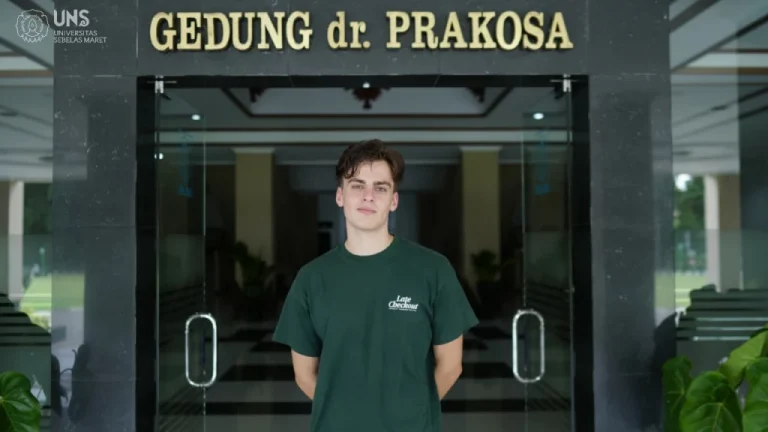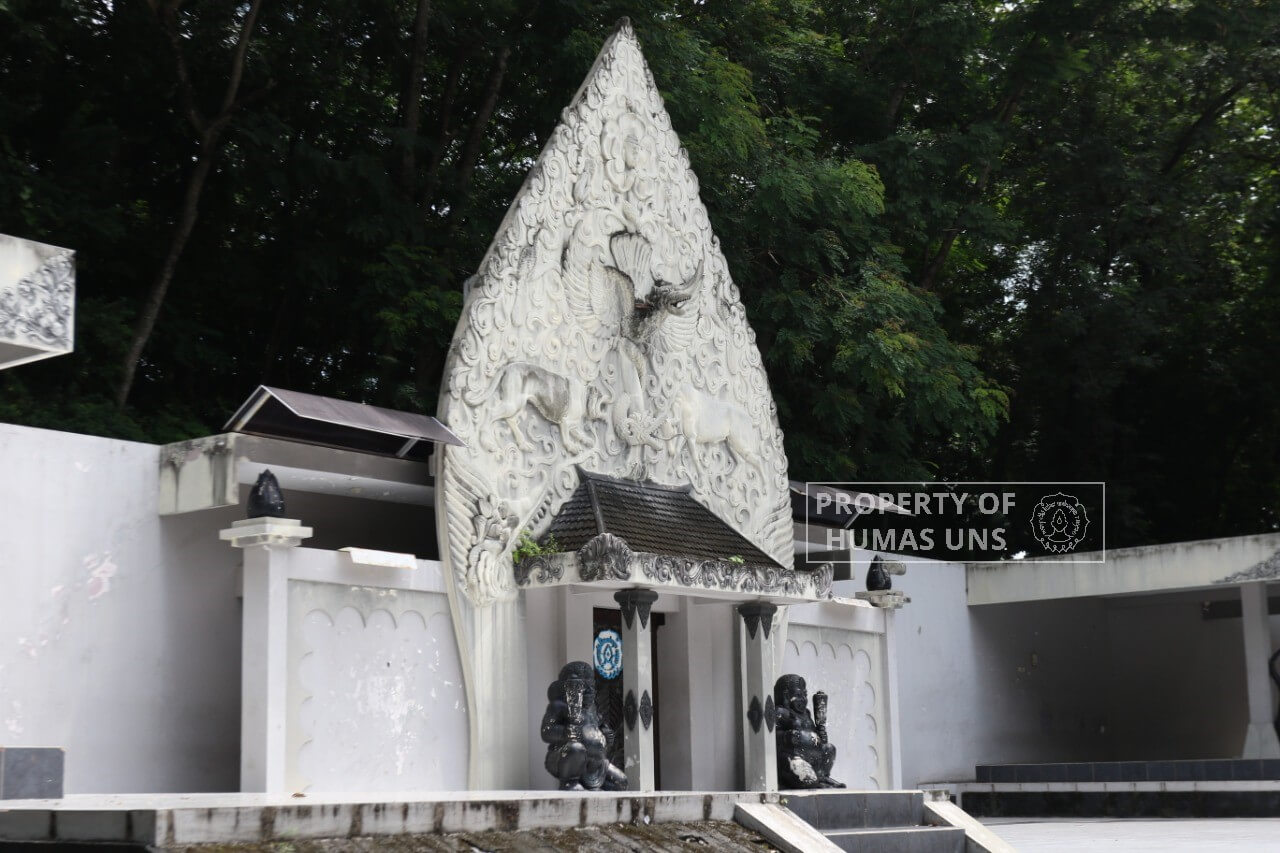
UNS — Universitas Sebelas Maret (UNS) Surakarta has the oldest open stage in Surakarta named Arga Budaya. This stage is located beside the Faculty of Agriculture (FP) UNS and east of Rectorate Building dr. Prakosa. As the oldest open stage in the city, this place is often shrouded in mystical stories that spread among UNS students. There is a story of the ghosted Arga Budaya and its watchman, Nyah Rewel, whose grave cannot be moved.
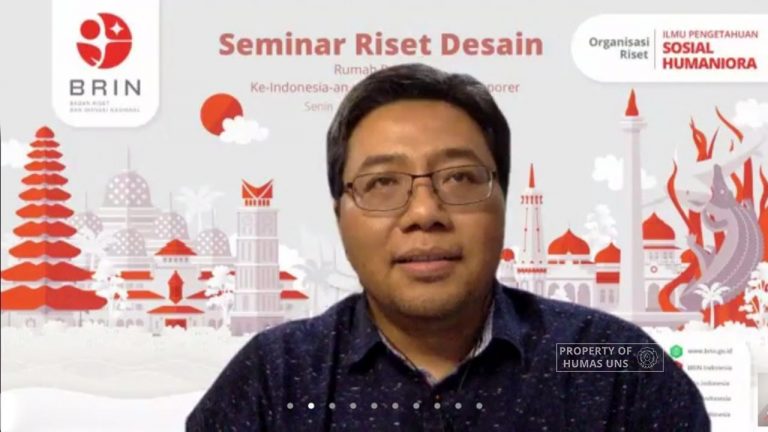
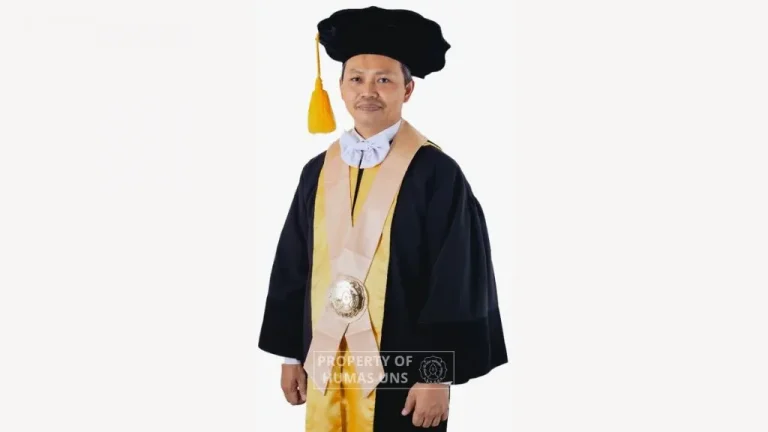
To fact check this infamous mystical story, the Chief of the Center of Excellence in Science and Technology (Pusat Unggulan Iptek – PUI) Javanologi of Javanese Tradition Study UNS, Prof. Sahid Teguh Widodo, provide clarification to uns.ac.id. In a meeting through the Zoom Cloud Meeting, Wednesday (23/12/2020), Prof. Sahid stated that Nyah Rewel’s grave had been moved a long time ago. Thus, it is not true that the grave cannot be moved.
He confirmed that before the central UNS Campus is built, Kentingan was a Chinese graveyard. But all of the graves have been relocated to another graveyard, and the UNS Kentingan campus was built.
“All UNS area was a graveyard. There were Chinese, Javanese, and public graveyards. All were granted by the palace. In the past, it was a wilderness with a lot of plants, but Nyah Rewel phenomenon is localized, and it has been moved to the eastern Chinese graveyard (red: Mojo Graveyard),” Prof. Sahid stated.
Prof. Sahid also explained about Gunung Kendil (Kendil Hill), located beside Arga Budaya. There used to be a cart on this hill, but it is not clear what kind of coach, who owns the cart, and where the cart is moved to. “Reportedly, the place was used to store a cart, but it is taken now. There was also a bodhi tree which now no longer there,” he added. However, he confirmed that there was a cart left in Gunung Kendil. The story about this cart becomes one of the mystical stories that are often discussed by UNS students.
History of Arga Budaya
Arga Budaya, as the older open stage in Surakarta, has been around since 1981. However, Prof. Sahid cannot confirm its construction date because there is no historical record of the event. Since established, the open stage has been used as art performances for UNS students. The name Arga Budaya came from two words. Arga means redi or mountain, which is interpreted as a large place that stores various types of minerals and as a place for plants and life to grow. Budaya means budi (character) and daya (power) as a means located west of Gunung Kendil in UNS. Prof. Sahid added that Gunung Kendil is a higher point in UNS Central Campus in Kentingan, which holds a similar meaning with the word ‘arga’.
Prof. Sahid stated that Arga Budaya is a silent witness of theater performance popularity in its time. The establishment of Wiswakarman Theater in 1989 as the older theater in Surakarta is inseparable from Arga Budaya. He stated that when he was a university student, he used the open stage as a place for ketoprak rehearsals since 1988. In 1989, Wiswakarmanwas established in the Faculty of Literature, which became the Faculty of Cultural Studies (FIB). “I was its founder and now has acted as its elder member for 31 years,” Prof. Sahid explained.
Arga Budaya, according to Prof. Sahid, emphasizes UNS existence as a Javanese culture pot. For him, Arga Budaya shows UNS concerns in providing facilities and infrastructure that support its vision as World Class University. Therefore, he hopes that Arga Budaya can serve as a representative cultural center in UNS. Humas UNS
Reporter: Yefta Christopherus AS
Editor: Dwi Hastuti