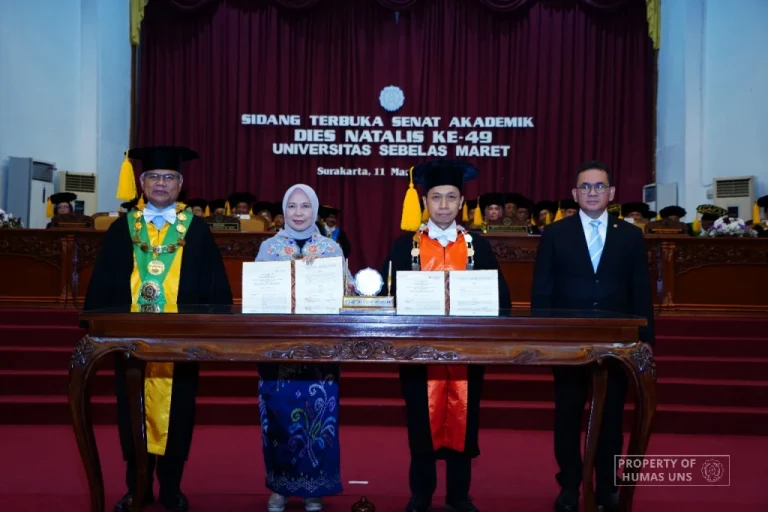
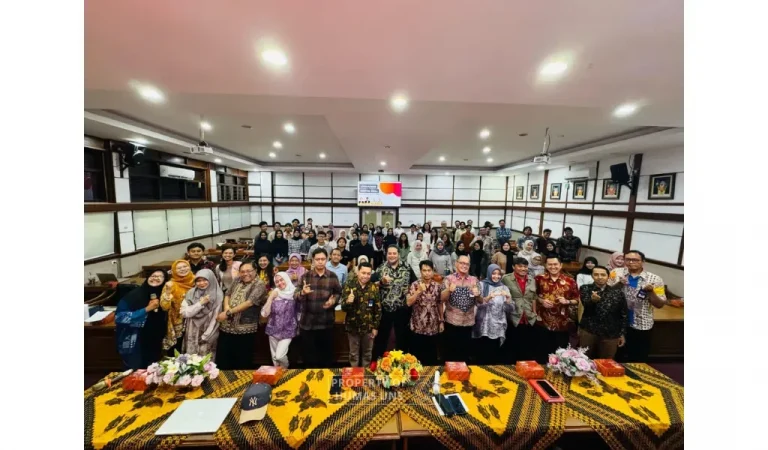
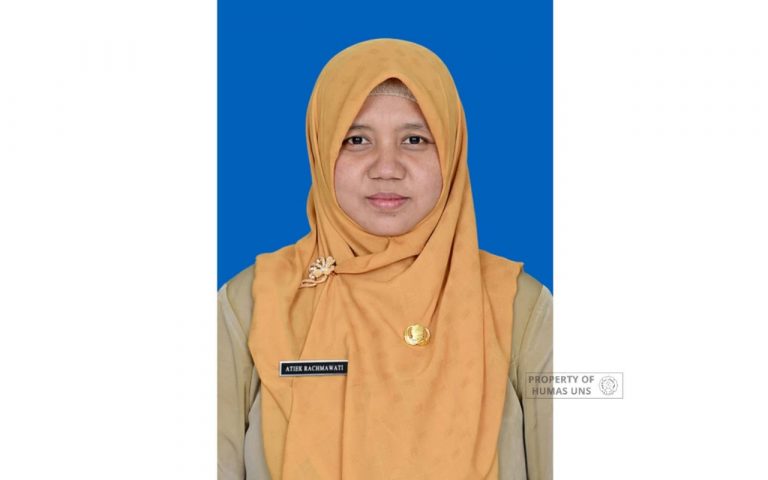
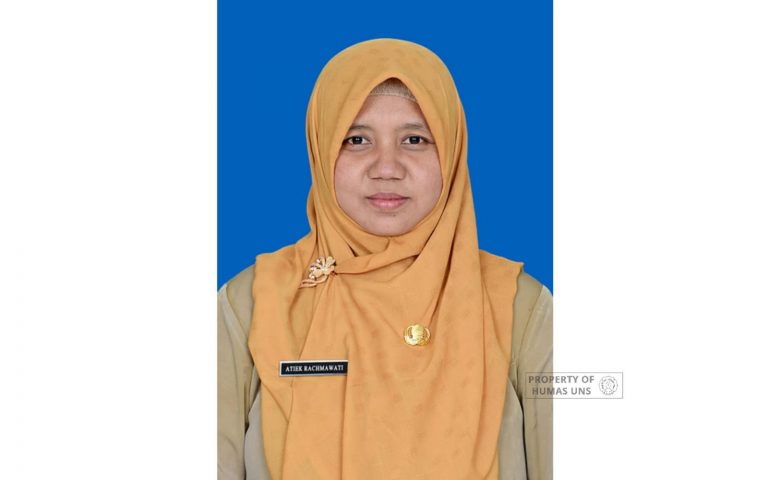
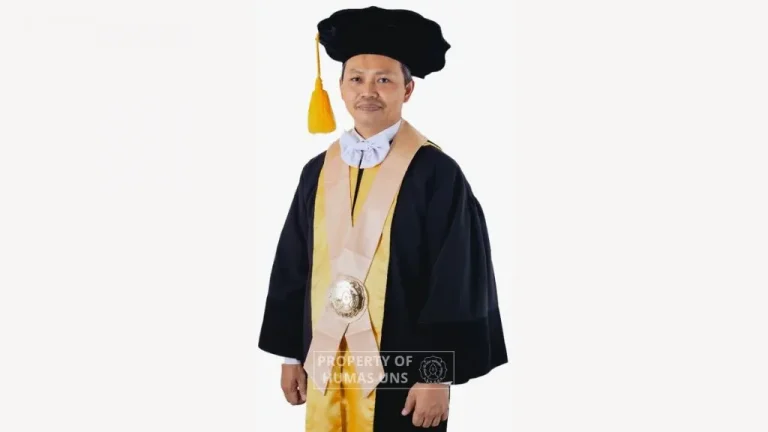
UNS – Universitas Sebelas Maret (UNS) Surakarta has appointed Prof. Ofita Purwani, S.T., M.T., Ph.D., as a new professor in Architecture. This achievement makes her the 36th Professor in the Faculty of Engineering (FT) and the 351st Professor at UNS. The inauguration ceremony took place at the G.P.H. Haryo Mataram Auditorium. There, she delivered her inaugural speech, “City, Power, and Royal Agency.”
Academic Background and Achievements
Born in Kebumen, Prof. Ofita has an extensive academic background. She earned her bachelor’s degree from Universitas Gadjah Mada (UGM) Yogyakarta. She then obtained her master’s degree from Institut Teknologi Sepuluh Nopember (ITS) Surabaya. Later, she obtained her Ph.D. from the University of Edinburgh. Throughout her career, she has actively participated in various organizations. She has also received prestigious awards, including the Urban Studies Foundation International Fellowship. Additionally, the London School of Economics and Political Science honored her with the LSE Senior Visiting Fellowship.
Urban Planning and Power Structures
During her speech, Prof. Ofita explored the relationship between urban planning and power. She compared the spatial structures of Solo and Yogyakarta, emphasizing the role of the palace in each city’s development. While both cities share similar layouts, the influence of the palace differs significantly. She referenced Kim Dovey’s theory of visibility and invisibility in urban architecture. She explained how highlighting or concealing certain elements reflects power structures.
For example, the statue of Slamet Riyadi in Solo appears more dominant than the gate of the Kasunanan Palace. This visual hierarchy symbolizes shifts in the city’s power dynamics. In addition to physical elements, she highlighted the role of city festivals in maintaining power structures. One notable event, the Grebeg Astana Oetara festival in Solo, reinforces the influence of Mangkunegaran through cultural rituals.
“Festivals and celebrations are not just traditions. They serve as mechanisms to sustain legitimacy and the palace’s role in public spaces,” she stated.
The Concept of Royal Agency
Prof. Ofita introduced the concept of royal agency. It refers to the active role of monarchies in urban development across Southeast Asia. According to her, royal institutions influence not only culture but also economic and political sectors.
“We can see how the Crown Property Bureau in Thailand manages vast assets. We can also observe how the Sultan of Johor plays a role in the Forest City project in Malaysia. These examples show that monarchy remains relevant in contemporary urban dynamics,” she explained.
Contributions to Architectural Studies
Her research fills a gap in architectural studies, which have largely been shaped by perspectives from the Global North. Through collaborations with international scholars, she aims to further examine how royal agency influences urban development in Southeast Asia. With her inauguration, she reaffirms her commitment to advancing architectural knowledge. She focuses particularly on understanding the relationship between power and urban planning.
“By adopting this approach, we can view urban spaces not just as places for living and activities but also as representations of evolving social structures and power dynamics,” she concluded.
Humas UNS