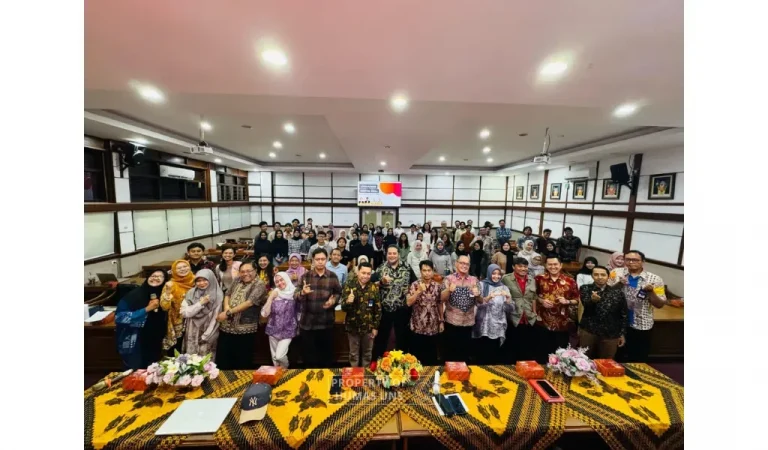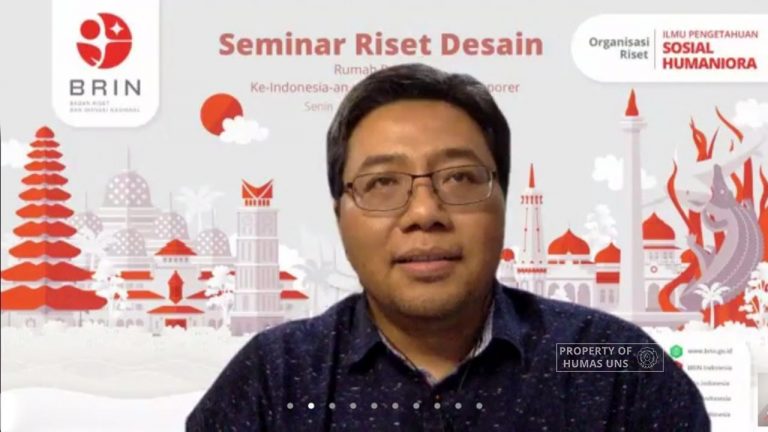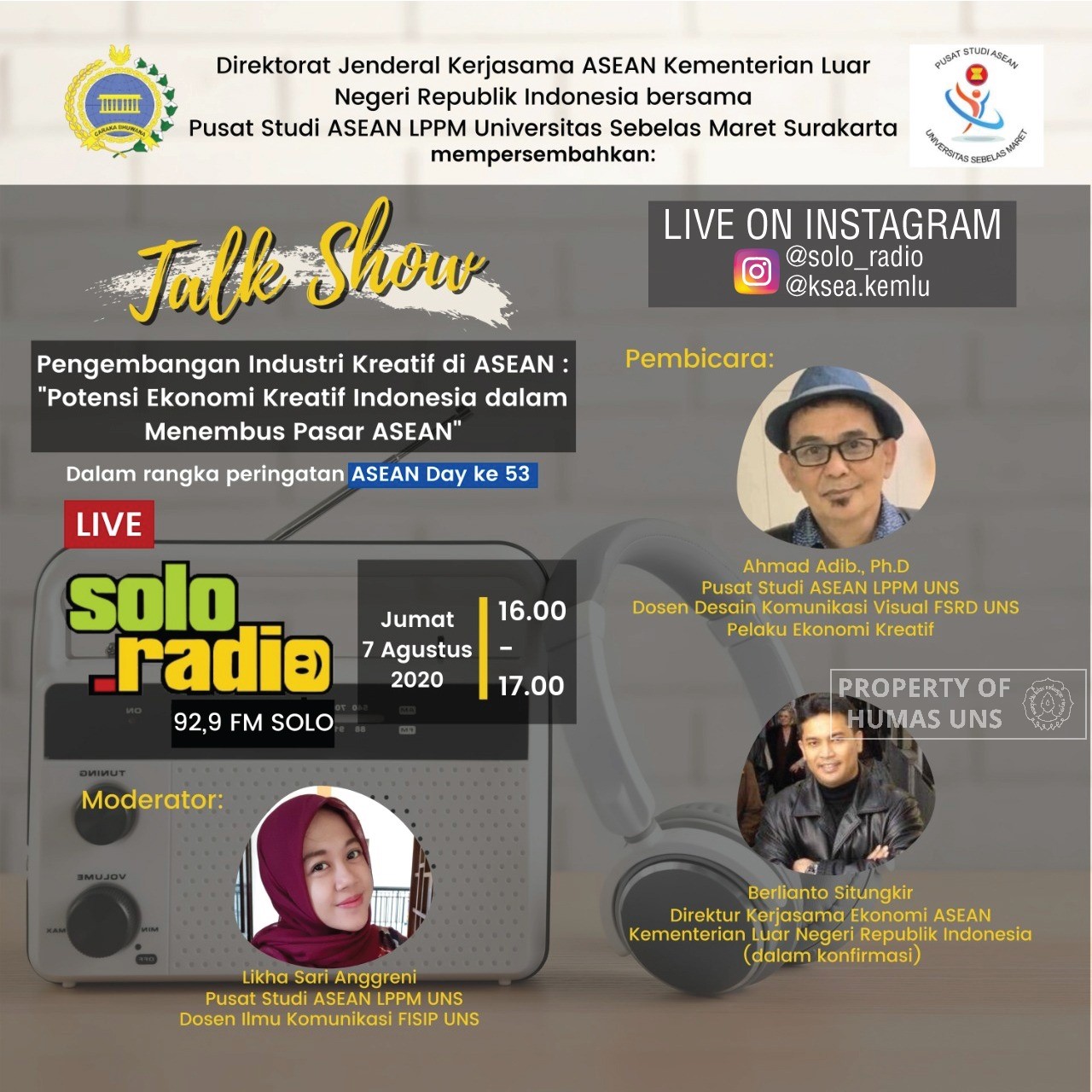
UNS — The Center for ASEAN Study (PSA) Institute of Research and Community Service (LPPM) Universitas Sebelas Maret (UNS) Surakarta in collaboration with the Directorate General of ASEAN Cooperation, Ministry of Foreign Affairs of the Republic of Indonesia held a talk show through Solo Radio on Friday (7/8/2020). The agenda is held in commemorating the 53rd ASEAN Anniversary or the ASEAN Day on 8 August. The development of the creative industry in ASEAN is the issue discussed in the talk show.
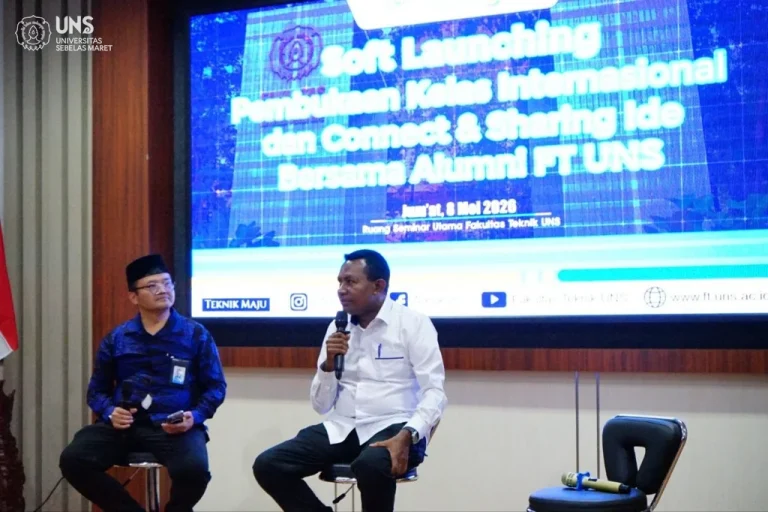
‘Indonesia Creative Economy Potential to Enter ASEAN Market’ is the topic selected in the discussion. Through radio broadcast and Instagram live stream, the event invited Ahmad Adib., Ph.D as an actor in the creative economy and Faculty Member in Visual Communication Design (DKV) Faculty of Art and Design (FSRD) UNS, and second speaker, Berlianto Situngkir, the Director of ASEAN Economic Collaboration, Ministry of Foreign Affairs of the Republic of Indonesia.
As the moderator, Likha Sari Anggreni, Faculty Member of Communication Science (Ilkom) Faculty of Social and Political Sciences (FISIP) UNS and a member of PSA LPPM UNS led the discussion. Berlianto provided a short history of ASEAN and Indonesia’s role in its development, as well as the agreements made by Indonesia as a form of participation in ASEAN, especially in Creative Economy field.
“There is no reason to be not creative because the government has provided supports,” Adib explained.
Adib mentioned that Indonesia creative industry needs to be developed, particularly by the millennials. As an educator and actor in the creative industry, he feels obligated to serve as an example for his students. The creative economy is one of the important sectors that support countries’ economy. As a dynamic sector, it is predicted that the creative economy will continue to provide a significant contribution to the global economy. In ASEAN alone, there are 7 unicorns and 4 of them are located in Indonesia, Gojek, Bukalapak, Traveloka and Tokopedia.
The creative economy development in Indonesia is supervised by the Ministry of Tourism and Creative Economy (Kemenparekraf) which classifies the industry into 16 economic sectors, among others, culinary, fashion, music, and architecture. According to Berlianto, three excellent sectors have the largest contribution to the economy, culinary, fashion, and craft. The other three sub-sectors, animation and video, application and game, and music are prioritized due to their economic potential, though its development is quite slow. Adib also stated that the creative economy prospect in Indonesia is promising. Indonesia has adequate resources to develop the industry. Humas UNS
Reporter: Ratri Hapsari
Editor: Dwi Hastuti