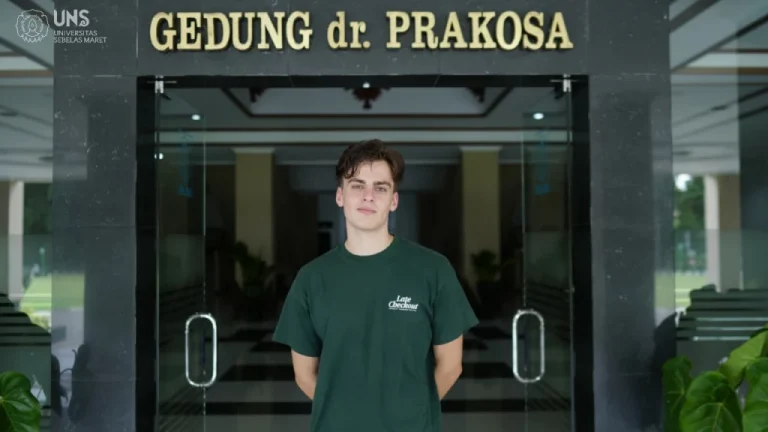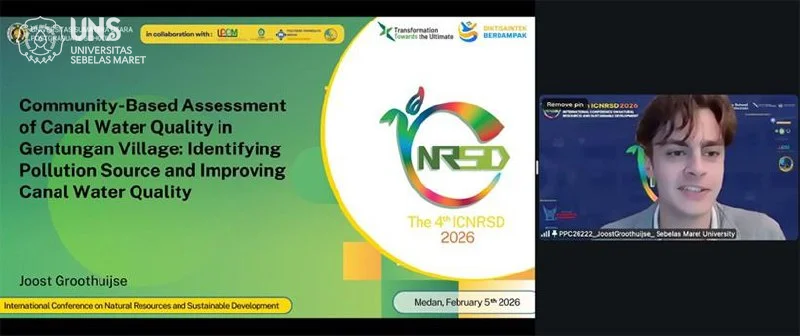
UNS — Joost Groothuijse, an inbound internship student at the Urban Rural Design and Conservation (URDC) Laboratory, Faculty of Engineering (FT), Universitas Sebelas Maret (UNS) Surakarta, once again won the Best Presenter award at the 4th International Conference on Natural Resources and Sustainable Development (ICNRSD) 2026.
The award was given for the excellence of his presentation and the quality of his research titled “Community-Based Assessment of Canal Water Quality in Gentungan Village: Identifying Pollution Sources and Improving Canal Water Quality.”
ICNRSD is the fourth international conference that this year carried the theme “Sustainable Management of Natural Resources: Tackling Environmental Degradation and Strengthening Ecosystem Resilience.” The conference was held at Universitas Sumatera Utara (USU) on 5 February 2026 and became a collaborative space for researchers and academics to exchange ideas and innovations in addressing climate and environmental challenges.
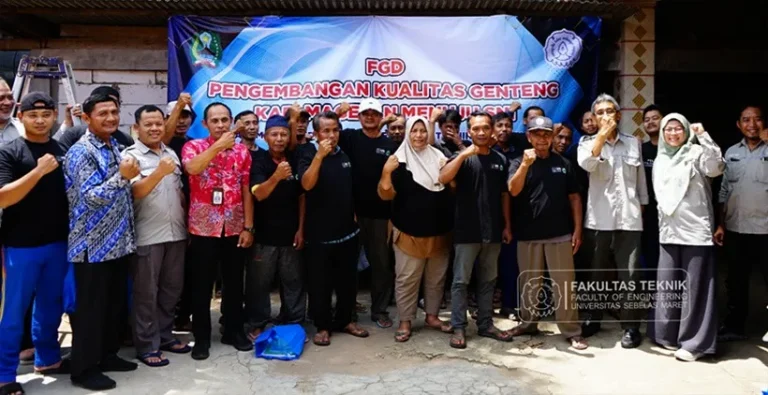
In his research, Joost studied canal water quality in Gentungan Village, Mojogedang District, Karanganyar Regency, using a community-based approach. He examined how agricultural activities and the daily lives of local residents affect water conditions. Gentungan Village was chosen because it has unique characteristics, including a combination of organic and conventional rice farming, residential areas located close to waterways, and steep hilly topography. These conditions make the village a representative location for observing the impact of human activities on water systems.
Joost Groothuijse is a student of Rotterdam University of Applied Sciences in the Netherlands and is currently joining an internship program at the URDC Lab, Faculty of Engineering, UNS. During the research process, he was supervised by Dr. Eng. Kusumaningdyah Nurul Handayani, a lecturer of Architecture at FT UNS, and Rick Heikoop from Rotterdam University of Applied Sciences. This guidance strengthened the methodology and data analysis used in the research.
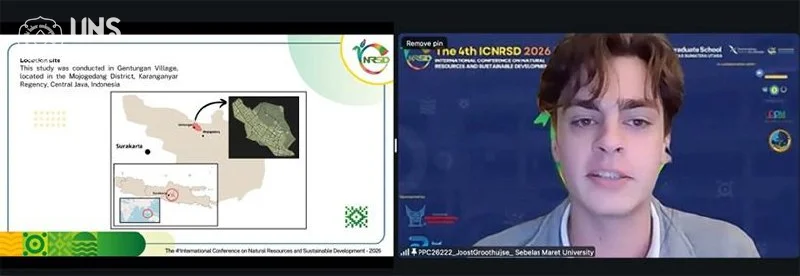
The research results showed that the canal water quality in Gentungan Village is currently still in good condition. However, there are several aspects that need attention, especially the potential for erosion due to steep land slopes and plastic waste management around the waterways. Preventive efforts are considered important to ensure that water quality remains sustainable in the future.
“Working with the local community has been a very valuable experience for me. Although the water quality is still good at the moment, we need to focus on preventing erosion and managing plastic waste so that water cleanliness can be maintained in the future,” said Joost, as quoted from ft.uns.ac.id on Wednesday (25/2/2026).
Joost’s participation in this international conference not only served as a platform for disseminating research results, but also strengthened cross-country academic networks and international collaboration.
The involvement of international internship students reflects the commitment of the Faculty of Engineering UNS in encouraging research that creates direct impact for society and the environment. FT UNS will continue to support academic activities, research, and international collaboration to produce sustainable innovations that contribute to environmental preservation and sustainable development.
This achievement is in line with the Sustainable Development Goals (SDGs), especially SDG 4 (Quality Education), SDG 6 (Clean Water and Sanitation), SDG 11 (Sustainable Cities and Communities), and SDG 17 (Partnerships for the Goals). International internship programs like this reaffirm FT UNS’s commitment to preparing globally competitive young generations who are oriented toward sustainability.
HUMAS UNS