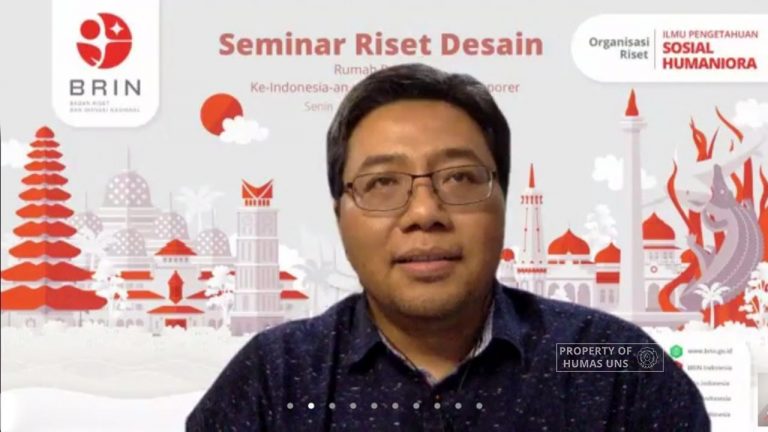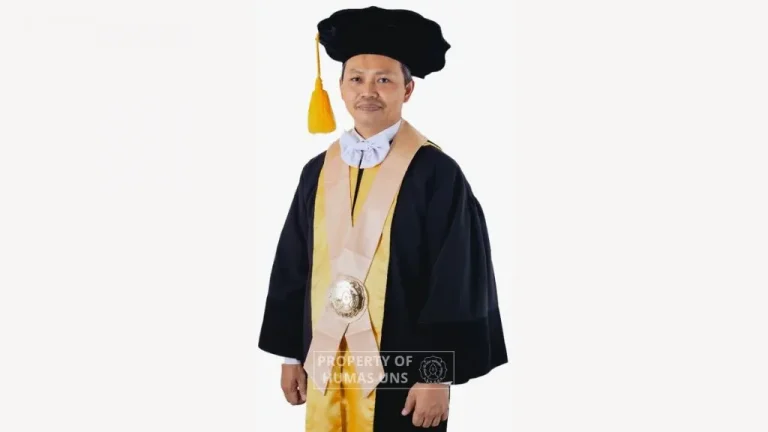
UNS – The economist of Universitas Sebelas Maret (UNS) Surakarta, Dr. Suryanto reminded the government about the dangers of a recession that haunts Indonesia at the end of the second quarter of 2020. One of which is negative economic growth that might bring large scale work terminations. The threat of economic recession for Indonesia and globally is real. The global recession will disturb the export market and brings bankruptcy which will turn into large scale work termination. The decline in the number of incoming investments is also feared to ignite a decline in the money supply.
Contacted by uns.ac.id on Friday (17/7/2020), Dr. Suryanto mentioned several indicators which indicated that Indonesia is on its way into recession. These indicators are, among others, the negative economic growth at the end of the second quarter and economic trend in the third and fourth quarter which highly dependent on the global economic condition. He mentioned that the uncertainty regarding when Covid-19 will end becomes a heavy burden for the Indonesia economy in this second quarter. He suspected that this will hinder the Indonesia economy from moving freely.
He continued with the importance of government’s role in improving national food resilience to avoid these threats. The disturbed production process will reduce people income and in the long-term, it will bring an economic downturn, which is why Indonesia needs to strengthen its primary sector, particularly agricultural sector to support national food resilience. Local economy strength will reduce people dependence on the global economy.
Additionally, Dr. Suryanto mentioned that several sectors will experience a significant impact if a recession hit Indonesia, for example, the tourism sector. He stated that Large-Scale Social Distancing (PSBB) implemented by the government has brings serious impact for the tourism sector. However, several sectors reap significant profit amid the pandemic, for example, communication services such as Zoom, Meet, and Webex.
Commenting on World Bank notion that Omnibus Law has potential to leverage Indonesia economy amid the Covid-19 pandemic, Dr. Suryanto explained that Omnibus Law only facilitate licensing and amid the Covid-19 pandemic, licensing and running a business are not the main hindrances for investors, but instead, the uncertainty on when the pandemic will end.
Dr. Suryanto also discussed the probable impact of Singapore recession on Indonesia economy, which, in his argument, will not significant in the short-run, mainly because Singapore depends on tertiary sector or services in their economy. Humas UNS
Reporter: Yefta Christopherus AS
Editor: Dwi Hastuti