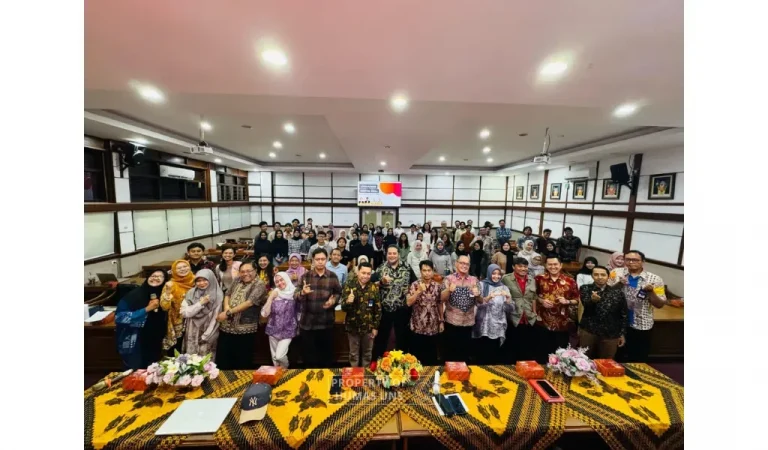
UNS – The Research Group (RG) and the Urban Rural Design and Conservation (URDC) Laboratory of the Architecture Study Program at the Faculty of Engineering (FT) Universitas Sebelas Maret (UNS) Surakarta participated in the Wetskills Indonesia program as part of the World Water Forum 2024 series of events. The workshop program took place from May 11 to 23, 2024.
During the World Water Forum 2024 held in Bali, Wetskills collaborated with the Civil Engineering Study Program of Sultan Agung Islamic University (FT UNISSULA) and the Architecture Study Program of FT UNS. This program is aimed at students and young professionals interested in water issues, offering an international network and fostering teamwork to find interdisciplinary water solutions.
Wetskills is a foundation that has been organizing events since 2010, headquartered in The Hague, Netherlands. Previously held in 2011, this Wetskills event brought participants to different experiences in Indonesia, such as in Semarang and Pekalongan, Central Java, presenting cultural and water challenges.
The final presentations took place at the Dutch NL Pavilion of the Netherlands World Water Forum in Bali on May 22-23, 2024. The teams consisted of various members, including Civil Engineering students from UNISSULA, Architecture students from UNS, bureaucrats from PDAM Tirta Moedal Semarang, and BBWS officials. This Wetskills water challenge program tasked participants with solving complex problems.
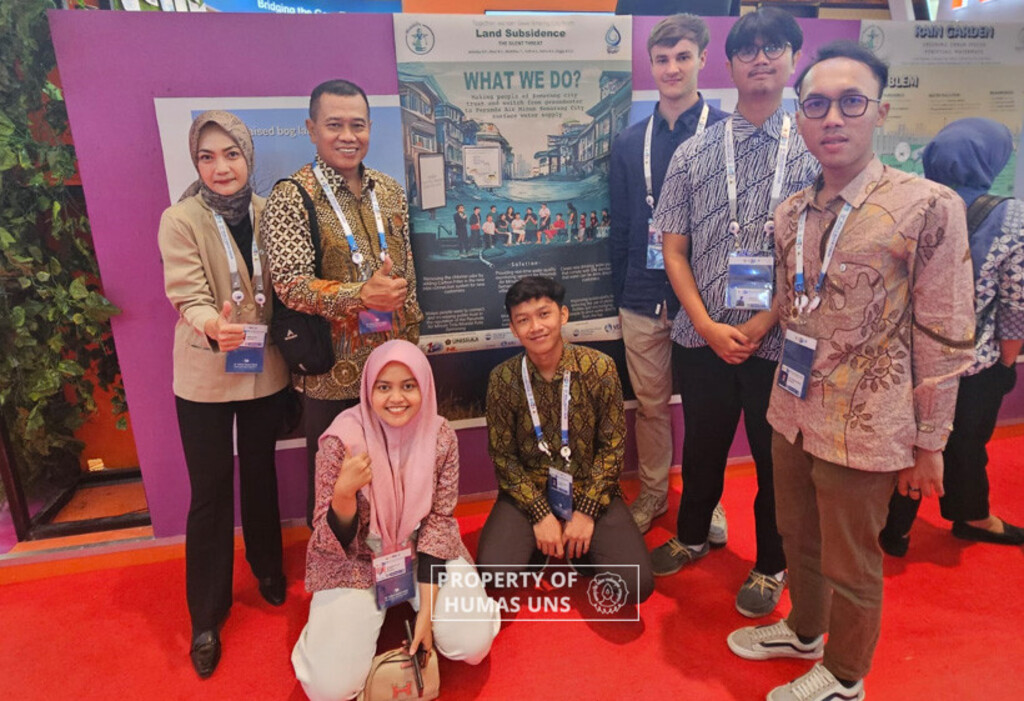
The Architecture Study Program of FT UNS sent two students, Ilhan Rizki Syaputra and Anindya Koeswanto, along with an intern, Carole Le Du (URDC Labo Prodi Architecture FT UNS), from Pantheon University, Paris Sorbonne, France.
Participants were divided into three teams, each with a unique case to solve. The first case focused on transitioning private groundwater usage to surface water supply by PDAM, managed by VEI Dutch Water Operators and PDAM Tirta Moedal Semarang. The second case involved opportunities for water footprint compensation, owned by Foxall Munro. The third case addressed environmental theology practices in Islamic boarding schools through water and waste management, managed by Percik Institute and UNS, represented by Dr. Haryani Saptaningtyas, S.P., M.Sc., Ph.D. from the Graduate Program of Development Extension and Community Empowerment at UNS.
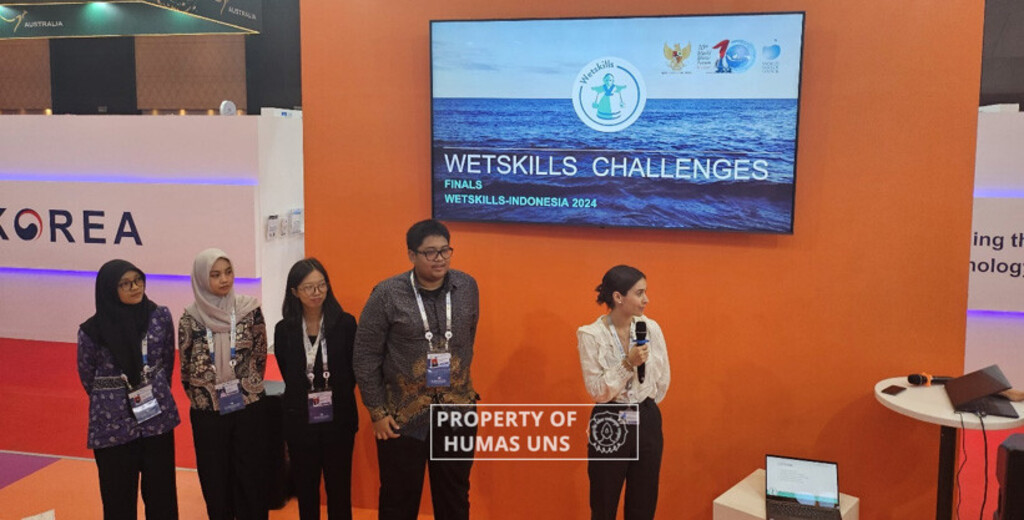
Among the presented ideas, Team 3, with Anindya Koeswanto as the spokesperson, won the judges’ evaluation with their project titled: “How to Reuse Water After Ablution.” This team developed a filtration system to recycle water used for ablution for reuse in ablution, irrigation, and fish ponds. Dr. Eng Kusumaningdyah, a supervising lecturer from UNS, noted that although using recycled water for ablution is controversial among some scholars, she praised Team 3’s innovative approach to addressing ablution wastewater, emphasizing the inevitability of water shortages due to climate change.
“During the event, participants conducted field surveys at locations such as the Bangor River, Loji River, Degayu Beach, and the Percik Institute. After the site surveys, we collaborated as a team to solve the cases. We had one week to find solutions and produce a paper, poster, and presentation. The presentations lasted 2 minutes to convince the jury,” Anindya Koeswanto explained.
HUMAS UNS
Reporter: Dwi Hastuti