UNS – The spread of COVID-19 for the past few days in Indonesia shows a significant increase. The Regional Governments are starting to determine the status and policy to anticipate the spread of Coronavirus Disease-2019 (COVID-19) in their respective region.
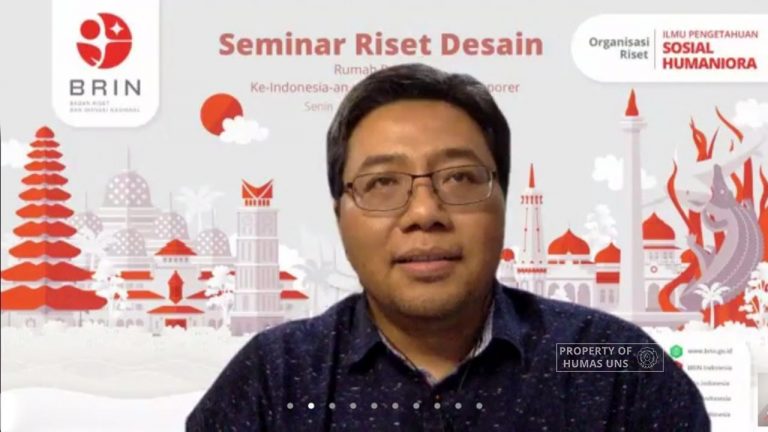
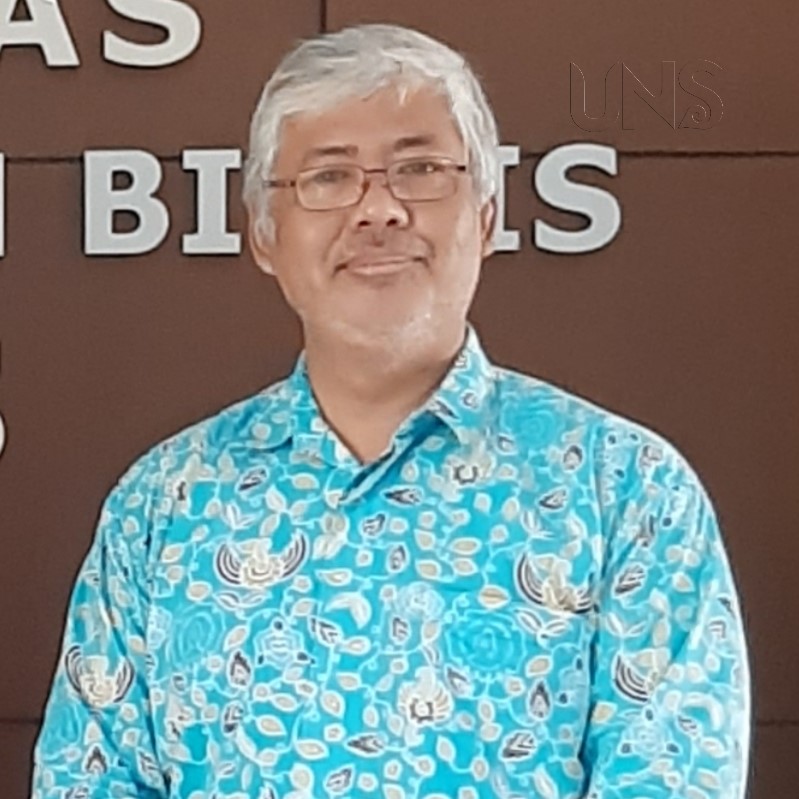
Responding to the development of each regional policy, Dr. Mulyanto, ME from the Regional Development Information Center (Pusat Informasi Pembangunan Wilayah – PIPW), Institute of Research and Community Service (LPPM), Universitas Sebelas Maret (UNS) Surakarta, join in speaking.
The COVID-19 outbreak has made the Regional Government take action in line with the condition in their region. Solo, for instance, prefers the status “Extraordinary Condition (Kejadian Luar Biasa – KLB) in hopes of a collective understanding that the effort to control the COVID-19 outbreak becomes a concern and responsibility for all parties. Meanwhile, the Tegal city government prefers a quarantine model to limit access to get into the city or to leave Tegal.
“All have its positive and negative side. Solo by using the KLB approach still allow their people to continue their economic activities, but still have to be cautious with the spread of COVID-19,” explains Dr. Mulyanto.
From the regional finance point of view, a policy reformulation is needed especially to implement the 2020 Regional Revenue and Expenditures Budget (APBD). This aims to align the regional financial capacity to anticipate and strengthen the significant programs to overcome the COVID-19.
“Regional Finance Agency, as OPD that manages and controls the regional finance can provide inputs regarding the implementation of program and activities that have not been deemed important to get postponed. This mechanism, further, is regulated in APBD 2020 amendment,” Dr. Mulyanto added.
The Regional Government is clearly affected by the COVID-19 outbreak, especially the region that applies isolation policy. Transactions and economic activities that require economic actors from outside of the isolated area will face problems and obstacles. However, the regional economic activities can keep running as long as the government can secure the basic needs that are needed most by the community at the current condition.
“For example, if Solo uses isolation concept, thus the distribution of basic needs in the form of agricultural products from the surrounding area of Solo will be hampered because Solo is not the main region of the agriculture sector. On the other hand, isolation can suppress the COVID-19 spread,” said Dr. Mulyanto.
Currently, rural area government can be involved to effectively overcome COVID-19, if the village government apparatus can mobilize and awaken the community to work together to overcome COVID-19, either in preventive measure or addressing the most urgent primary needs. An effort to find the product that can be provided by a village and can be used to fulfill regional needs can be done. This can be used as a means to achieve food-independent village, that has a high synergy among the village apparatus and the villagers though the optimization of the use of village funds, and other sources of village income.
“The use of Village Fund from the State Budget (APBN) in accordance with the central government directives, can be directed for COVID-19 prevention. Now is the right time for the village government to consider the main product that can be produced by the village, at the same time is useful for the villagers. Indonesia with approximately 75 thousand villages can be more effective in reducing the COVID-19 spread if the synergy between the village government and its people can run simultaneously,” said Dr. Mulyanto.
In general, the Regional government can implement territorial quarantine if the COVID-19 outbreak was really out of control, under a note that the Regional Government is capable to fulfill its society needs in the short-term. For instance, food supply, there is a safe-plan to fulfill the community need for several months to come.
“Regional Quarantine is not effective if the Regional Government does not know and does not have a scenario to implement in the short-term. At the same time there is also no awareness from various parties to work together, including the absence of the network of involvement with the parties/police and military,” Dr. Mulyanto concluded. Humas UNS