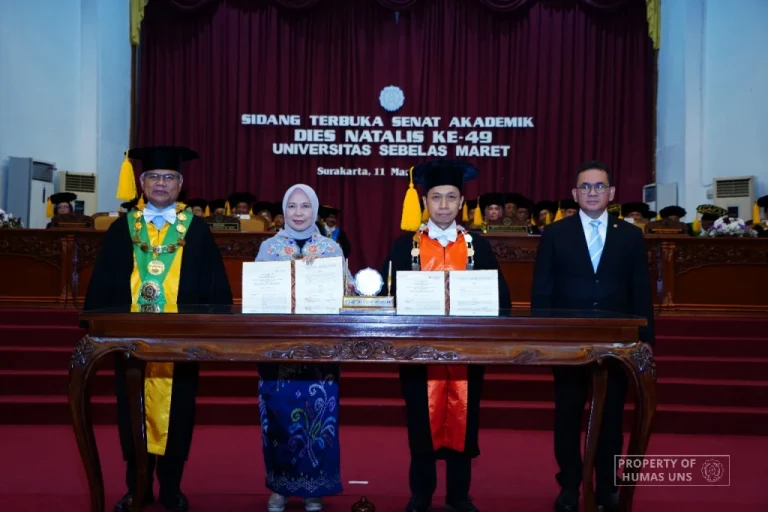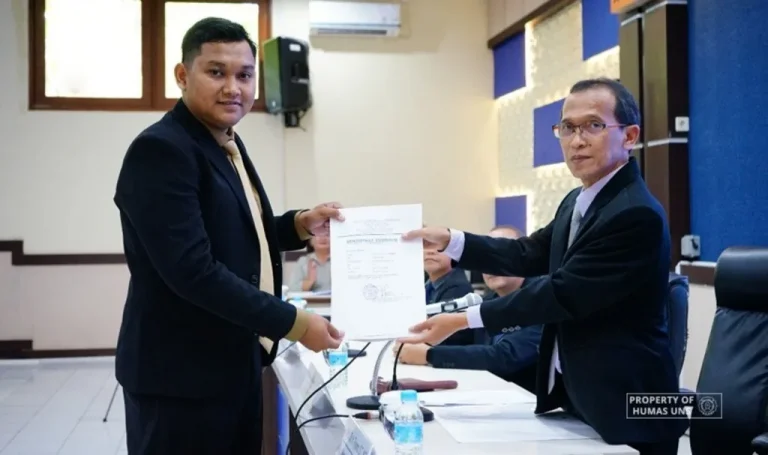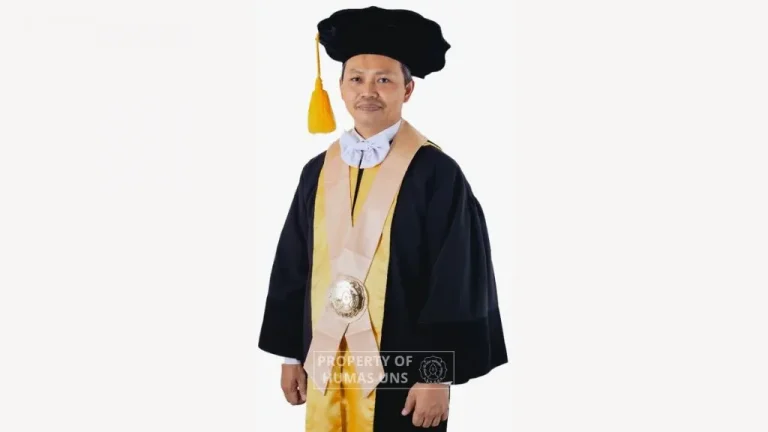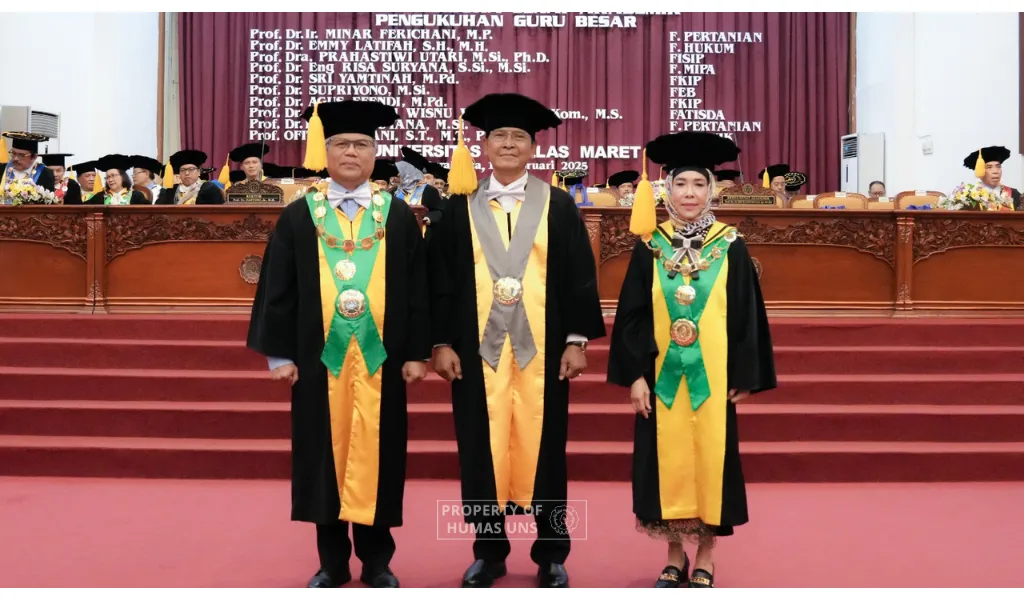
UNS – Universitas Sebelas Maret (UNS) has officially appointed Prof. Dr. Supriyono, M.Si., as a Professor in Conservation Economics. He serves as a lecturer at the Faculty of Economics and Business (FEB). The Rector of UNS, Prof. Dr. Hartono, dr., M.Si., presided over the conferment ceremony during an Open Senate Session. The event took place on Tuesday (11/2/2025) at the G.P.H. Haryo Mataram Auditorium.
Prof. Supriyono is the 25th professor at FEB and the 347th at UNS. His inaugural speech was “Stakeholder Awareness in Conservation as a Foundation for Sustainable Development”. He emphasized the need for conservation-based economic growth. He highlighted its importance in ensuring environmental sustainability.
The Role of Conservation in Sustainable Development
During his speech, Prof. Supriyono highlighted the increasing global population and its impact on natural resources. According to him, human needs continue to expand while resources remain finite. As a result, excessive exploitation leads to environmental degradation. Therefore, conservation plays a crucial role in balancing economic, social, and environmental aspects.
“Sustainable development rests on three key pillars: economy, society, and the environment. The economic aspect focuses on resource efficiency and green technology. The social dimension ensures equity and public welfare. Meanwhile, the environmental aspect emphasizes ecosystem preservation through responsible resource management,” he explained.


Challenges and Solutions in Conservation
Prof. Supriyono identified several challenges to sustainable development, including low stakeholder awareness and declining environmental quality. These issues contribute to global warming, climate change, and environmental destruction. Therefore, stakeholders must take an active role in conservation efforts.
- Government: Responsible for creating policies and regulations that support environmental conservation.
- Private Sector: Encouraged to develop innovative and eco-friendly technologies.
- Communities: Particularly those reliant on natural resources, must engage in sustainable resource management.
- International Organizations: Play a role in setting global standards and providing sustainable funding.
“Soil and water conservation should be a top priority. Techniques such as terracing, watershed rehabilitation, and efficient irrigation systems help prevent land degradation. They also effectively address water shortages. Additionally, preserving ecosystems, such as forests and wetlands, helps mitigate climate change by absorbing carbon dioxide,” Prof. Supriyono added.
The Importance of Public Awareness
Raising public awareness is essential for effective conservation. Environmental education, stakeholder collaboration, and strong policy support are critical for sustainable implementation. Moreover, partnerships between various sectors can enhance conservation efforts, ensuring a balance between economic growth and ecological preservation.
These initiatives align with the United Nations’ Sustainable Development Goals (SDGs). They specifically support Goal 13 on Climate Action and Goal 15 on Life on Land. By adopting a holistic approach, conservation challenges can be addressed, securing a sustainable future for generations to come.
HUMAS UNS