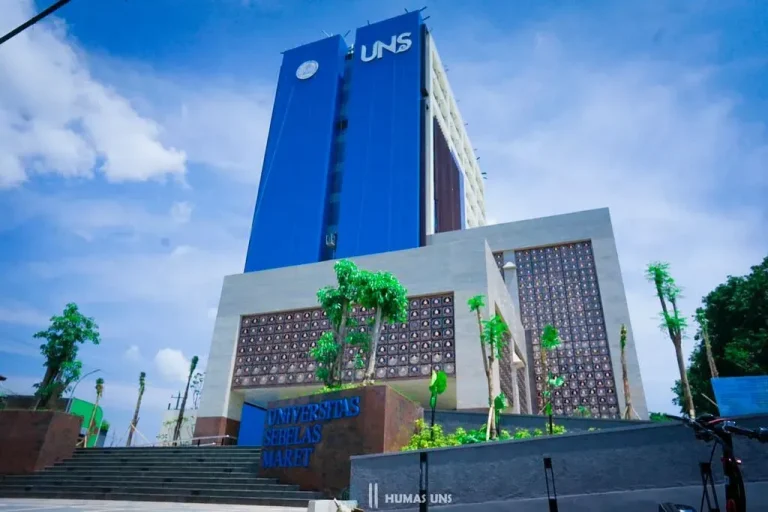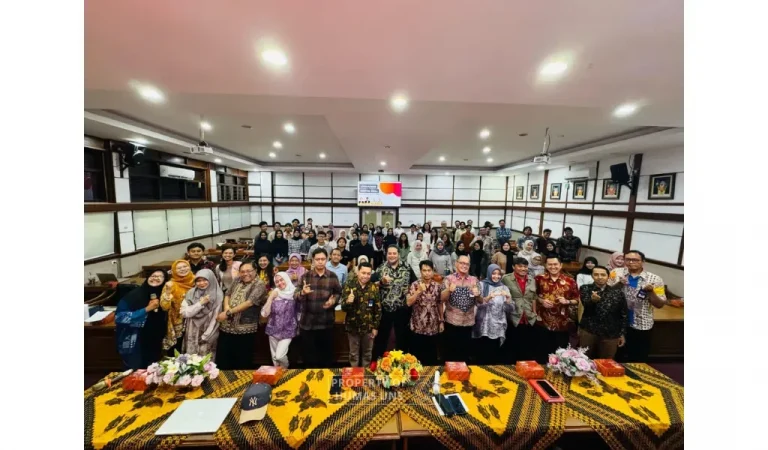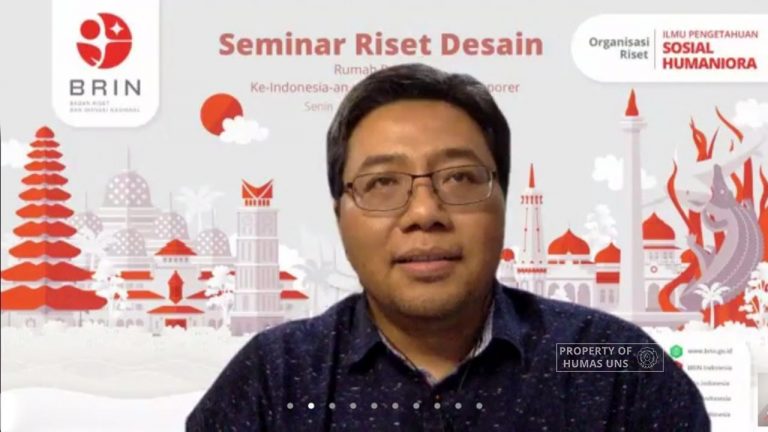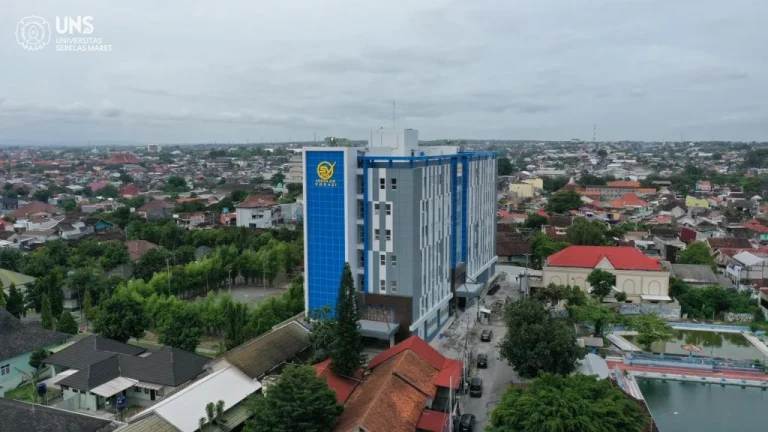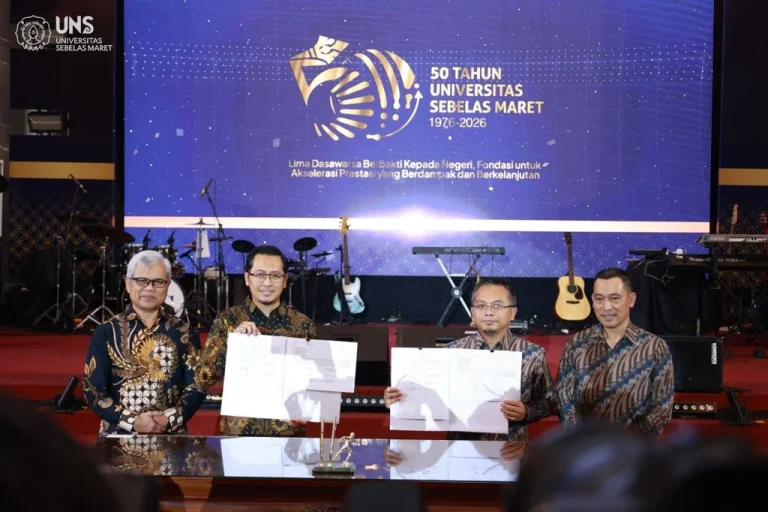
UNS — Universitas Sebelas Maret (UNS) Surakarta officially inaugurated the Islamic Economics and Business Center Building as part of the 2025 Benefit Program of the Badan Pengelola Keuangan Haji (BPKH) at the Faculty of Economics and Business (FEB), on Tuesday (10/2/2026). This inauguration marks a strategic step by UNS in supporting the strengthening of the Islamic economic ecosystem in Indonesia.
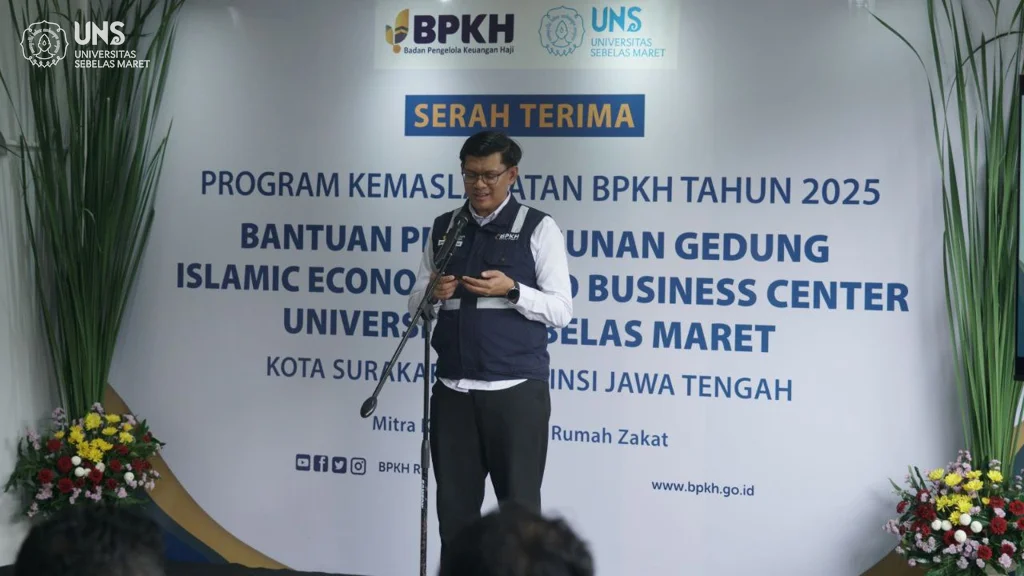
In his remarks, UNS Rector Prof. Dr. Hartono expressed gratitude and high appreciation to BPKH for its real support through the Benefit Program, which made the construction of the building possible. The construction of the UNS Islamic Economics and Business Center Building began in July 2025 and is now ready to be fully utilized.
“This building is a form of collaboration, national vision, and shared commitment in building the future of an inclusive, fair, and sustainable Islamic economy,” said Prof. Hartono. According to him, Indonesia, as the country with the largest Muslim population in the world, has enormous potential in the Islamic finance sector and the halal industry.
However, this potential still requires stronger support in terms of human resource development, research, and a sustainable supporting ecosystem. The presence of the Islamic Economics and Business Center at UNS is expected to become a concrete contribution from higher education in addressing these challenges.
Furthermore, Prof. Hartono emphasized that the development of the Islamic Economics and Business Center is in line with the UNS DREAMTEAM strategy, especially the value of Active, which reflects the spirit of building strategic collaboration with various stakeholders, including the government, business sector, philanthropic institutions, and civil society.
“Universities do not only serve as centers for the development of knowledge, but also as solution agents that provide real benefits to society,” he stressed.
The UNS Islamic Economics and Business Center is expected to become a center of excellence for implementing the Tridharma of Higher Education—education, research, and community service—with a focus on the development of Islamic economics and business based on academic knowledge and oriented toward public benefit.
In addition, the center is projected to become a place where innovative ideas, applied research, and cross-sector synergy in Islamic economic development can grow at the local, national, and global levels.
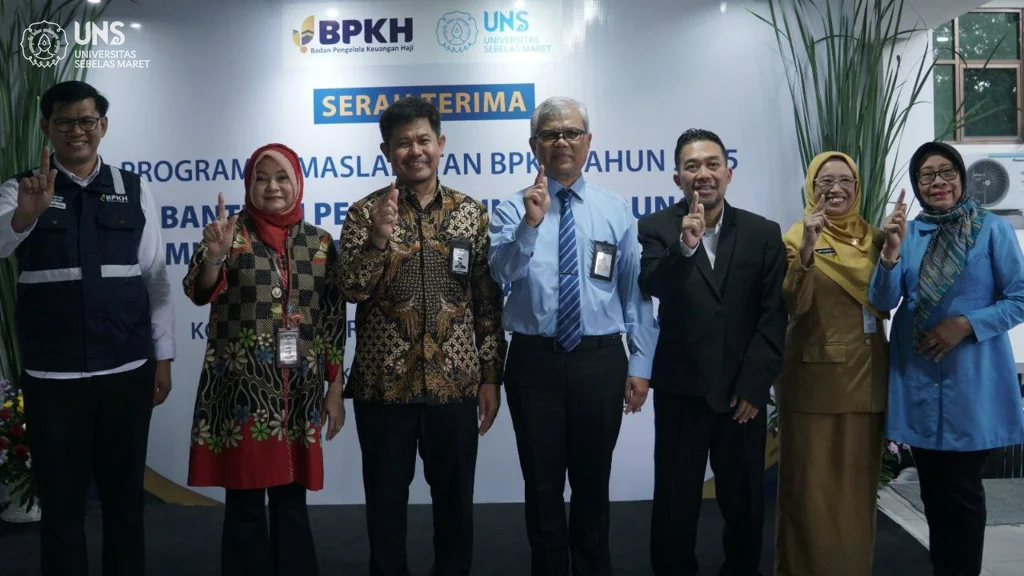
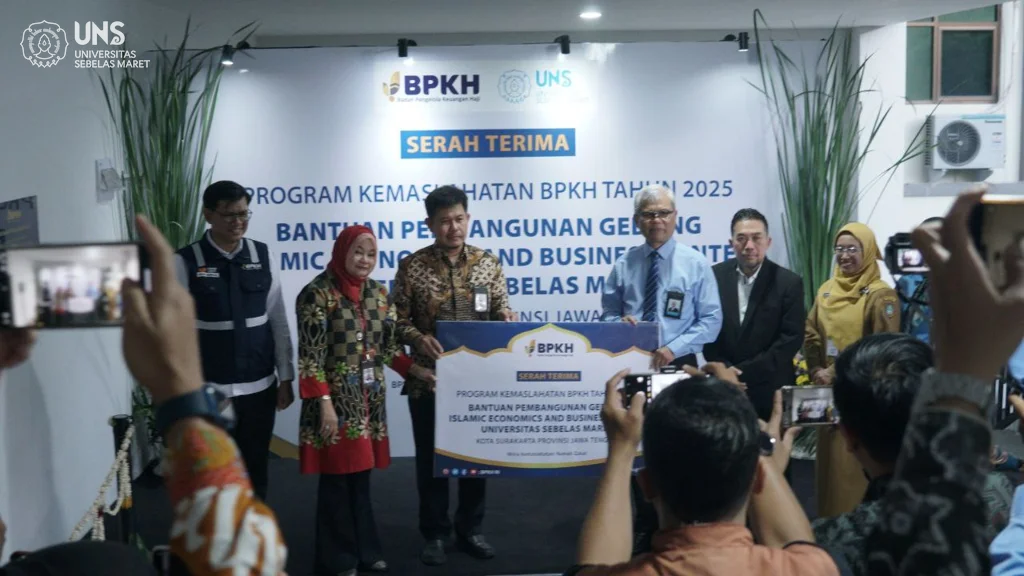
UNS hopes this center will produce excellent human resources who not only have academic competence, but also integrity, ethics, and social awareness. On the same occasion, the Rector also expressed appreciation to the Faculty of Economics and Business of UNS and all parties who had prepared the sustainable management and utilization of the building.
UNS also opens wide opportunities for collaboration with local governments, Islamic financial institutions, zakat and waqf institutions, industry, and international partners. “We hope the presence of the UNS Islamic Economics and Business Center will provide the greatest possible benefit, not only for the UNS academic community, but also for society at large,” he concluded.
Meanwhile, Member of the BPKH Supervisory Board, Dr. Mulyadi, explained that BPKH, through the Endowment Fund for the Ummah, has a public benefit function, one of which is realized through support for development in the education sector.
This value of public benefit became the foundation for BPKH in supporting the construction of the Islamic Economics and Business Center Building at UNS. “We welcome UNS’s step not only in receiving the building, but also in opening a new study program, namely Islamic Economics and Finance. This is very much in line with BPKH’s mandate and the principles of transparent, accountable, and Sharia-based management of Hajj finances,” said Dr. Mulyadi.
Through this cooperation, BPKH hopes that the collaboration between BPKH and UNS will not stop here, but can continue to grow in various other forms of cooperation, especially in education and strengthening Islamic economic and financial literacy.
The presence of this new program also opens opportunities for further collaboration, including Hajj financial literacy programs, Hajj seminars, and strengthening the role of BPKH in society. In its implementation, this Benefit Program is managed together with implementation partners, one of which is Rumah Zakat.
“BPKH has built various educational facilities throughout Indonesia, from Sabang to Merauke, including Islamic boarding schools and other educational institutions. The selection of UNS as a strategic partner is based on UNS’s role as a growing university that continues to make real contributions to society, while also having the potential to become a center for the development of Islamic economics and finance education in Indonesia,” he concluded.
HUMAS UNS