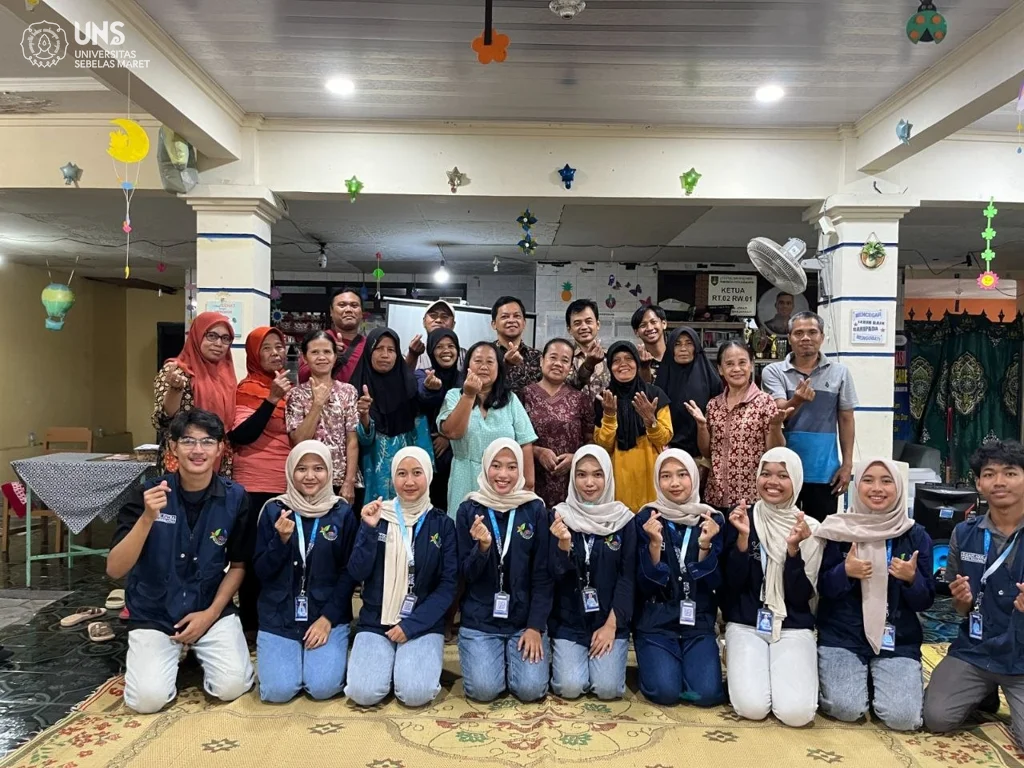
UNS — The JarPak Grant Team of Universitas Sebelas Maret (UNS) Surakarta carried out a learning activity under the Village Development Project. This initiative aims to empower communities through programs that have a direct impact on rural society. The impact-driven grant team consists of nine undergraduate Agribusiness students: Alma Aprilstya, Amalia Putri Chamilla, Annida Kharisma Putri, Ayu Widyaningsih, Chintya Ayu Pramesti, Damar Adhi Nugroho, Desinta Ayu Anggrahani, Yogi Putra Setyawan, and Alya Rayhan Ramadhany as the project leader.
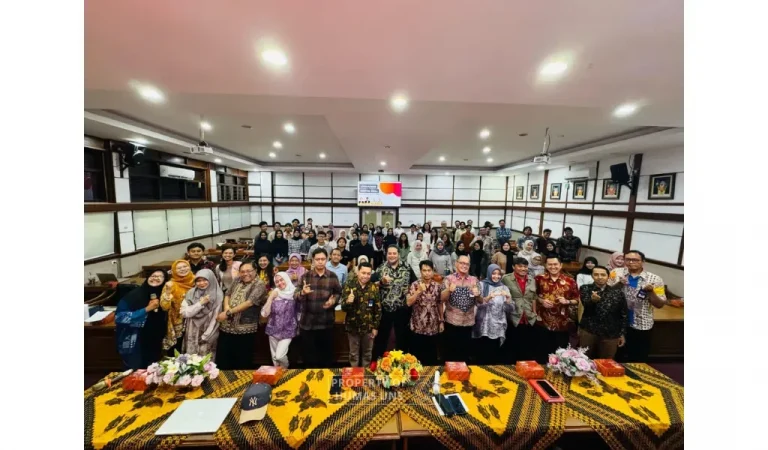
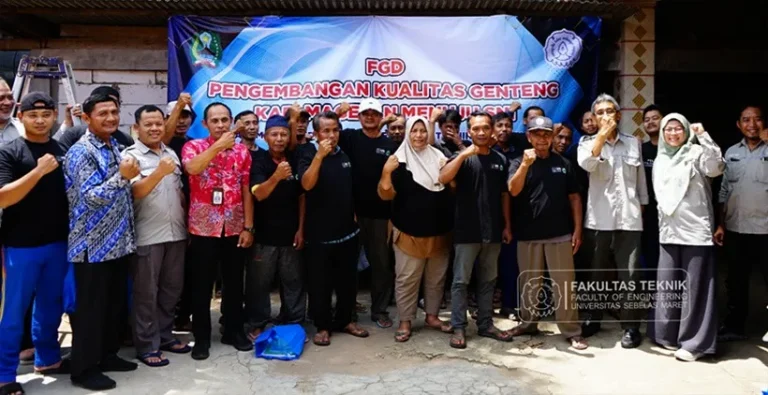
The outreach program on maggot cultivation and aquaponics demonstrates a strong commitment to supporting food security and environmental management. The activity was held at the home of a local resident, Agus Haryanto, in Joglo Subdistrict, Banjarsari District, Surakarta, on April 12. It was attended by 20 members of KWT Ngadi Asih and was also joined by the Head of Joglo Subdistrict, Agus Riyadi, S.T., the supervising lecturer Raden Kunto Adi, S.P., M.P., and local officials.
The event featured a speaker from CV Kans.id, Muhammad Aji Pamungkas, who provided both educational insights and hands-on practice on utilizing organic waste through maggot cultivation and implementing urban farming systems based on aquaponics. The materials focused on practical solutions to household waste issues while also increasing community economic value.
In his presentation, Muhammad Aji Pamungkas explained that organic waste holds significant potential when properly managed. “Organic waste, which is often considered worthless, can actually become an economically valuable alternative feed source through maggot cultivation. Even in small quantities, maggots are capable of decomposing a substantial amount of waste,” he explained.
He also emphasized that understanding the maggot life cycle is key to successful cultivation. “Maggots go through several life stages, from eggs to adult flies. During the larval stage, they are highly active in decomposing waste. This is where their main potential lies in supporting organic waste management,” he added.
In practice, the cultivation medium uses a mixture of tofu residue and bran in a ratio of 1 kg to 500 grams. This combination is considered effective in supporting maggot growth due to its balanced protein and carbohydrate content. He further mentioned that 1 gram of maggots aged 0–5 days can decompose up to 2 kg of organic waste.
In addition to maggot cultivation, the program also introduced aquaponics as an integrated agricultural solution. This system combines fish farming and plant cultivation within a mutually supportive ecosystem.
“Aquaponics is highly suitable for household-scale farming, especially in limited spaces. Waste from fish can be utilized as nutrients for plants, creating a fully integrated system with minimal waste,” he explained.
During the discussion session, participants showed great enthusiasm by asking various questions. One participant raised concerns about the growth differences of catfish in different cultivation media. In response, the speaker explained that limited space and oxygen availability are key factors.
“Catfish raised in small containers such as gallons tend to grow more slowly compared to those in ponds. Ideally, one catfish requires about 5 liters of water. For a gallon container, it is best to stock only 3–5 fish to maintain optimal growth,” he clarified.
The Head of Joglo Subdistrict, Agus Riyadi, S.T., appreciated the activity as a concrete step toward community empowerment. “Activities like this are highly beneficial as they not only provide knowledge but also offer practical solutions for managing waste and improving household food security,” he stated.
Through this training, KWT Ngadi Asih is expected to independently implement organic waste management and develop integrated agriculture-based businesses. This program is hoped to serve as an initial step toward creating a cleaner, more productive, and sustainable environment, while also improving community welfare.
HUMAS UNS