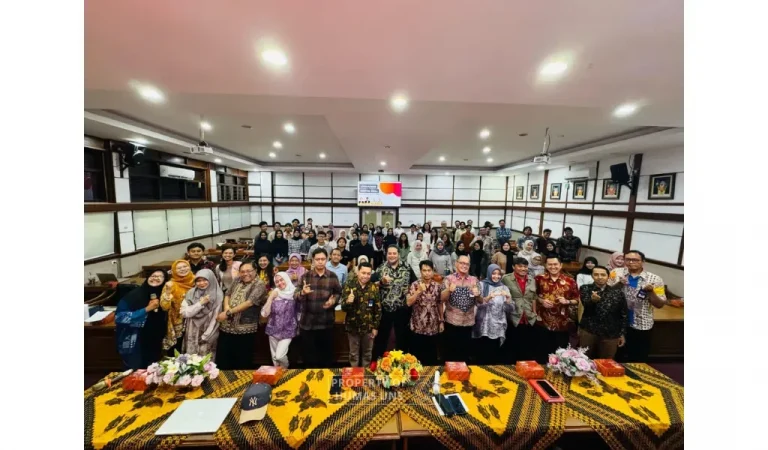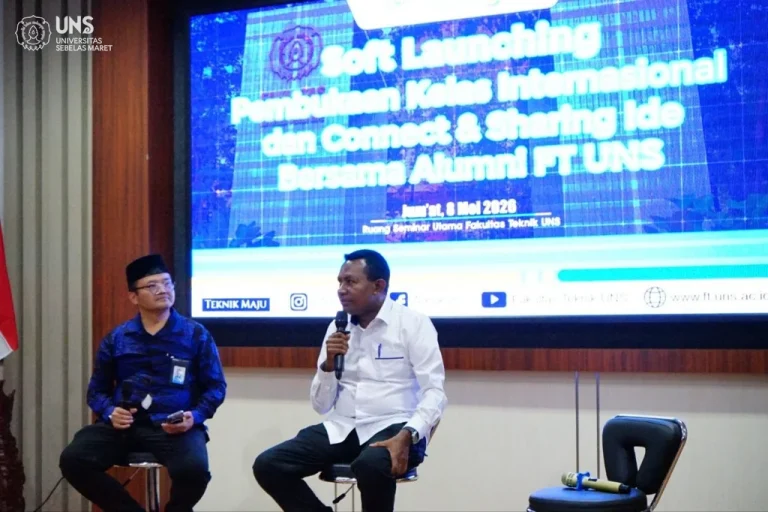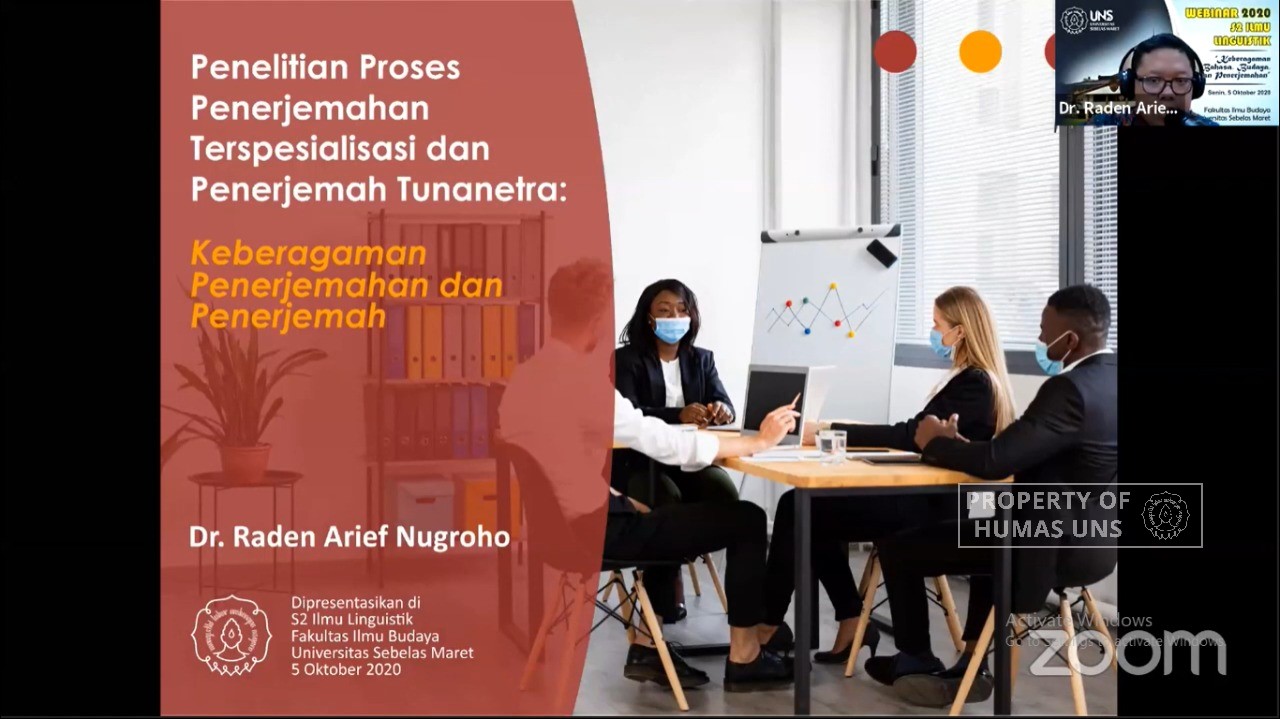
UNS — The Master Program in Linguistics Universitas Sebelas Maret (UNS) Surakarta held a webinar on the Diversity of Languages, Culture, and Translation through the Zoom Meeting application on Monday (5/10/2020). The webinar was led by Wiwik Yulianti, M.Hum. as a moderator, and invited Dr. Obing Katubi and Dr. Raden Arief Nugroho as speakers.
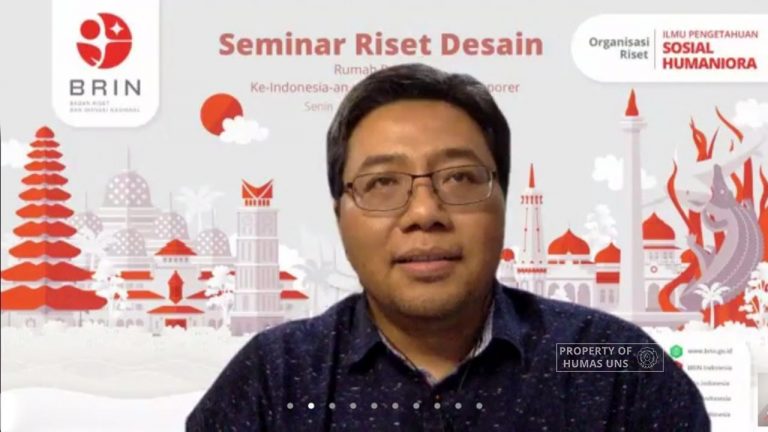
In his material, Dr. Raden Arief Nugroho shared the process of specialized translation and blind translator. The faculty member in the Faculty of Cultural Studies (FIB) Universitas Dian Nuswantoro (Udinus) conveyed that specialized translation is interesting to be studied because it requires special treatment. “Specialized translation exists in a certain domain, it uses specific lexicon, and so forth. Specialized translation means that specialized translators work in a certain domain, for example, texts in the field of economic, maritime, and banking which still have operational objectives,” he explained.
Some areas require comprehension from certain people in specialized translation. A detailed comprehension of a text is what makes a text special. This comprehension can be a reader’s comprehension or translator’s comprehension. The translator’s ability and competence play a significant role in specialized translation. Therefore, there is an additional axis in specialized translation, the diagonal axis, which is the translator. The translator in specialized translation is the one who will convince the translational researcher that a text is special.
The second speaker, Obing Katubi, delivered material on the development of language ideas to maintain language diversity. The researcher in the Center for Social and Cultural Research the Indonesia Institute of Science (LIPI) stated that one of the marks of language extinction is a deviation in language usage. “The level of language vitality is the key indicator in designing a program to maintain and revitalize languages that almost extinct. We cannot determine if a language is almost extinct without proof. Academic must have evidence, the evidence must be obtained from the research, one of which is from the level of vitality or variation. The principle is that language is never monolithic, language is always diverse due to the social aspect, level of education, and so on.”
There are three indicators of language vitality, the status of a group in the larger community, demographic variable, and institutional support for the group. The status includes the social, economic, and political status, while the demographic variable is related to the demographic aspects, for example, the group with a smaller size is predicted to shift their language to the dominant group or adjust to the dominant group. Institutional support is concerned with the policymaking institution and its support for the particular language. If the institution provides strong support for the language, the language will be stronger than other languages. Humas UNS
Reporter: Bayu Aji Prasetya
Editor: Dwi Hastuti