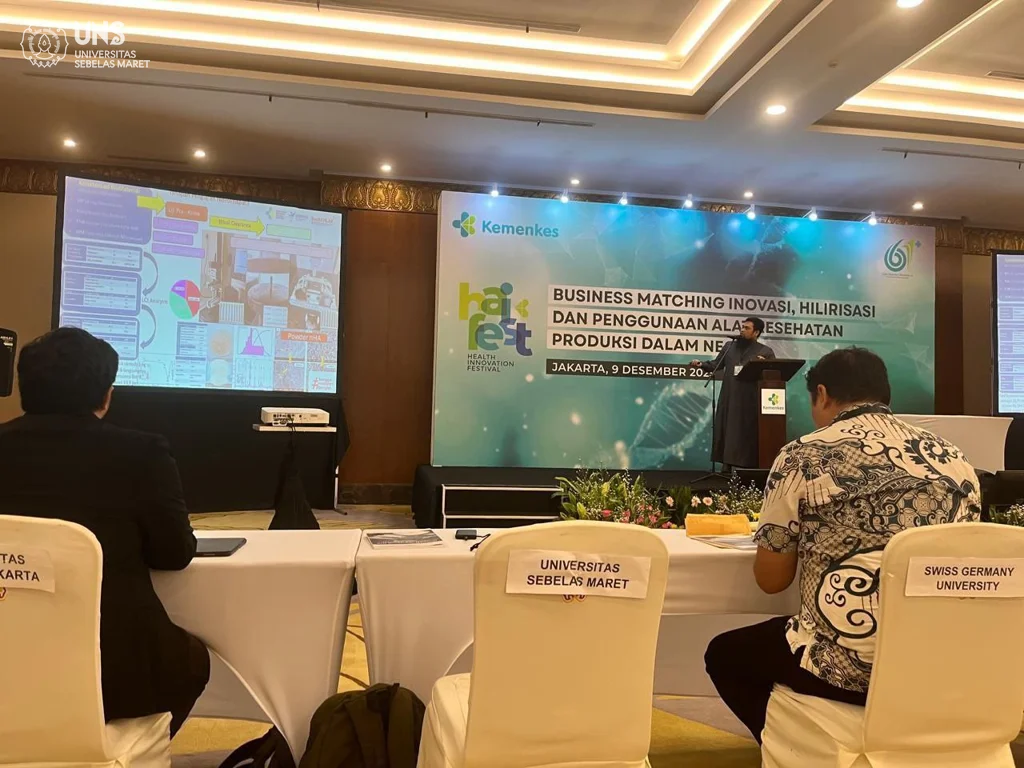
UNS — In an effort to accelerate research downstreaming and strengthen the domestic medical device innovation ecosystem, the Ministry of Health (Kemenkes) of the Republic of Indonesia held a Business Matching on Innovation, Downstreaming, and the Use of Local Medical Device Products in Jakarta at the end of 2025. One of the featured innovations presented was the development of nano-hydroxyapatite (nHA) powder derived from fish bone waste, created by a research team from Universitas Sebelas Maret (UNS) Surakarta.
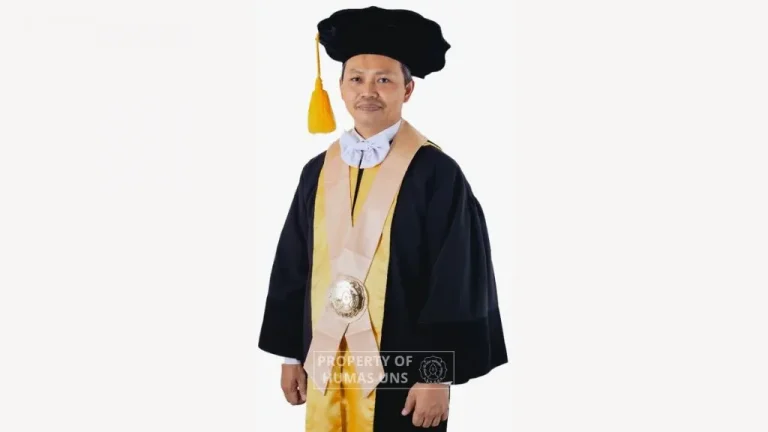
Prof. Ir. Ubaidillah, S.T., M.Sc., Ph.D., IPM., along with the Mechanical Engineering lecturers of the Faculty of Engineering (FT) UNS and Head of the Applied Research Team, explained the significant potential of fish bone-derived nHA as a raw material for orthopedic implants, particularly for coating metal implant surfaces.
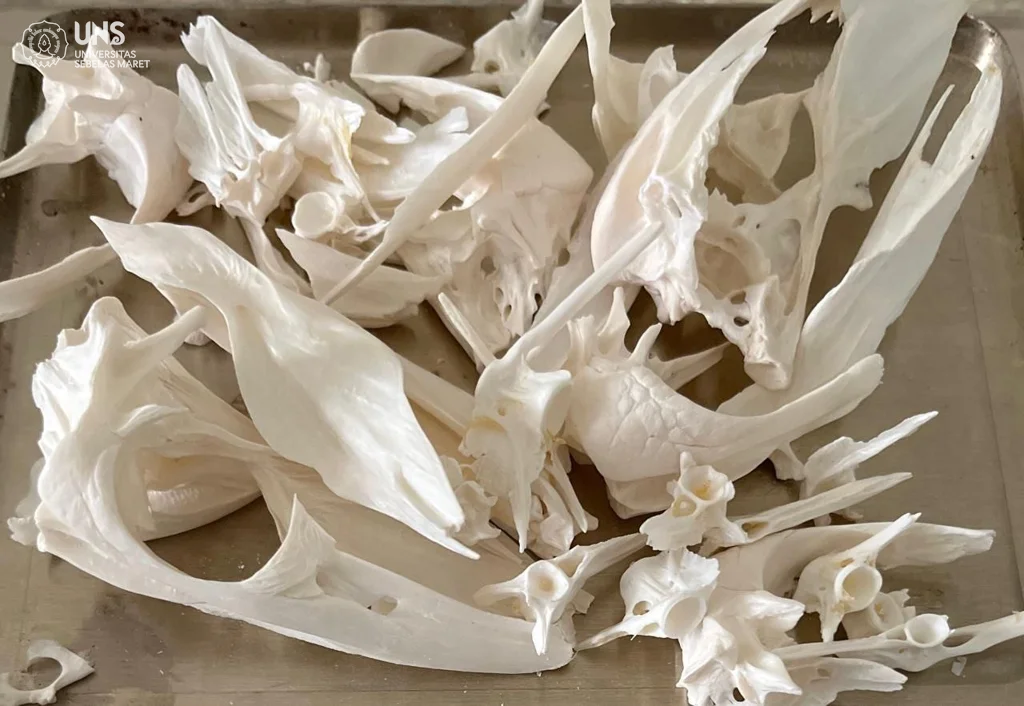
“Fish bone waste, which has long been considered merely a byproduct of the fisheries industry, actually contains a mineral composition very similar to the natural hydroxyapatite found in human bones. Through controlled hydrothermal and calcination processes, we successfully converted it into nano-sized powder measuring 20–50 nm with high purity, optimal bioactivity, and competitive production costs,” he explained.
This innovation aligns with the spirit of the circular economy and waste-to-value principles, while also addressing Indonesia’s dependence on imported orthopedic biomaterials, which currently exceeds 90%. Characterization results (XRD, FTIR, TEM, SEM, and PSA) have confirmed that this material meets international standards for implant applications, ranging from its hexagonal crystal structure, stoichiometric Ca/P composition of approximately 1.67, to particle morphology that supports osseointegration.
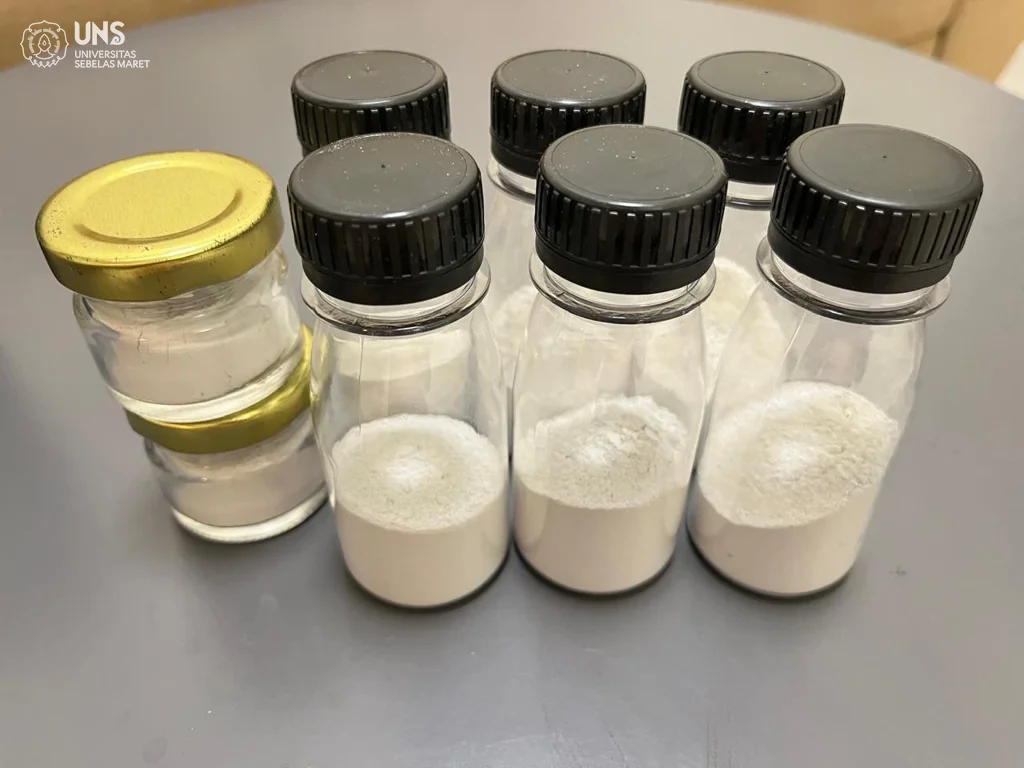
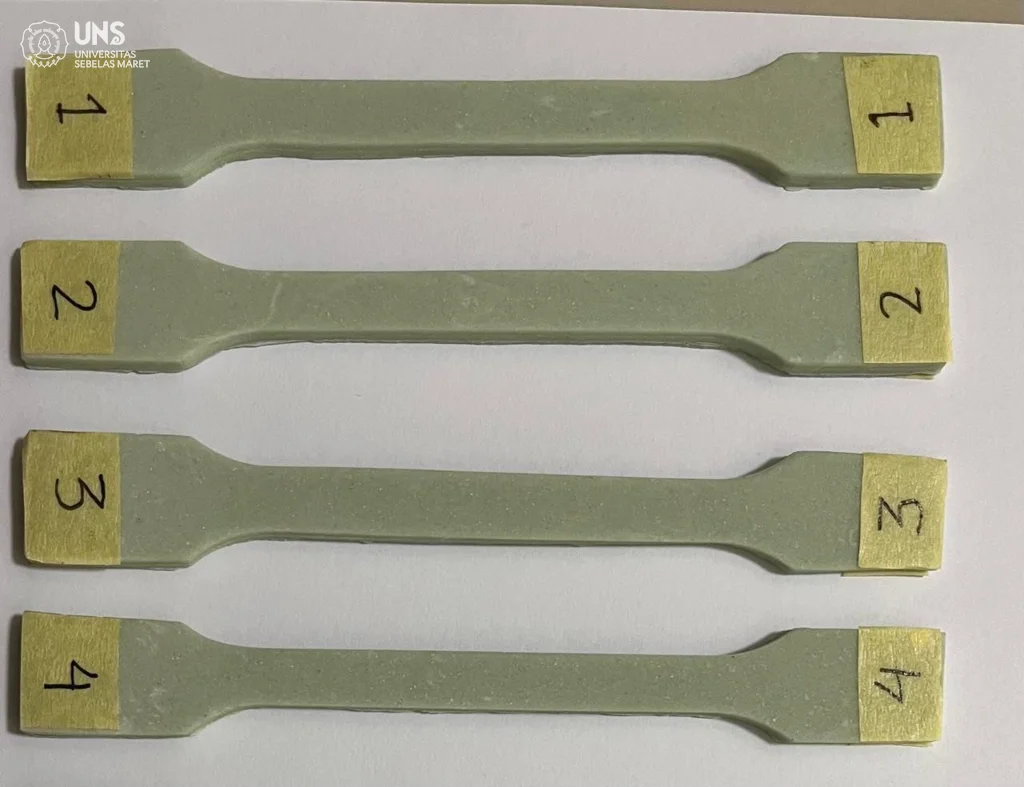
During the business matching session, the UNS team explored strategic collaborations with medical device industries, referral hospitals, and precision metal SMEs in Central Java to develop a dry-powder spray coating prototype—a coating technology for implants based on nHA that is currently being developed under the Health Project.
The Director of Pharmaceutical and Medical Device Resilience at the Ministry of Health, Dr. Jeffri Ardiyanto, M.App.Sc., emphasized in his remarks that innovations like this are key to transforming Indonesia’s sovereign healthcare system.
“We need more ‘entrepreneurial researchers’ like Prof. Ubaidillah—those who not only conduct research in laboratories but also push their results into the real market, for real patients,” said Dr. Jeffri.
This initiative opens the way for Indonesia not only to become a consumer but also a producer of advanced biomaterials based on local resources, generating economic, environmental, and humanitarian value.
HUMAS UNS