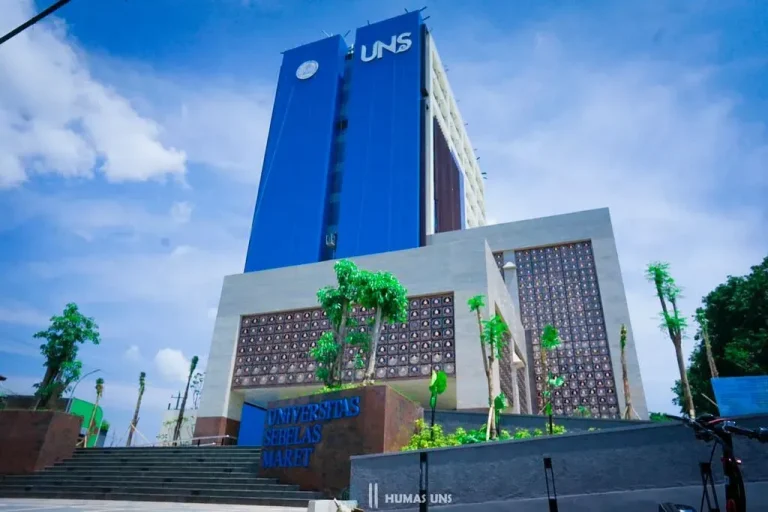
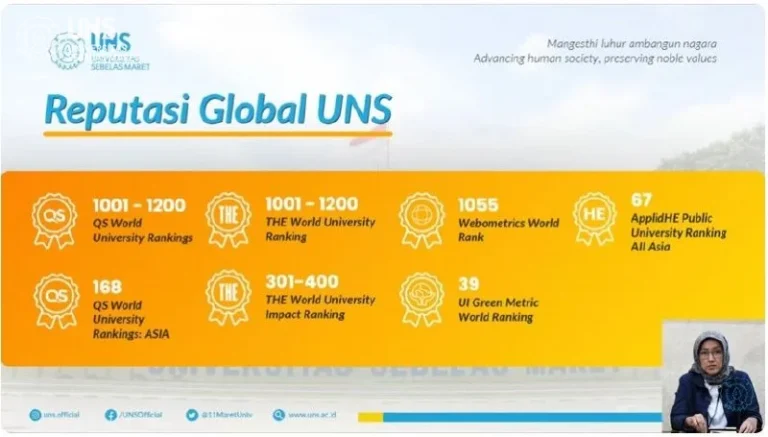
UNS — Universitas Sebelas Maret (UNS) Surakarta has achieved another remarkable milestone at both national and international levels. In the 2025 Times Higher Education (THE) Interdisciplinary Science Rankings, UNS was ranked in the 201-250 range globally and claimed 6th place among universities in Indonesia.
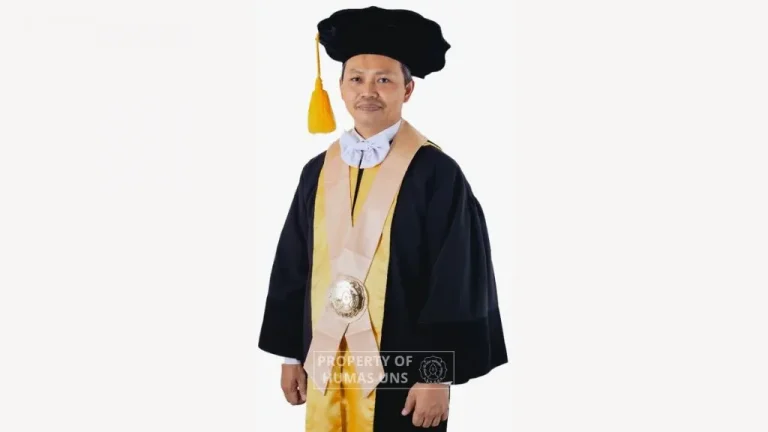
UNS Rector, Prof. Dr. Hartono, dr., M.Si., expressed pride in UNS’s position alongside other leading Indonesian universities. The Indonesian universities featured in the THE Interdisciplinary Science Rankings 2025 include IPB University (60th globally), Universitas Indonesia (UI, 65th), Institut Teknologi Sepuluh Nopember (ITS, 77th), Institut Teknologi Bandung (ITB, 108th), Universitas Padjadjaran (Unpad, 181st), followed by Universitas Sebelas Maret (UNS) and Universitas Andalas in the 201-250 range.
THE Interdisciplinary Science Rankings focus on universities excelling in interdisciplinary scientific fields. Institutions are assessed using various indicators, including the volume of scientific publications, research quality and impact, citations, research funding, and international reputation.
“UNS’s accomplishment in this ranking demonstrates our success in integrating various disciplines into both learning and research processes,” Prof. Hartono said on Thursday (21/11/2024).
A total of 749 universities from 92 countries participated in the inaugural edition of these rankings, underscoring the growing global interest in interdisciplinary science. UNS’s inclusion in this prestigious list confirms its recognition as part of the global academic community.
UNS achieved an overall score of 42,6–45,4, with a particularly strong performance in the ‘Inputs’ category, scoring 92,4. This high score reflects the university’s effective allocation of resources—such as funding, facilities, and expertise—to support its research activities, enabling the production of high-quality scientific work.
“With this achievement, UNS is firmly progressing as a world-class university committed to advancing the quality of interdisciplinary science research and education,” Prof. Hartono concluded.
Humas UNS