UNS – MersifLab is a start-up founded by a group of students from Universitas Sebelas Maret (UNS) Surakarta. It has made a significant mark in a prestigious national start-up competition. The company secured the 2nd Runner-Up position at the Indonesia AI Innovation Challenge (IAIIC) 2024.
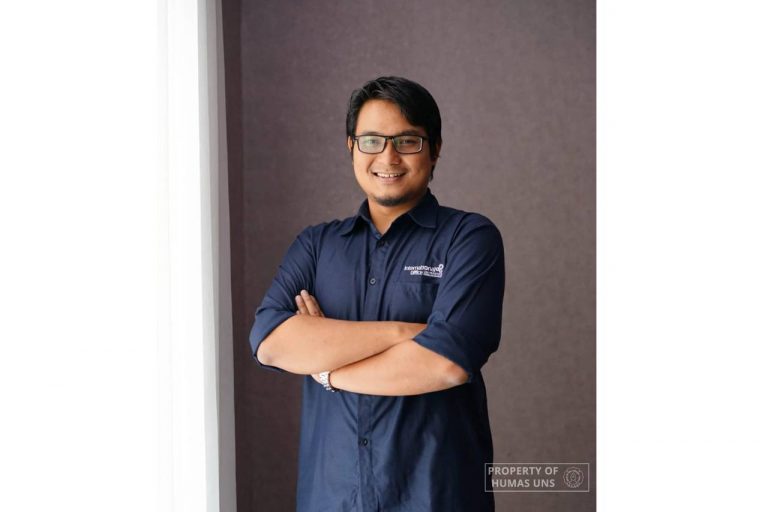
MersifLab’s CEO, Rozin Fata Ulwan, explained that the start-up was incubated by UNS Innovation Hub. This process took place through the 2023 Sebelas Maret Start-Up Academy (SEMESTA).
MersifLab advanced through multiple competition stages and earned recognition as one of the top three start-ups at IAIIC 2024. These stages included submitting a business proposal, participating in incubation programs, attending hot seat sessions, and delivering a final pitch. This year marked their second participation in the event. The team aimed to further develop their start-up and introduce it to a wider audience.
“Our team reached the top nine in 2023. In 2024, we achieved the 2nd Runner-Up position, which was announced on Friday (10/1/2025). Through this competition, we gained invaluable knowledge that we can apply to MersifLab,” Rozin said on Monday (3/2/2025).
Rozin highlighted that MersifLab is a technology and education start-up. It offers a Virtual Reality (VR)-based virtual laboratory to enhance school practical learning. The start-up provides an intensive and collaborative learning experience. Its products are powered by VR, Augmented Reality (AR), and the Internet of Things (IoT). One of its key innovations is a customized VR system designed for practical learning, supporting interactive and modern education. MersifLab originated from the 2019 Student Creativity Program (PKM) under the Karya Cipta (KC) category.
“As of 2025, MersifLab has expanded its offerings with various innovative products and services. These include virtual reality (VR) training for teachers and students. The platform also offers teacher accounts with a drag-and-drop function to create virtual practical rooms and student accounts for collaborative practical sessions. Additionally, MersifLab provides customized VR products tailored to specific needs, such as for schools or research purposes. Currently, 17 schools in Solo and Yogyakarta use our services,” he explained.
Product Development and Expansion Plans
MersifLab continues to enhance its products and expand its innovations into both private and public schools. It aims to ensure accessibility across all educational levels. Rozin noted that VR usage in schools remains limited to technology branding, requiring further development to maximize its potential.
“Moreover, we plan to collaborate with the Faculty of Teacher Training and Education (FKIP) at UNS. This partnership aims to establish a VR ecosystem within campuses and schools through research and community service programs. In the short term, we will focus on the Solo and Yogyakarta markets. Our long-term vision is to expand throughout Indonesia and internationally. We also welcome partnerships to support the dissemination and positive impact of VR in modern education,” he added.
Furthermore, technologies such as VR, AR, and e-learning platforms create more interactive and engaging learning experiences. These innovations ultimately improve student learning outcomes. MersifLab’s educational technology innovations align with Sustainable Development Goal (SDG) Number 4: “Quality Education.”
HUMAS UNS