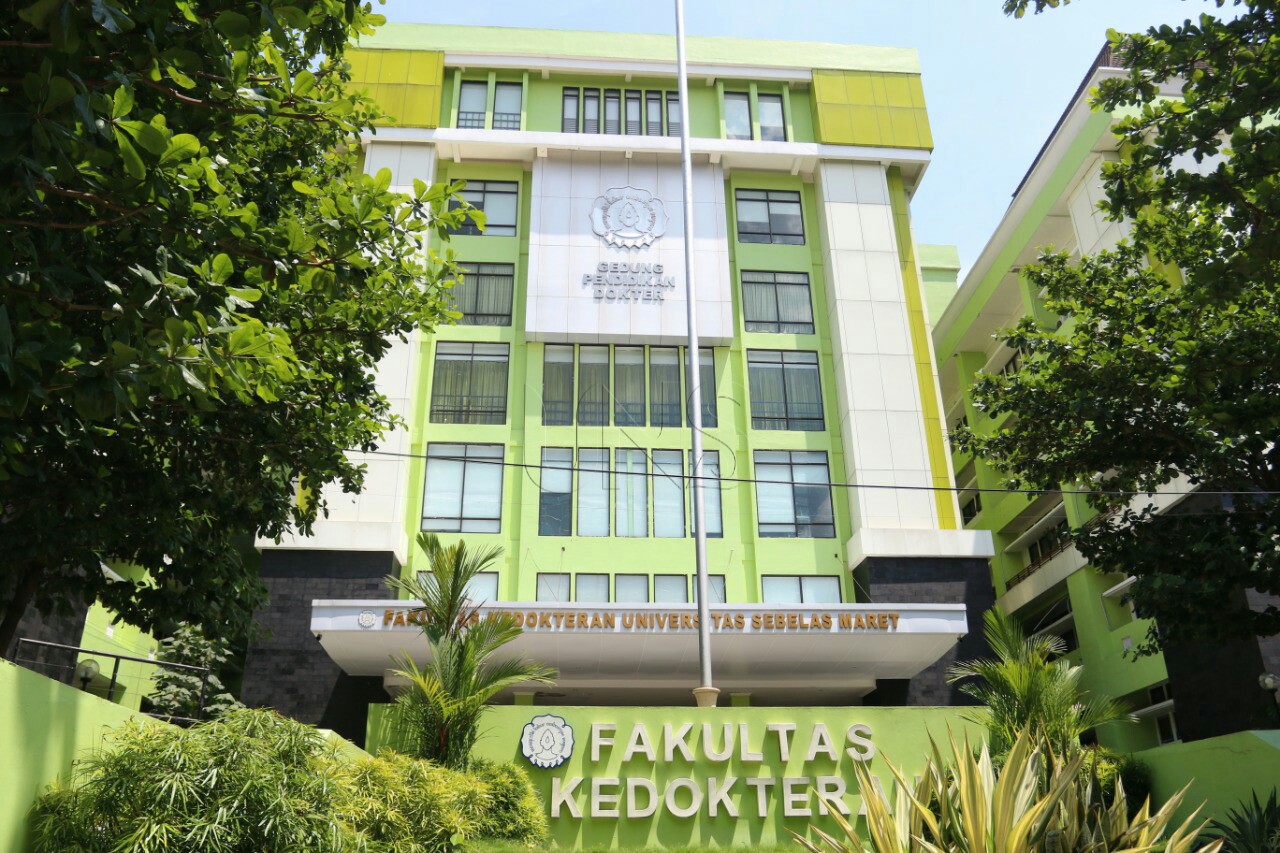
UNS – The Faculty of Medical Science (FK) Universitas Sebelas Maret (UNS) Surakarta is officially launching the Community Service (Pengabdian Masyarakat-Abdimas) activity for the handling of COVID-19. As a form of response to the current condition, the FK UNS encourages its students to contribute to society. This launching is held through the online system, by the Dean of FK UNS, Prof. Reviono on Tuesday (5/5/2020).
The Vice Dean of Student and Alumni Affairs, Dr. Selfi Handayani, reporting that there are 88 FK students, detailing that 81 students from the Medicine Education Study Program and 7 students from Psychology Study Program are participating on the agenda.
Furthermore, there are 25 lecturers who will act as Community Service Supervisor (DPP), whose duty is to guide the students during the program implementation. Each supervisor will supervise 3-5 students who have scattered across several regions in Indonesia. This activity will be started from May until June with a duration ranged from 80 to 100 hours.
“This Community Service program is a result of a discussion among the head of FK UNS and the University. Considering that some FK students are volunteering in handling Covid-19 off campus, thus a team from FK UNS discusses the matter at the university level,” said Dr. Selfi.
Like a tit for tat, the university welcomed the action taken by the students. Thus, an idea to recognize their volunteering activity as part of the Student Community Service Program (KKN).
Further, this program will be considered as a replacement of KKN under several certain conditions, such as activity reports. Hopefully, the output of this program will be in line with KKN activity.
Meanwhile, the Dean of FK UNS, Prof. Reviono, adds that Abdimas KKN has an objective to implement one of the Higher Education Tri Dharma, which is community engagement. Through this Abdimas KKN, hopefully, the students that apply their knowledge and benefiting the COVID-19 affected community. The activities planned for the program are, among others, socialization on Clean and Healthy Behavior, washing hand, nutrition fulfillment, stress reduction, and many others. Moreover, it will train the students to participate and contribute to the prevention of COVID-19 transmission.
“Hopefully, in the future, the students and supervising lecturers can contribute to the surrounding community during this ongoing COVID-19 pandemic,” Prof. Reviono concluded. Humas UNS/Ratri