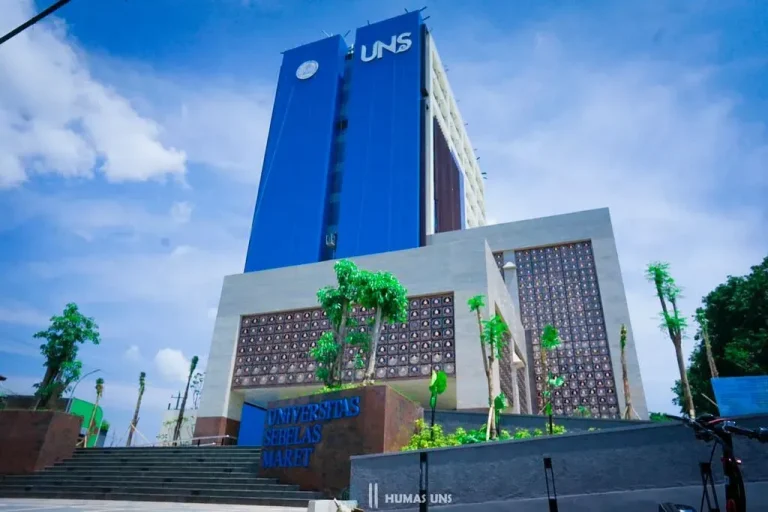
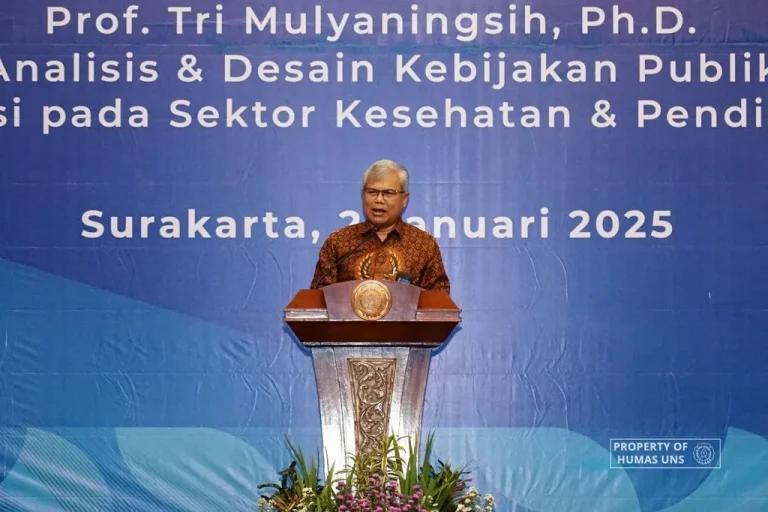
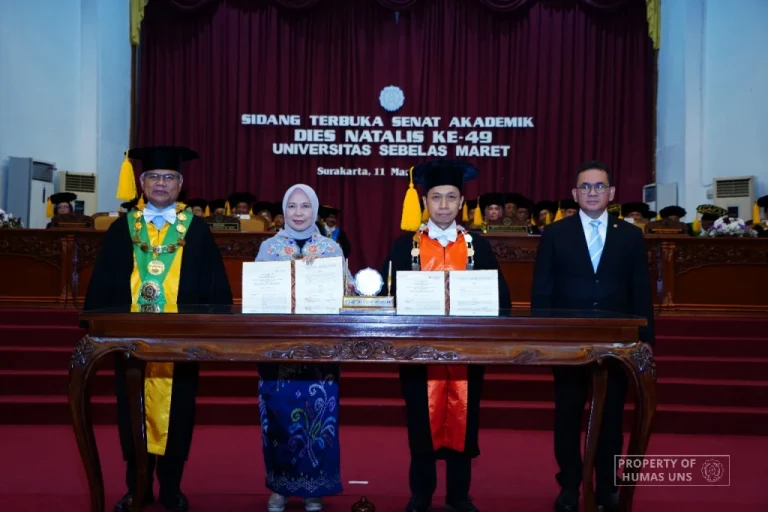
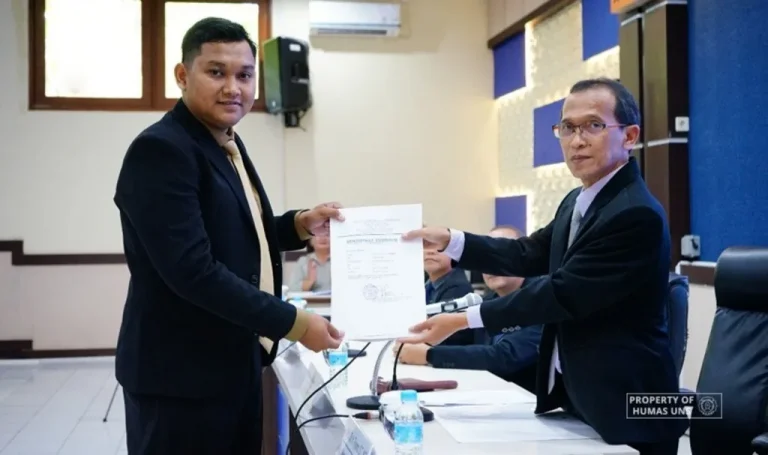
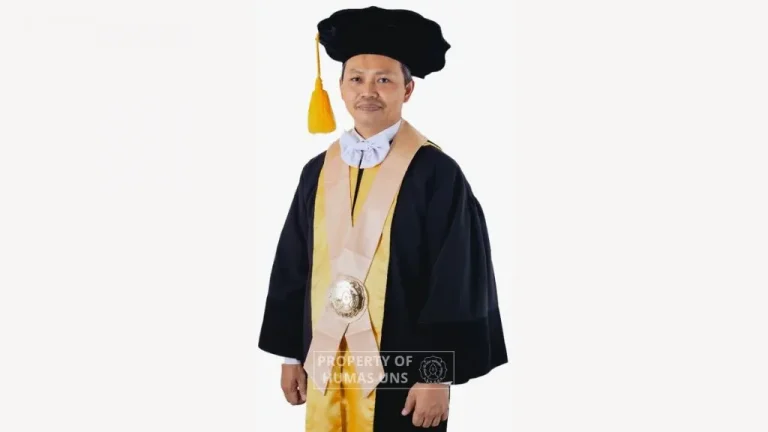
UNS – Universitas Sebelas Maret (UNS) Surakarta has appointed the Vice Dean for Non-Academic Affairs at FMIPA as a professor. Prof. Dr. Fahru Nurosyid, S.Si., M.Si., has officially earned the title in Organic Solar Cell Material Physics. His inauguration took place during the Open Senate Session at the G.P.H. Haryo Mataram Auditorium on Monday (10/2/2025).
In his inaugural speech, Prof. Fahru discussed the role of organic solar cell materials. The speech was titled “Development of Natural Materials in Solar Cell Innovation as a Low-Carbon Energy Source.” He emphasized their importance in advancing sustainable energy. His appointment marks him as the 35th professor at FMIPA and the 336th at UNS.
Advancing Organic Solar Cell Technology
Prof. Fahru explained that photovoltaic technology converts solar energy into electricity through solar cells. Dye-Sensitized Solar Cells (DSSC) represent the third generation of solar cells. These photoelectrochemical devices absorb sunlight using dyes and convert it into electrical energy.
One crucial component of DSSC is the dye sensitizer. It absorbs solar photon energy at the molecular level. Then, it excites the energy into excitons. Most DSSC applications use synthetic and natural dyes. While synthetic dyes offer high efficiency (around 11–12%), they are expensive to produce.
Exploring Natural Dyes for DSSC Efficiency
The high cost of synthetic dyes has led researchers to explore natural alternatives. They extract these dyes from plants, including leaves, fruits, and flowers. Several natural pigments, such as anthocyanins, chlorophyll, and carotenoids, have proven effective for DSSC applications.
“Natural dyes have multiple advantages,” Prof. Fahru stated. “They are widely available in nature, offer various pigment colors, are cost-effective, and require simple processing techniques. Most importantly, they are environmentally friendly.”
His research team worked on modifying natural dyes by expanding their absorption wavelengths through dye combinations. This method significantly improved DSSC efficiency. A combination of chlorophyll from spinach and anthocyanin from rose petals improved DSSC efficiency. The efficiency increased from 0,117% and 0,11% (single dyes) to 0,58%. This result was nearly four times higher.
Enhancing DSSC Performance with Metal Integration
Further research combined anthocyanin from dragon fruit peel, betalain from bougainvillea flowers, and chlorophyll from cassava leaves. This technique tripled DSSC efficiency compared to using single dyes.
Additionally, incorporating silver (Ag) metal into the natural dye combination enhanced DSSC efficiency. The efficiency increased to 1,7%, which was five times higher than single-dye efficiency. “This modification proves that DSSCs can achieve high efficiency at low cost while supporting low-carbon energy development,” Prof. Fahru emphasized.
Supporting Sustainable Energy Goals
Prof. Fahru’s research aligns with the United Nations’ Sustainable Development Goals (SDGs). It is SDG 7, Affordable and Clean Energy. In addition, it also supports SDG 9, Industry, Innovation, and Infrastructure
His work contributes to innovations in material technology, particularly in organic solar cells. By utilizing natural resources, this research paves the way for clean, affordable, and sustainable energy solutions.
Through continuous advancements, organic solar cells hold great potential for revolutionizing renewable energy while reducing environmental impact.
HUMAS UNS