UNS – The Government has officially abolished for this year’s National Exam (Ujian Nasional-UN). The step to abolish the UN is taken directly by the President Joko Widodo (Jokowi) together with the Minister of Education and Culture (Mendikbud), Nadiem Makarim, to avoid the spread of Coronavirus Disease 2019 (COVID-19). The announcement for the policy was delivered by Nadiem Makarim during a press conference on Monday (24/3/2020).
In the Circular No. 4 of 2020 signed by Nadiem on (24/3/2020), several options are prepared to determine the graduation of the students at Elementary (SD), Middle High School (SMP), and Highschool (SMA)/Vocational School (SMK). Among others are the determination of students’ graduation based on the School Exam (US), which is not allowed to be done through a face to face exam, students’ scores on the last 5 semesters, and practice score for the SMK students.
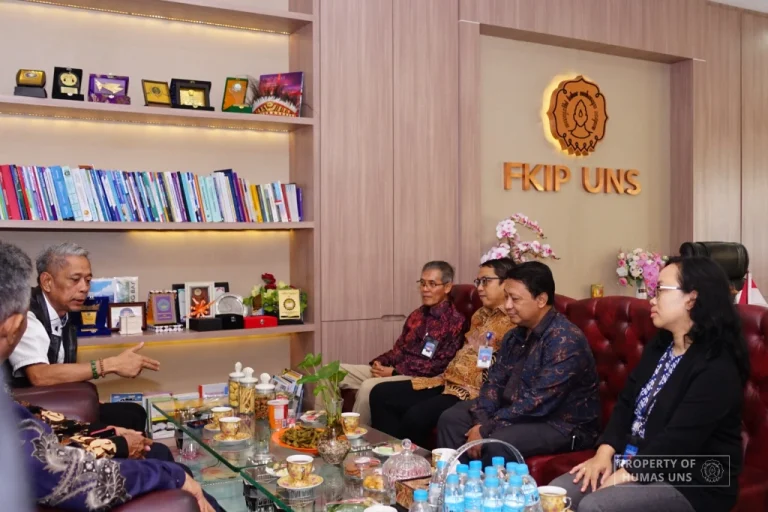
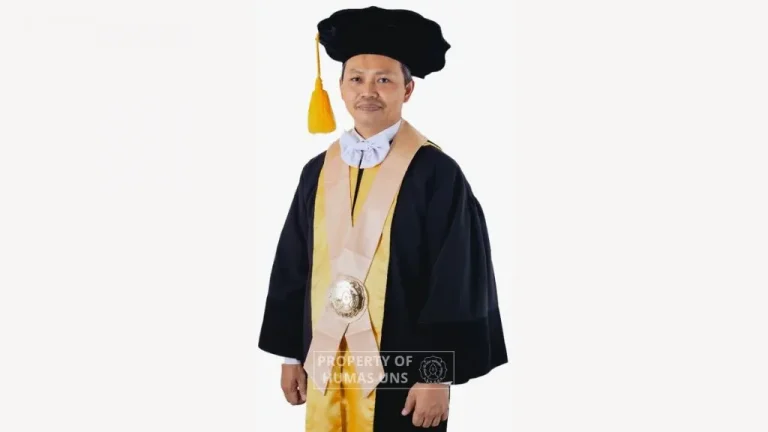
Responding to this, education observer, who is also a professor in the Faculty of Teacher Training and Education (FKIP), Universitas Sebelas Maret (UNS) Surakarta, Prof. Siswandari, said that the government needs to implement a graduation standard in each Region.
“I do not think it is enough because, in my terms, ‘there is no local standardization’. Based on my experience for 7 years all around Indonesia plus geographical considerations and the diversity of each region’s abilities, thus, I have 4 suggestions for the government,” said Prof. Siswandari, Wednesday (1/4/2020).
The first suggestion from Prof. Siswandari is the need for graduation standardization to be implemented in each District/City. Second, the graduation standard needs to cover several academic components where each component needs to have a standard, such as subject assessment standards chosen for each schooling level, standards of achievement outside of school subject that can be recognized as substitutes for subjects.
Third, the responsibility for standardization becomes the responsibility of the District/City Education Authority. Lastly, it is necessary to appoint a school that has good quality and qualifications to become a ‘sister school’ for the schools with relatively low qualification levels.
When asked about the option to determine the students’ graduation based on US score, Prof. Siswandari requests that the availability of a standardized exam question must be considered and is supported by a Human Resource (HR) that capable to implement online exam.
“The first and foremost concern for schools is the availability of standardized exam questions, the questions must be prepared by a team of teacher and then validated by an expert (not made by lecturers), online exam facility availability, and lastly the availability of HR who possess an appropriate capability to facilitate the implementation of online exam in each school,” explains Prof. Siswandari.
In the future, if the teaching and learning activities in schools remain constrained by the COVID-19 pandemic, Prof. Siswandari reminds the government regarding the importance of face to face lecture or offline lectures. One of the objectives is to instill noble character within the students, which is impossible to do through online lectures.
“If our government’s motto is ‘SDM Unggul Indonesia Maju (Excellent Human Resource Progressive Indonesia)’, I personally suggested offline lectures to develop the students’ noble character, because an excellent HR is not only about the academically excellent person, but also have high spiritual intelligence. They need to get trained until it becomes their lifestyle in the community. Students also need to have great nationalism to The Unitary State of the Republic of Indonesia and have complete integrity,” concludes Prof. Siswandari. Humas UNS/Yefta