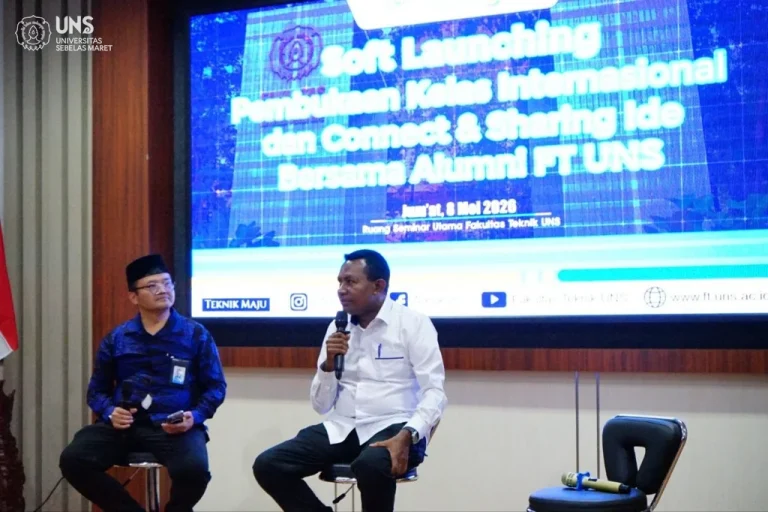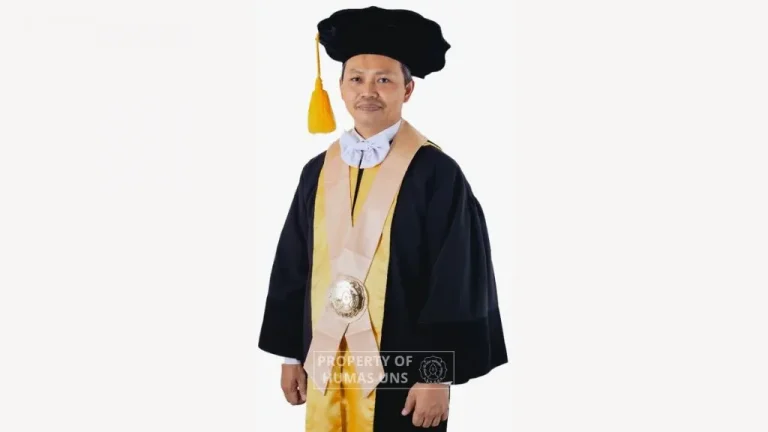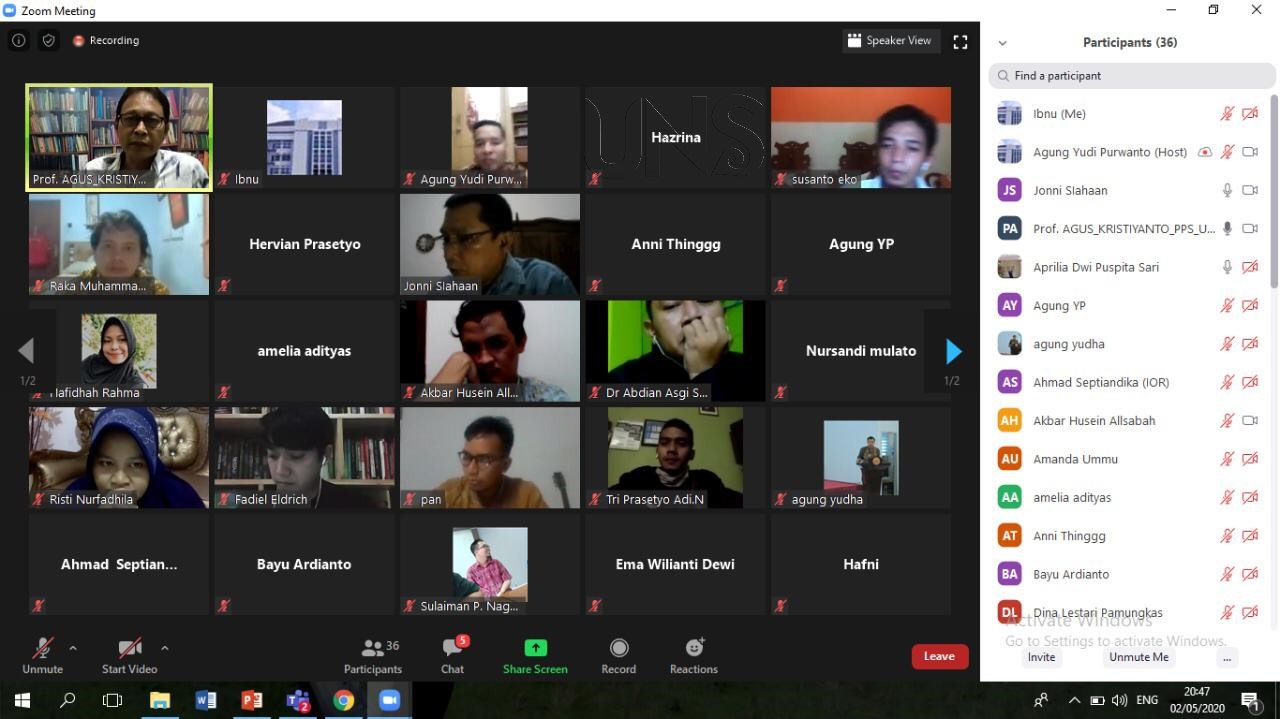
UNS – The Postgraduate Student Association (Himpunan Mahasiswa Pascasarjana – HMP) Universitas Sebelas Maret (UNS) Surakarta held a Smart Discussion (Ngobrol Pintar – NGOPI) under the Education Strategy Amid COVID-19 Pandemic theme with Deputy Director of Academic and Student Affairs Postgraduate Program UNS, Prof. Agus Kristiyanto as a speaker, on Saturday (2/5/2020) through Zoom Meeting application.
On the online discussion attended by 36 participants from various regions, Prof. Agus alluded to the topic of educating the nation.
“Educating people is easier than educating the nation. (We) should not be proud of the advancement of the education today, but (we) need to appreciate, this is a small homework. This is everyone’s homework, not just teachers, because the objective of education is to educate the nation,” stated Prof. Agus.
In a pandemic situation like today, people are expected to stay at home. This affects the education system which requires a strategy to maintain the quality of education amid the COVID-19 pandemic.
In the pandemic, the education system needs a systemic fix. There are interrelated components that when one component does not work, the system will not work. In education, all systems and components are equally important.
“Education teaches us that all of the components are important and functioned properly,” explained Prof. Agus.
In Law, there is only formal and non-formal education. Formal education as in schools, while non-formal education refers to education in the community. When pandemic struck, people only learn at home. This reminds all education components of informal education, namely family.
The role of parents is highly needed, they have to become teachers for their children. Children learn from parents, one on which is concerning character education. Parents have a significant role in building children’s characters. When they learn at home, external empirical facts need to be brought inside through tools, for example, online learning or communication. It turns that online learning has a less desired socio-emotional effect compared to offline learning. The socio-emotional aspect will be built better through direct communication.
At the end of the session, Prof. Agus provided a closing statement with using fly’s eyes and bee’s eyes analogy. The difference that can be found in both insect’s eyes is that fly’s eyes only focus on waste matters that are badness. Different from the bee’s eyes which is always focused on good things even though it is in a dirty place. This is similar to education; as a locomotive view that makes human becomes a ‘bee’s eyes’ which always focused on goodness.
“If we are succeeded in provoking all people to see to the good things, the education will be succeeded and interesting, and this is in line with our objective, to educate the nation and we are the component. Therefore, together we polish (ourselves) to educate the nation. The criteria of an excellent nation are when we can live independently, competitive, and resilient in all situations, especially in facing the pandemic,” Prof. Agus closed. Humas UNS/Zalfaa