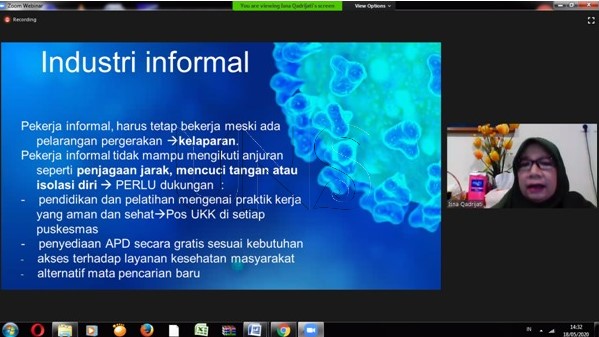
UNS – The implementation of social movement limitation in the Coronavirus Disease 2019 (Covid-19) pandemic has caused a drastic change in the industrial world which in turn affects the economic stability of the workers. However, there is another aspect that demands further concern for companies that operate amid the pandemic: The Occupational Health and Safety (Keselamatan dan Kesehatan Kerja – K3) of workers. This also includes K3 for informal workers that consists of 61% of total global workers.
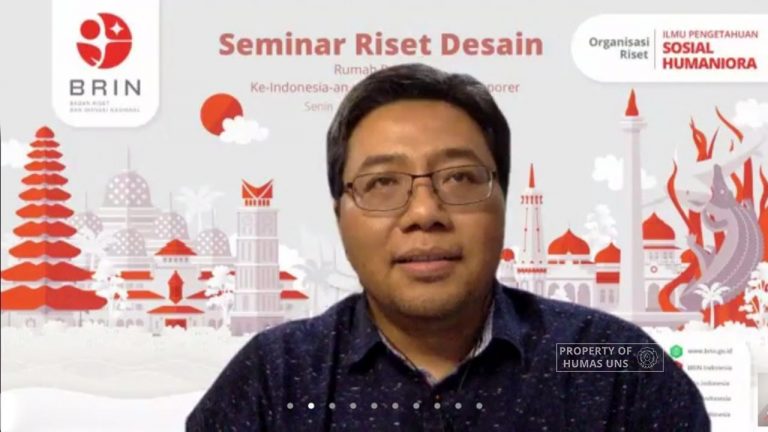
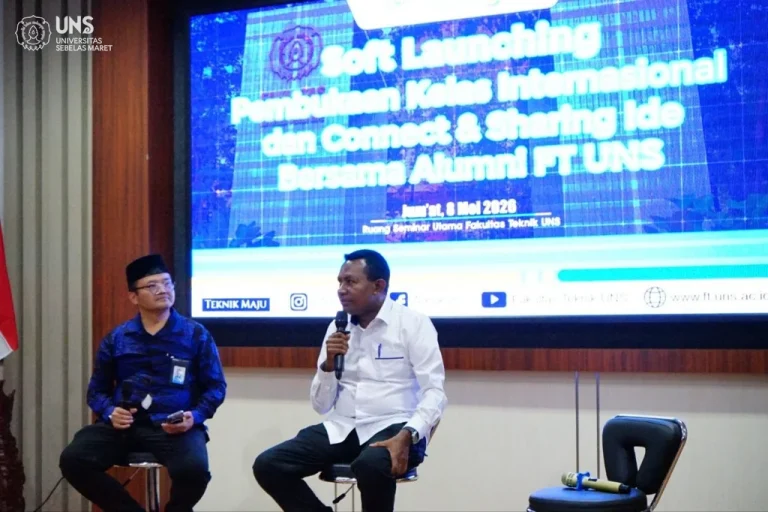
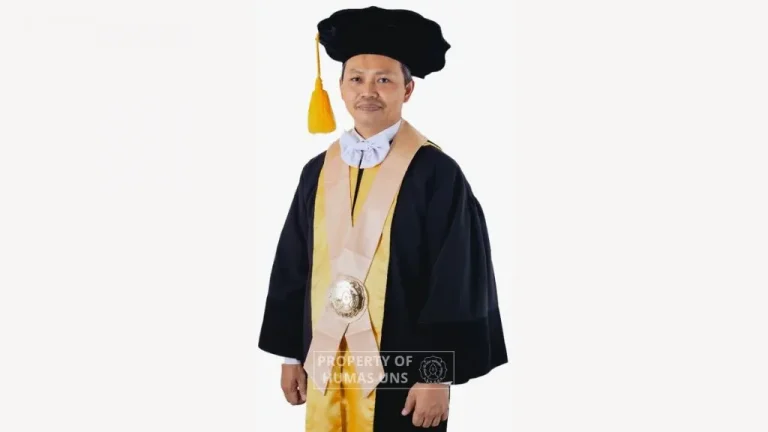
Dr. Isna Qadrijati, the Head of Diploma 4 K3 Program of Universitas Sebelas Maret (UNS) Surakarta described the steps for prevention and mitigation of work safety amid the Covid-19, both for formal and informal workers in the “Vocational Coaching Corner – Special Series” held by Vocational School (SV) UNS together with Anif Nur Artanti, S.Farm., M.Sc., Apt, the Head of D3 Pharmacy UNS as speakers. The coaching corner took the theme of “Maintaining Prime Condition during Pandemic”.
First, Dr. Isna explained the steps that can be taken by the formal industry sector such as conducting a communication among business owners and employees on the sustainability of the business, ensuring the control measures, and integration of emergency preparedness in the K3 Management System (SMK3). The integration of SMK3 according to Dr. Isna, can be in the form of the establishment of risk prevention and control measures, including K3 socialization to employees from practitioners and planning of diverse scenarios to face an emergency.
“In the formal industry or large industry, the socialization from K3 practitioner can be done easier because (the industry) has good management. But for MSMEs, for example, we can (conduct) socialization to the business owners, of which the material from us will be delivered independently by the business owners to their employees,” she explained Monday (18/5/2020).
Dr. Isna stated that there five points that need to be considered by formal employees to work under the current condition. First, develop cleanliness and hygiene as the key element to break the chain of transmission by regularly cleaning the surface of desks, door handles, office phones, and other workpieces with disinfectant.
“This kind of prevention strategy must be done continuously. It can even become a lifestyle of Indonesian society. Such as regularly cleaning of work desks, office telephone handles, door handles, and others,” Dr. Isna stated.
Under the International Labor Organization’s (ILO) Occupational Safety and Health Convention, the availability of supporting equipment for workplace hygiene is the main responsibility of the business owner. Employers must ensure the workplace is in a safe condition, the availability of a hand sanitizer, and strive for the implementation of physical distancing.
Second, creating physical distance; third education on the correct use and disposal of PPE; fourth, training and communication; fifth, conduct risk control based on each employee’s needs. This is because the needs of one part with another part are certainly different as the conditions of each field.
The Faculty Member at the Vocational School UNS gave an example of frontline emergency response workers who have different risks compared to the basic service workers and employees in high-density workspaces. The first type of worker is the hospital medical personnel, laboratory personnel, corpse care workers, and janitors as well as waste management in health care facilities. This type needs risk control in the form of environmental control and engineering to reduce the spread of pathogens and surface contamination of objects. As for the second type worker, they need management actions such as mandatory quarantine, service and business closures, even factory closures, because, this type of work has a very high risk of transmission, where workers with customers or other workers can be so close.
Further, Dr. Isna also highlights the vulnerable workers and have higher K3 risk but do not have appropriate PPE, such as janitor and sellers in the market or peddler who has to work outdoor.
“They need our support. In the traditional market, the traders need socialization on how to work healthily and safely from K3 practitioners. Then, at least local village government can provide mask as PPE and provides access to the public healthcare service,” Dr. Isna said.
K3 practitioners have a strategic role in the socialization. They are the key actor to provide access to information for the company’s workers and management concerning K3 during the pandemic. They also play a role in the development or revising plans for prevention, detention, mitigation and recovery. Isna wishes that UKK post at the Public Healthcare Center (Puskesmas) can work actively and is on standby to provide the best health care services during the Covid-19 pandemic.
“Many aspects need to be put together to reduce the impact of the health crisis during the Covid-19 pandemic in the world of work. Occupational Safety and Health remains a major investment to protect workers’ health and ensure business continuity,” she concluded. Humas UNS/Kaffa