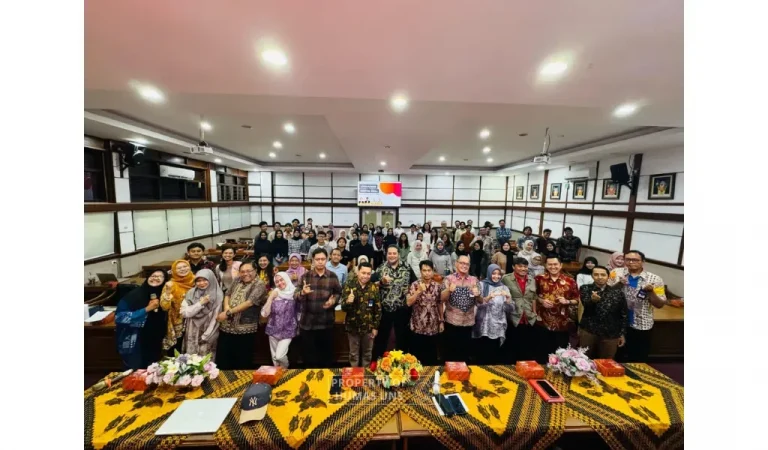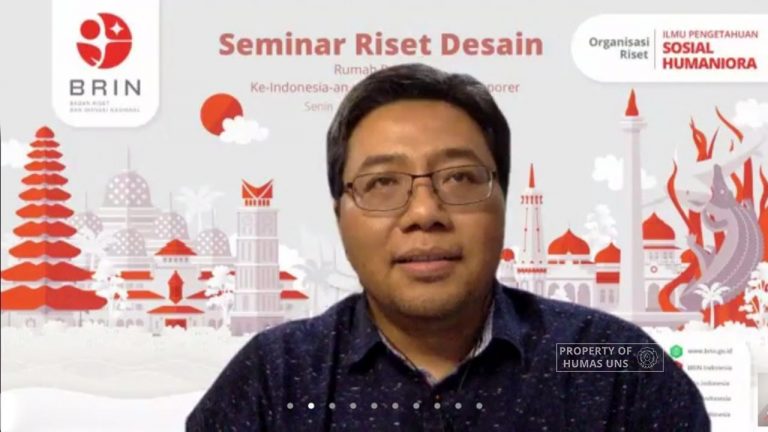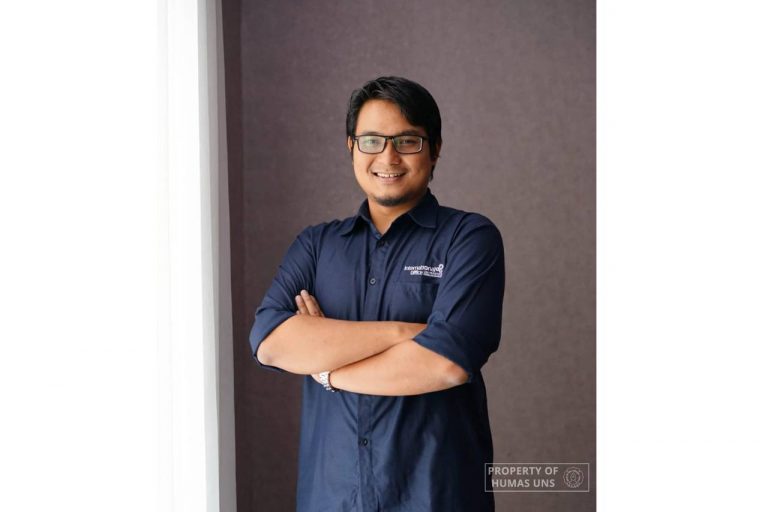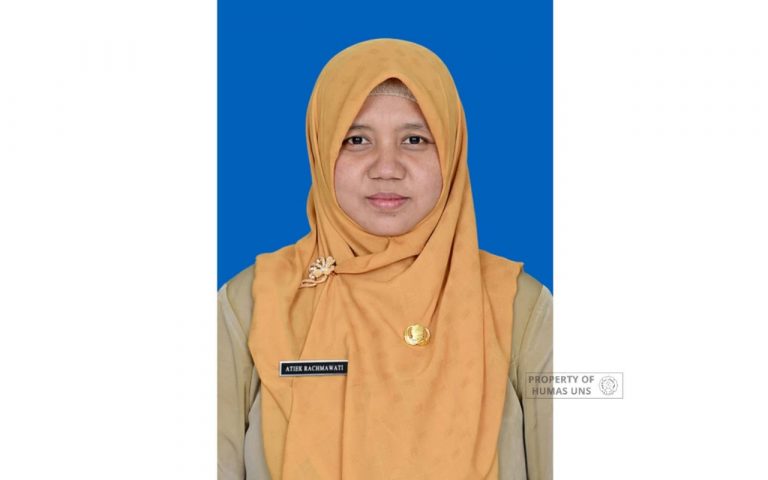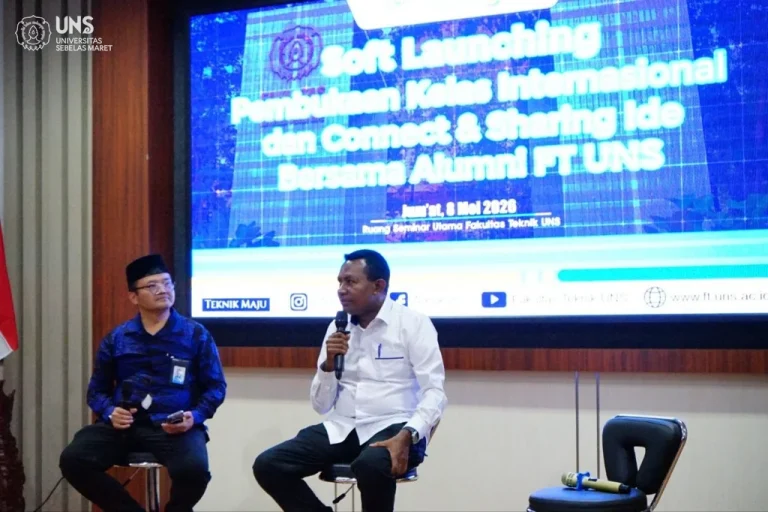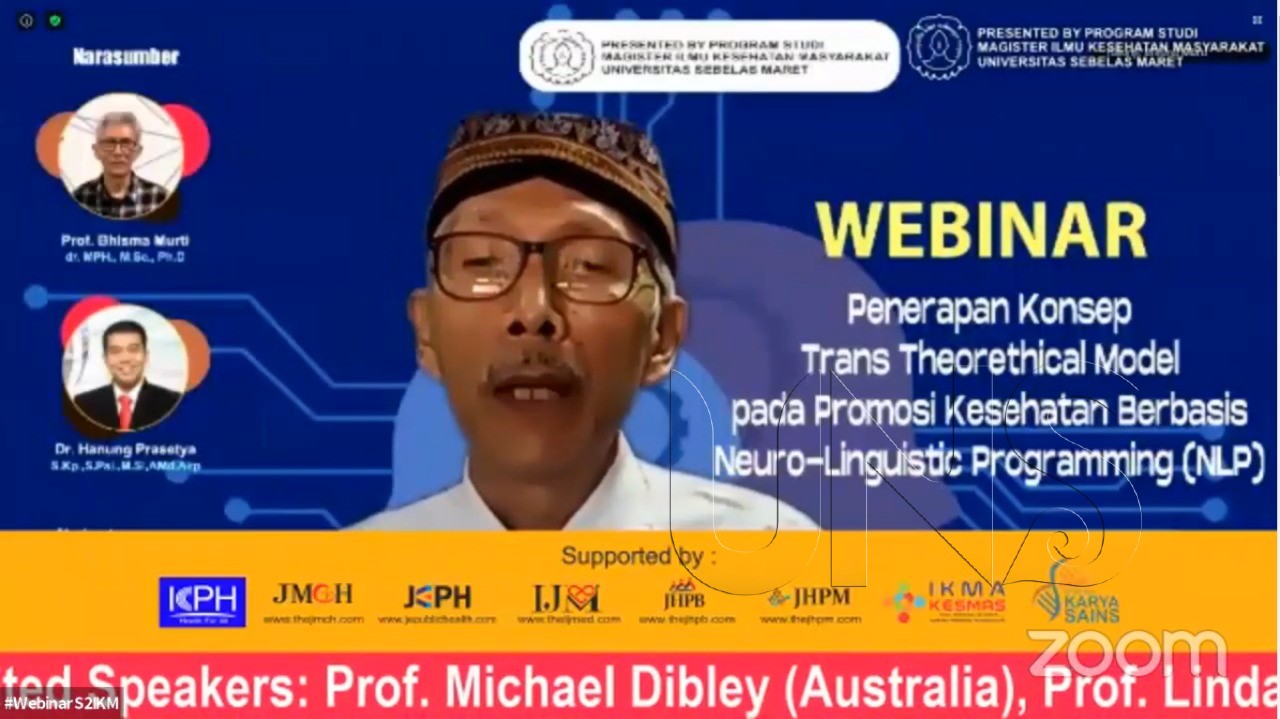
UNS – The Magister Program on Public Health (Ilmu Kesehatan Masyarakat – IKM) Universitas Sebelas Masyarakat (UNS) Surakarta hold a webinar on the Implementation of Trans-Theoretical Modal on Health Promotion based on Neuro-Linguistic Programming (NLP); Saturday (4/7/2020) shared through Zoom Meeting application and YouTube live stream. The moderator of the event was dr. Farahdila Mirshanti and two invited speakers, the Head of IKM program, Prof. Bhisma Murti and Dr. Hanung Prasetya from Poltekkes Kemenkes Surakarta.
The webinar was attended by more than 500 active participants in Zoom Meeting and around 200 viewers in YouTube channel from various universities. Attending the event was, the Director of UNS Postgraduate Program, Prof. Sutarno who conveyed his appreciation for the IKM program and participants in his opening remark. He also mentioned the importance of public awareness of health.
“In the pandemic, we need a way to make people aware of how to implement changes. For academics, it is not limited to health, but also implementing changes so that the learning, research, and community service activities in the campus follow the health protocol and in turn, it will maintain our health. Changing our behavior is not an easy task because it goes through stages, from plan to comprehension to action, and continuity,” he explained in his remark.
The webinar is relevant to the pandemic considering the importance of preventive and promotive actions against disease, especially Covid-19. If emphasize is not put on the preventive and promotive efforts, the health system will be overwhelmed to take care of the incoming patients. In his material, Prof. Bhisma Murti conveyed that health promotion is a proves to empower individual, group, and community. It aims to identify health problems in the population and to control the existing resources to solve the problems.
“Trans-Theoretical Model or TTM for health promotion is a biopsychosocial model which combines various theories of behavior change that describe the stages of behavior change and provides strategies for making behavioral changes. TTM consists of four main constructs, stages of change, balance in decision making, the process of change, and self-efficacy,” he explained.
Besides that, the Trans-Theoretical Model also integrates several theories, three of which are the theory of planned behavior, social cognitive theory, and health belief model. Prof. Bhisma juga also explained that the theory of planned behavior, behavior does not occur in instant but begins with an intention or plan.
“In the social cognitive theory, behavior is formed through observational learning, a person does something from seeing or observing others around her/him. In the health belief model, healthy behavior is affected by several constructs, perceived benefits and perceived barriers to performing the behavior. The relationship among the three is the reciprocal relationships that affect each other or are referred to as reciprocal determinism,” he added.
Dr. Hanung Prasetya delivered material on the application of neuro-linguistic programming and hypnosis in increasing the effectiveness of health promotion. Neuro-linguistic programming can be considered as a technology that learns one’s internal structure and the way the structure can be designed for a purpose that is beneficial to that person. NLP also mentioned about the modelling which means a person with an incompatible internal model can remodel it or copying another internal model that they expected. One’s internal world affects their experience in the external world; thus, the basic principle is to develop a subjective design of one’s internal world to achieve the desired external results.
Neuro is a way of thinking, a mean to take information from the outside world, filtering, processing information, producing responses, and others. In the neuro, diverse rights are used to think and act, or the reality map and world model. Both based on what one’s learned and knew in their life, thus, it is subjective.
“Linguistic is a language, a way to process language, and language used internally or externally. This language affects thoughts and language, but it also affects the way of thinking. Programming is various programs or strategies in thinking and behaving, this is a stage in thinking and acting,” he added. Humas UNS
Reporter: Bayu Aji Prasetya
Editor: Dwi Hastuti