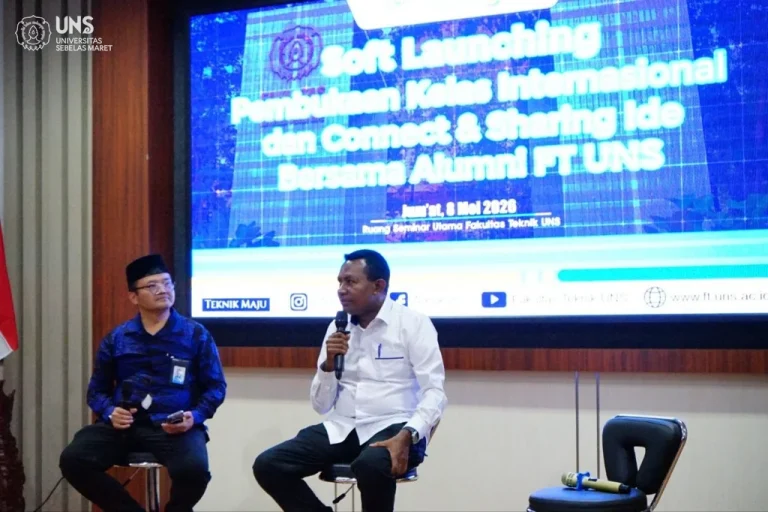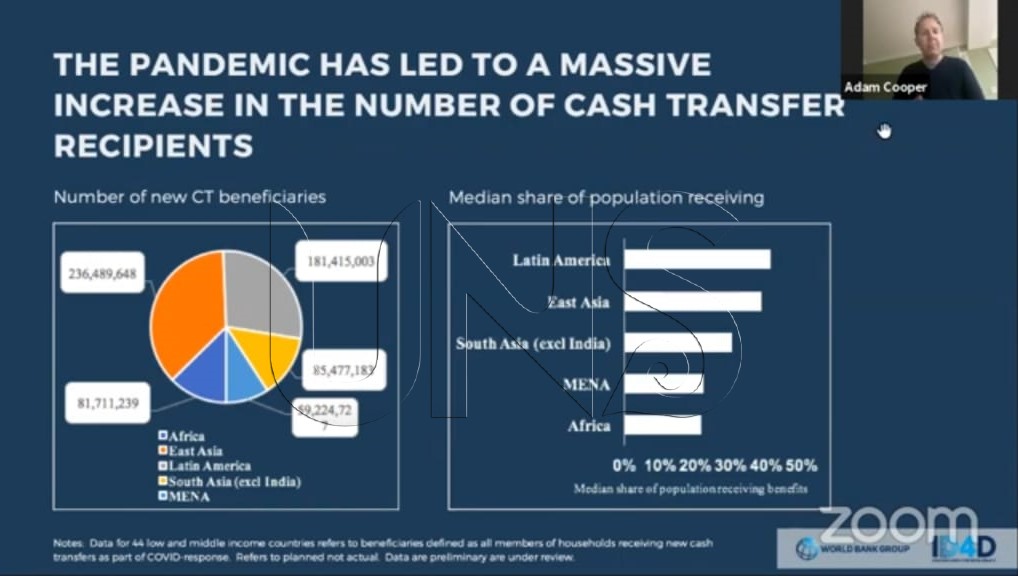
UNS – The Demographics and Civil Registration Diploma Program (D-IV) School of Vocational Program (SV) Universitas Sebelas Maret (UNS) Surakarta invited Senior Program Officer Identification for Development (ID4D) World Bank, Jonathan Marskell and Global Digital ID Expert, Adam Cooper, in DPS Talk on “Transformation on Population and Civil Registration amid the Pandemic” Friday (17/7/2020). The webinar discussed digitalization performed by the Directorate-General of Population and Civil Registration (Ditjen Dukcapil), especially amid the Covid-19 pandemic.
In front of the participants who join the webinar through Zoom Cloud Meetings, Jonathan Marskell delivered his material on “Digital Identity and Trust as Part of the Covid-19 Response”. He stated that his organization has supported several countries to utilize the identification system, including population data to support the development process. In this case, Jonathan Marskell said ID4D World Bank paid attention to the level of welfare or prosperity of the community and Sustainable Development Goals (SDG’s).
“More than 1.2 million people in the world have no identification in the form of an ID card or residence identification number. We add these up annually and half of them are from Indonesia,” Jonathan Marskell stated.
Jonathan Marskell also stated that his institution has collaborated with Ditjen Dukcapil since 2018. This collaboration includes assistance for Ditjen Dukcapil and sharing Indonesia experience in the field of Dukcapil to other countries. Continuing the explanation from Jonathan Marskell, Global Digital ID Expert, Adam Cooper, stated that the Covid-19 pandemic has worsened and complicated certain problems. For example, direct transaction, people limit their travels, carrying cash and working with many people, and health care and other services experienced greater pressure, even though these all highly depends on country condition.
The problems occurred from Covid-19 pandemic, according to Adam Cooper, have diminished inventory due to the limited number of available employees and limitation of travel. There was great expenditure occurred by a country in handling Covid-19 pandemic. Adam Cooper noted that 80% of the government budget is utilized to fulfil people’s needs. He also underlies steps taken by several countries that digitalized their public services. In his opinion, governments need to transform their public services.
“Pandemic has put a barrier in distributing services, through the demand increases. Services do not need digitalization, but transformation. We cannot always rely on paper documents to perform proper checking on the grounds of avoiding direct checking. The use of digital evidence for the identity and reliable data should become a necessity,” Adam Cooper continued.
Adam Cooper provided an example that in the European Union, several parties have paid attention to the consequences of the Covid-19 pandemic on daily life and economic activities, including new technology to assist communication between individuals who work from home and facilitates students during long-distance learning.
The event was attended by the Governor of Central Java, Ganjar Pranowo, Rector of UNS Prof. Jamal Wiwoho, Dirjen Dukcapil Kemendagri, Prof. Zudan Arif Fakrulloh, and Vice-Dean for Students and Alumni Affairs Faculty of Law (FH) UNS, Dr. Isharyanto. Humas UNS
Reporter: Yefta Christopherus AS
Editor: Dwi Hastuti