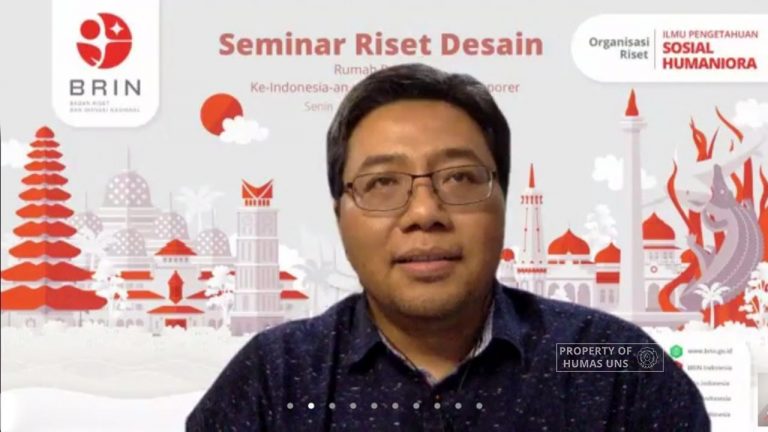
UNS – The professor of Universitas Sebelas Maret (UNS) Surakarta and the Director of Master Program in Public Health Science (IKM) UNS, Prof. Bhisma Murti discussed the supply and demand of healthcare services. The speech was delivered in the Supply and Demand of Healthcare Service webinar held by the Master Program in Public Health Science on Thursday (3/9/2020).
Demand and supply have a close relationship with healthcare services. The production of health services can be carried out by hospitals, health centers, clinics, midwives, and medical laboratories. Healthcare services used in health production will result in health. The producer is us, each individual, and not limited to health practitioners. Health producer uses inputs such as healthcare services, diet, exercise, environment, income, and time to produce health.
This will affect community health, it is better to have a full year of healthy days, instead of having 1 or 2 sick days. The community demands healthcare services with the final objective of derived demand for health. Prof. Bhisma added that in the law of demand, the quantity of demand, including for healthcare, is affected by various factors. Price is one of these factors, when price increases, demand will decrease, and vice versa.
Consumers or patients will increase their demand on healthcare if prices go down, for example, then healthcare service is funded by Badan Penyelenggara Jaminan Sosial – BPJS (Social Security Administrator). He explained that this is because the community wants to maximize the benefits of satisfaction and considering the law of demand on the demand curve or what is called the marginal utility curve.
“Elasticity means a slight change in price will lead to significant changes in the quantity of demand for healthcare services. If the price has a strong influence on healthcare demand, then it is elastic,” Prof. Bhisma explained.
Prof. Bhisma added that the price elasticity demand (PED) for the perfectly elastic price is unlimited. Another extreme elasticity is perfectly inelastic, with PED of 0, which means that the quantity of demand asked by a patient is independent of price. For example, drugs or emergency services that can safe patient’s life and has no substitute. Humas UNS
Reporter: Bayu Aji Prasetya
Editor: Dwi Hastuti