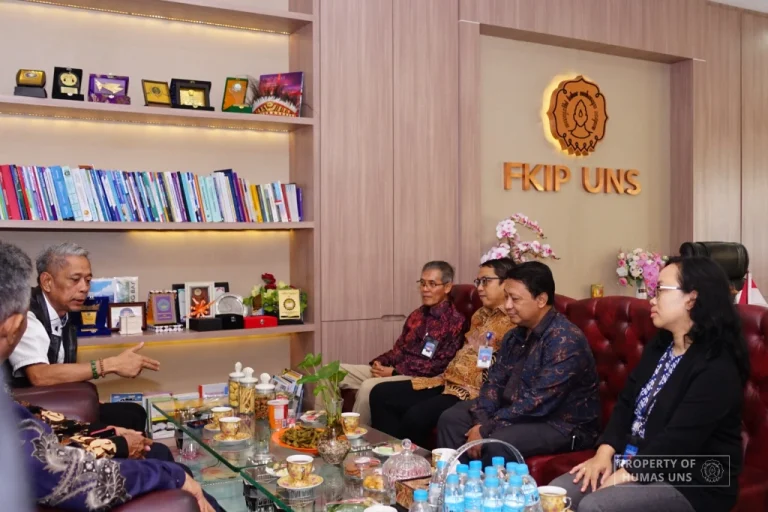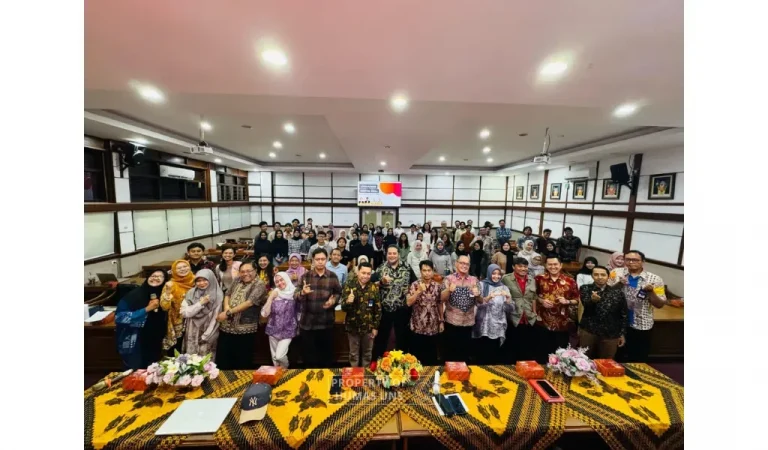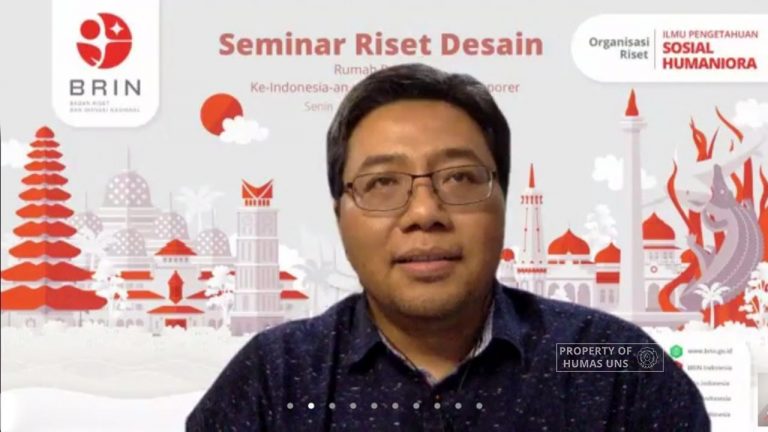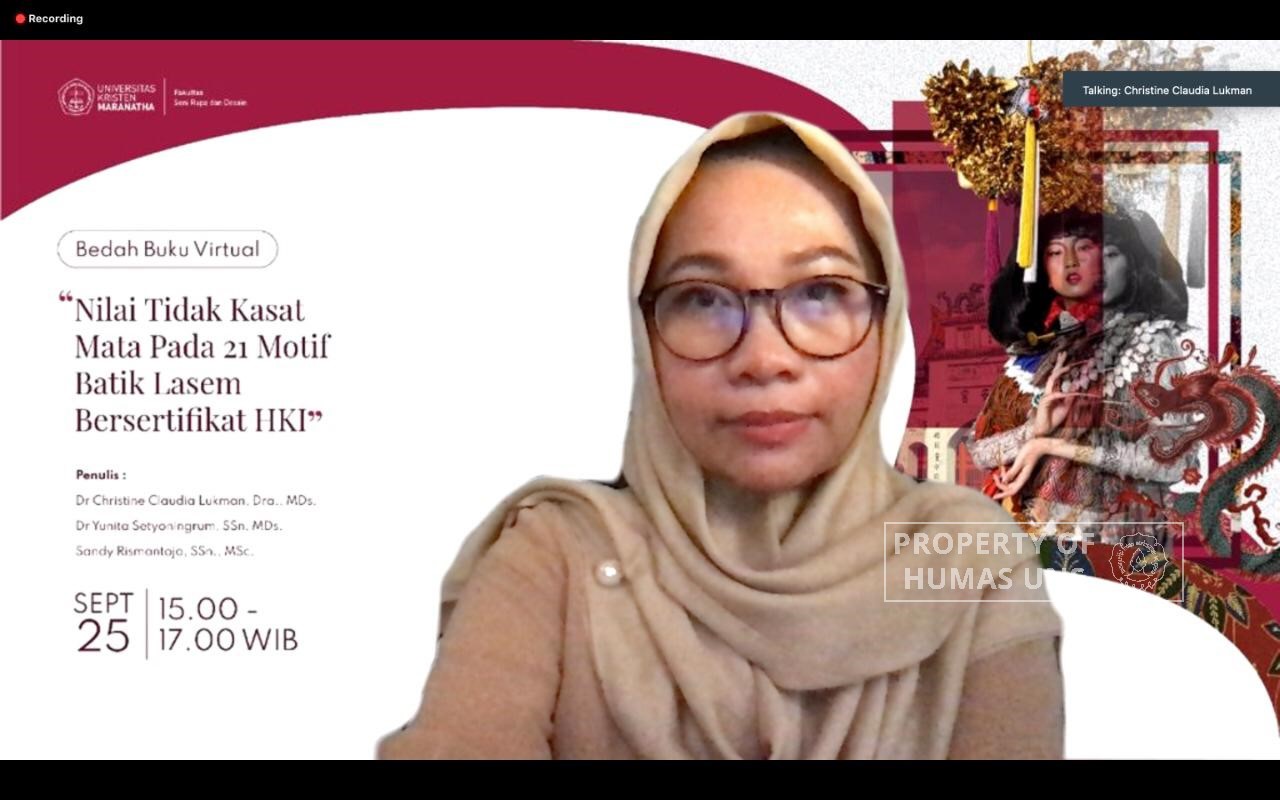
UNS — Lecturers from the Architecture Engineering Study Program, Faculty of Engineering (FT), Universitas Sebelas Maret (UNS), Surakarta, are joining as one of the panelists in the virtual book review entitled ‘Intangible Values in 21 Lasem Batik Motives with HKI Certification’ that organized by Faculty of Art and Design, Universitas Kristen Maranatha and the Center of Chinese Diaspora Studies (CCDS)-LPPM Universitas Kristen Maranatha. This event was held on Friday (25/9/2020) evening through Zoom Cloud Meeting.
On this occasion, Dr. Eng. Kusumaningdyah, NH, ST., MT., as the Head of Laboratorium Urban-Rural Design and Conservation (URDC Labo) Architecture Engineering Study Program UNS, reviews a book written by Dr. Dra. Christine Claudia Lukman, M.Ds., Dr.Yunita Setyoningrum, S.Sn., M.Ds., dan Sandy Rismantojo, S.Sn., M.Sc. According to Dr. Kusumaningdyah, this book is interesting to be reviewed. “There are 21 batik motifs with HKI certification and its impacts are interesting. As well as the intangible value from the Lasem batik as discussion material object is interesting to be reviewed,” Dr. Kusumaningdyah explains.
The structure of the book discussed covers the substance, layout, and redaction of the book. An object can have a meaning if it is directly related to a subject under a subject consciousness. Therefore, meaning can never be singular. Dr.Kusumaningdyah suggests the concept of “cultural landscape heritage (pustaka saujana)” can be considered as an explanation in this book. The concept of saujana Lasem has significantly affected the meaning of the intangible value of Batik Lasem. A cultural landscape is a complex phenomenon that has a tangible and intangible value. This value of excellence can be contained in heritage resources, regional history, distinctive geography, and the socio-cultural life of the people. The meaning of the batik motif is influenced by the value span of pusaka saujana Lasem.
Dr. Kusumaningdyah herself has conducted research on the Lasem Batik cluster since 2016. Afterward, she initiates a promotion activity entitled ‘Kesengsem Lasem (Fall in love with Lasem)’ in collaboration with Lasem Heritage Foundation. The foundation is focused on pusaka saujana Lasem conservation.
The batik meaning is affected by the layer of Lasem history in Indonesia. In the beginning, the Lasem region is known as Corong Candu during the nineteenth century, also known as the City of Batik, City of Islam Student, City of Salt, and Maritime City. This city was established by several layers of historical periods, namely prehistoric, Buddhist – Hindu, Chinese, Javanese, colonial, Japanese, and also Indonesia. This acculturation affects the intangible meaning of the batik.
Further, Dr. Kusumaningdyah explains that the batik technique was introduced in the 15th century. Lasem batik motif is also influenced by the symbolic patterns of the Chinese community tradition, side by side with Lasem, Javanese, and European motifs. During the Dutch colonial period, Lasem is famous for the ‘kembangun’ motif or flower motif that inspired by Chinese traditions bouquets as reported in the article entitled Hetsenuit Oast – Java. The batik industry in Lasem faced a downturn in the 1970s, and in 2009 UNESCO established batik as Masterpieces of the Oral and Intangible Heritage of Humanity. Until it affected the revival of the batik industry in 2018.
The book is a result of research dissemination funded by a grant from the Ministry of Research, Technology, and Higher Education in 2018-2019. Popularly packed with an attractive layout accompanied by the examples of Batik Lasem fashion, this book is aimed at the young generation as documentation of Batik Lasem’s repertoire that is easy to read. The conservation effort as well as Batik Lasem promotion efforts are made here to preserve Batik Lasem and the Batik Lasem industry environment. Humas UNS
Reporter: Zalfaa Azalia Pursita
Editor: Dwi Hastuti