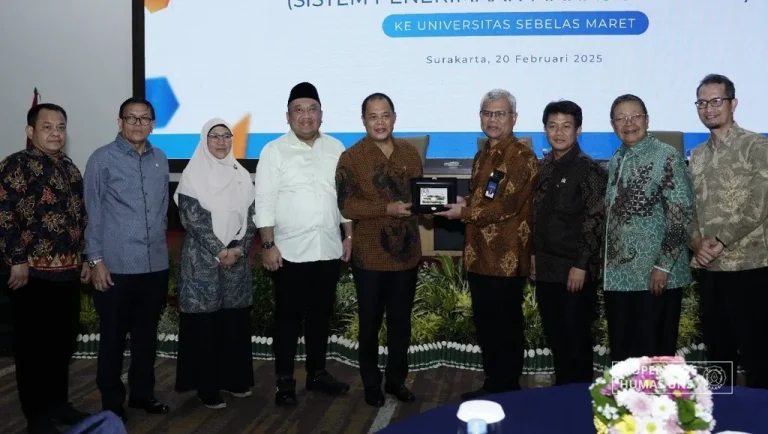
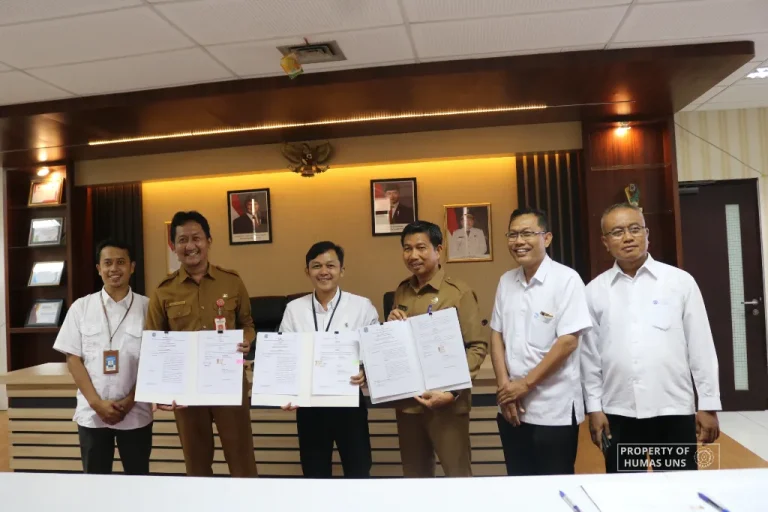
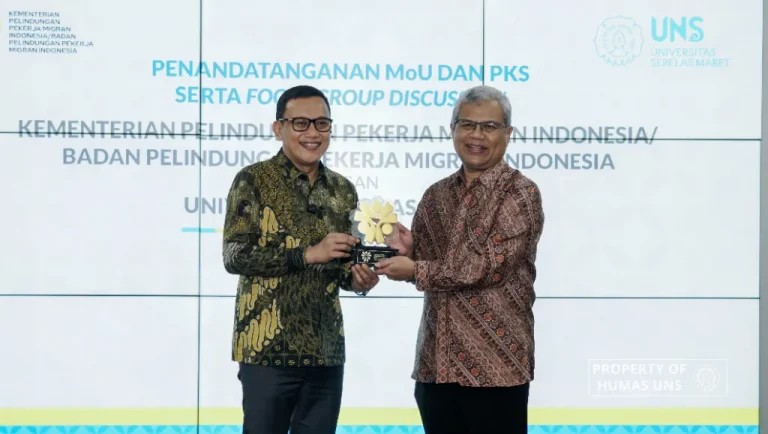
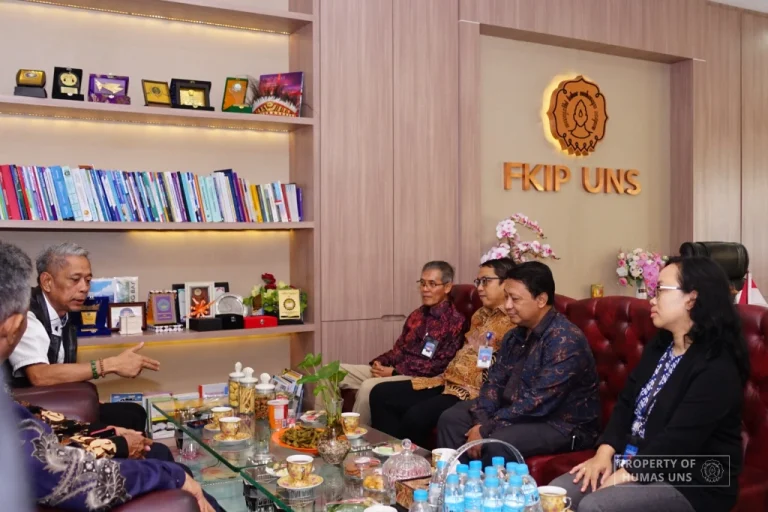
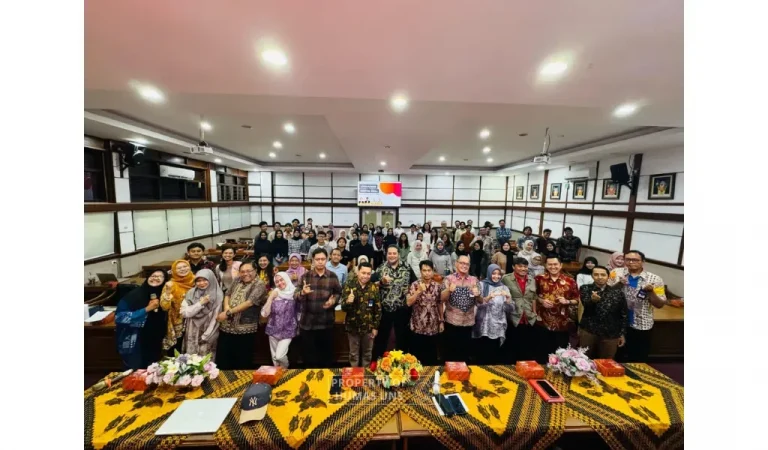
UNS — The Ministry of Manpower the Republic of Indonesia (RI) visits the Center for ASEAN Study (PSA) Institute for Research and Community Engagement (LPPM) UNS for a Coordination, Data Collection, and Inputs for the Implementation Plan of ASEAN Consensus ACMW Action Plan 2021-2025. Represented by Gitmawati Rahmadewi (Conveyer of the Ministry of Manpower RI), Ratri Nurinda (Foreign Collaboration Analyst for the Ministry of Manpower RI), and Atik Widayani (Collaboration Material Drafter Domestic Institution of the Ministry of Manpower RI), the visit took place in PSA office in LPPM UNS Building, Thursday (5/11/2020). Ign. Agung Satyawan, Ph.D., and Andriko Sandria, M.A., as peer-group and representatives from PSA LPPM UNS, welcome the representatives.
Andriko Sandria mentions that the visit from the Ministry of Manpower aims to get inputs and suggestions from the academicians in PSA LPPM UNS related to the children education whose parents are migrated to the ASEAN region. The representatives of the Ministry of Manpower during the discussion session states that the Ministerial has had programs designed for this matter, namely the Productive Migrant Village Pilot Project (Desa Migran Produktif-Desmigratif). However, this Demigratif program needs further development and program implementation evaluation.
Education for Children with migrants parents, according to Andriko, need mapping/identification for migrants children in ASEAN regions, whether the children follow their parents’ migration or staying in their place of origin. Moreover, treatment standardization within the ASEAN region related to the education of children with migrants parents is essential to establish the appropriate framework, considering that there is a different standard among ASEAN country members.
Concluding the discussion, Ign. Agung Satyawan, Ph.D., states that mapping/identification for the children with migrant parents should be focussed in the Indonesia Migrant Workers enclave. Through this measure, the government can determine the children who need the most educational assistance or support. There must be an awareness from the smallest sector, such as the Regional Education Office, which can start the establishment of a community to encourage education for children from migrant parents and to reduce the probability of dropouts. “Therefore, children who follow their migrant parents or left at their place of origin, can have their rights on the access to education,” explains Ign. Agung Satyawan, Ph.D.
This visit also discusses the pre-departure training for Migrant Worker in the ASEAN region. The suggestion provided by the PSA LPPM UNS is related to the addition to the training curriculum regarding Migrant Workers’ safety awareness and the need to establish an ASEAN regional standard. At the end of visitation, PSA LPPM UNS realized a need for further research in developing appropriate programs for the benefit of Migrant Workers in the ASEAN region. Humas UNS
Reporter: Dwi Hastuti