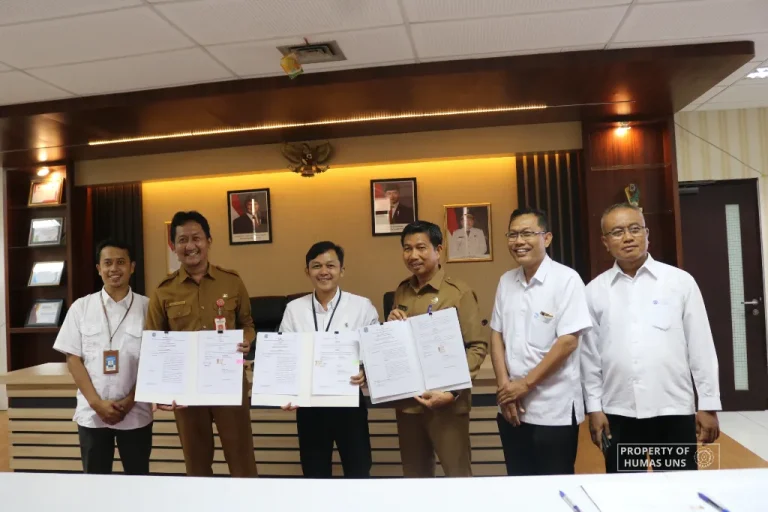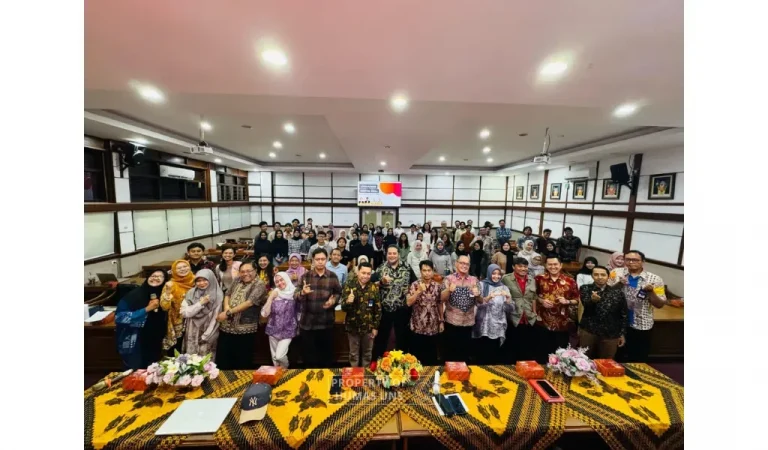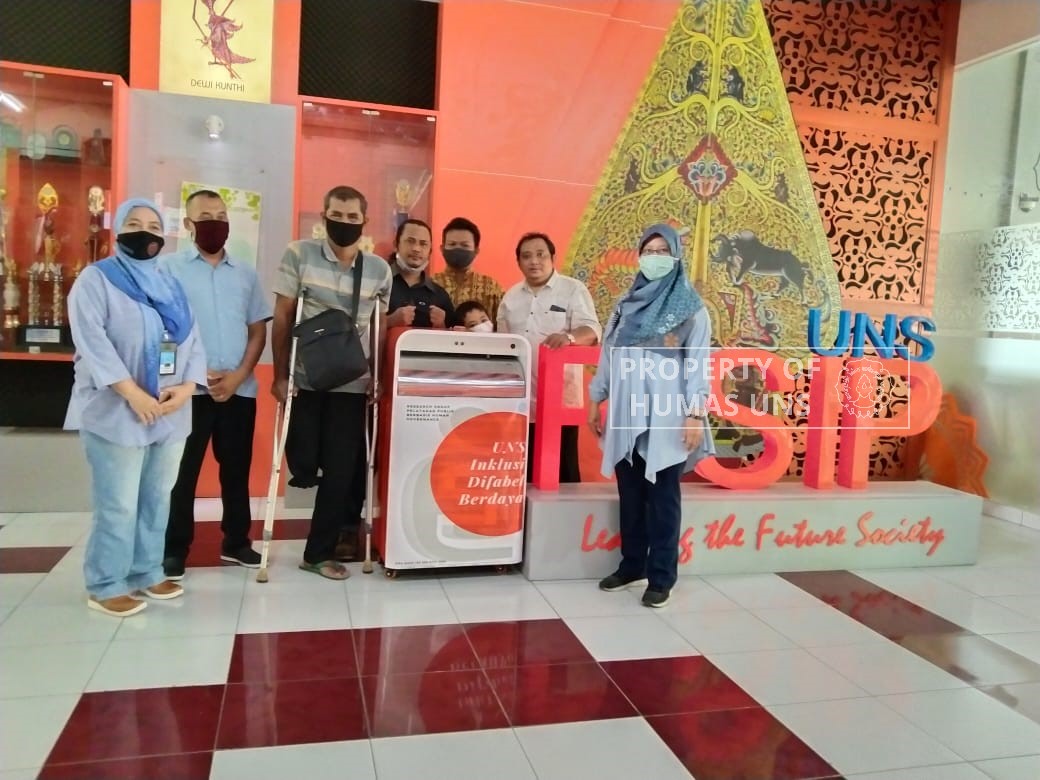
UNS — Community Service Team from Research Group (RG) Human Governance based Public Services Faculty of Social and Political Sciences (FISIP) Universitas Sebelas Maret (UNS) Surakarta and Solo Mandiri Disability Community handed smart dustbin to UNS, Tuesday (15/12/2020). The dustbin named “Difa Elektra” was granted to UNS as a form of community service outcomes and to commemorate International Disability Day on 3 December.
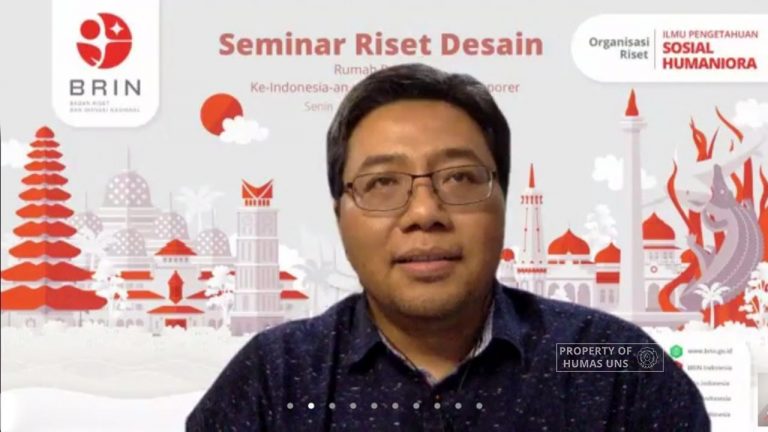
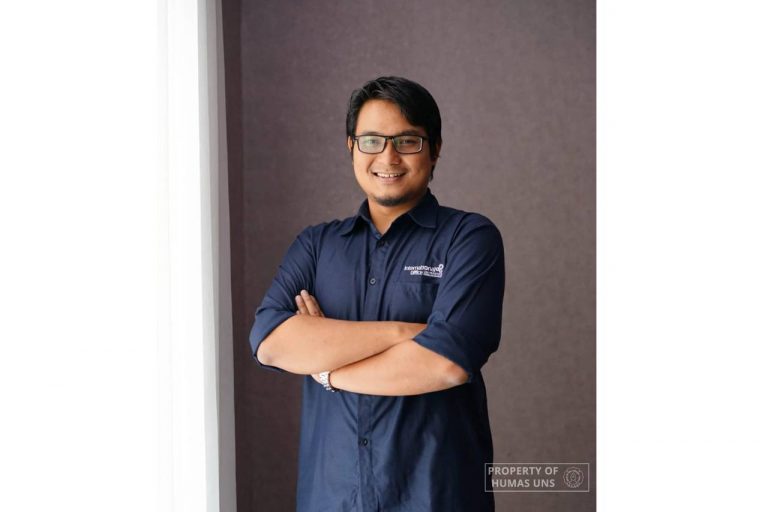
“Mainstreaming Disability through Difa Preneurship Literacy” is the title of the community service program conducted by the research team, Dr. Rina Herlina Haryanti and Sudaryanti, M.Si. The Coordinator, Dr. Rina Herlina Haryanti stated that the community service program was implemented in collaboration with Solo Mandiri Disability Community, represented by Heru Sasongko as the Person in Charge. “The three smart dustbins were placed in FISIP, LPPM, and Rectorate Building dr. Prakosa UNS,” Dr. Rina explained Friday (18/12/2020).
Dr. Rina added that this program was supported by the grant from Non-Tax National Income (PNBP) UNS. The collaboration was established based on previous research findings on Difashop Digital Platform to empower people with disabilities in Solo. The results pointed out several factors that lead to the platform’s ineffectiveness. “Some of the factors are because the community does not know the platform and the stereotypes of disable people,” Dr. Rina.
Further, Rina added that Difashop offers around 50 products for people with disability; Difa Elektra is one of the products offered on the platform. Difa Elektra, their leading product that has won innovation product competition in Surakarta. to introduce this device, the team took two approaches, Community Governance and Mainstreaming Disability. Community governance is an approach to improve community capacity based on linking and networking. This approach aims to empower people with disabilities because when they sell their products, they will generate income and improve their capability. This process will eliminate the stereotype that links disability with charity receiver. Mainstreaming disability is an approach by including written literacy “UNS Inklusi Difabel Berdaya” (Inclusive UNS for Empowered People with Disability), emphasizing UNS inclusivity and willingness to work with and use products from people with disability.
The smart dustbin was designed to be disability-friendly, using sensors to automatically open and close the lid and provide audio instruction for users in a radius of 75 cm. This system will help blind people find dustbins around them, while the automatic opening and closing sensor will assist people with a physical disability in their wheelchair. The dustbin also supports the Green Campus program because it has separate organic and non-organic wastes. It is also equipped with Wi-Fi to notify the janitor when the bin is full. Lastly, Difa Elektra is a dustbin with mainstreaming disability literacy with voice recording to educate people on the use of ‘difabel’ (different ability) and not people with disability. The tagline on the front part of the dustbin also invites people to support social inclusion and UNS efforts to be inclusive.
However, this product still requires improvement. Dr. Rina stated that it is currently relatively expensive, the design can be improved, and the size can be reduced. Some buttons are not automatic, such as the volume button and the setting for opening and closing the lid. The voice recording also can use some improvement.
“Hopefully, in the future, UNS can provide a workshop room for this community. So that they have a special room to produce and offer their products,” Dr. Rina stated. HUMAS UNS
Reporter: Ratri Hapsari
Editor: Dwi Hastuti