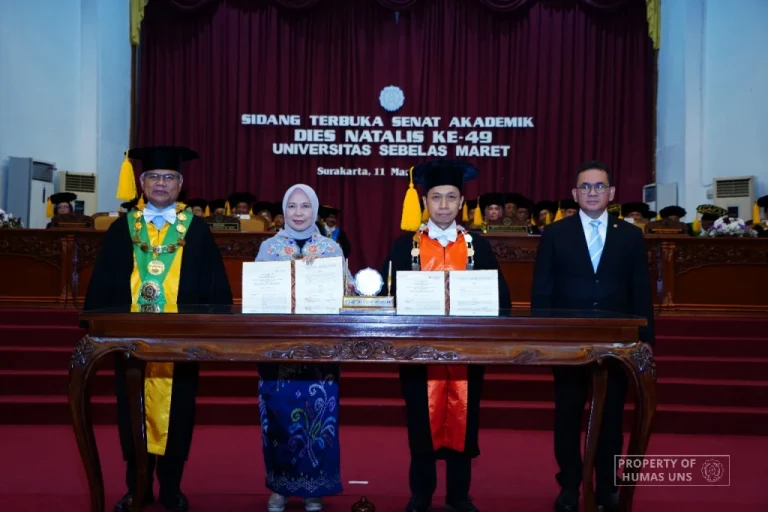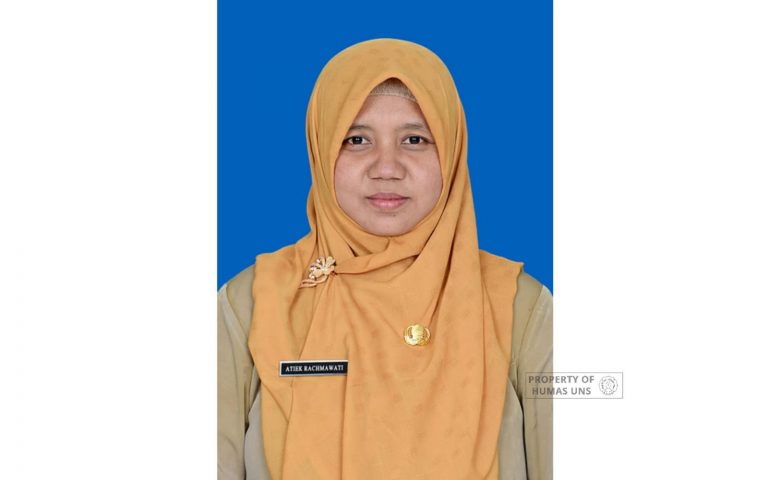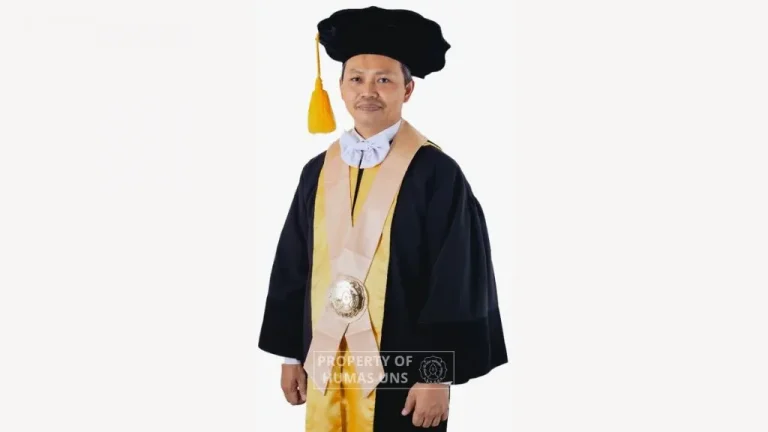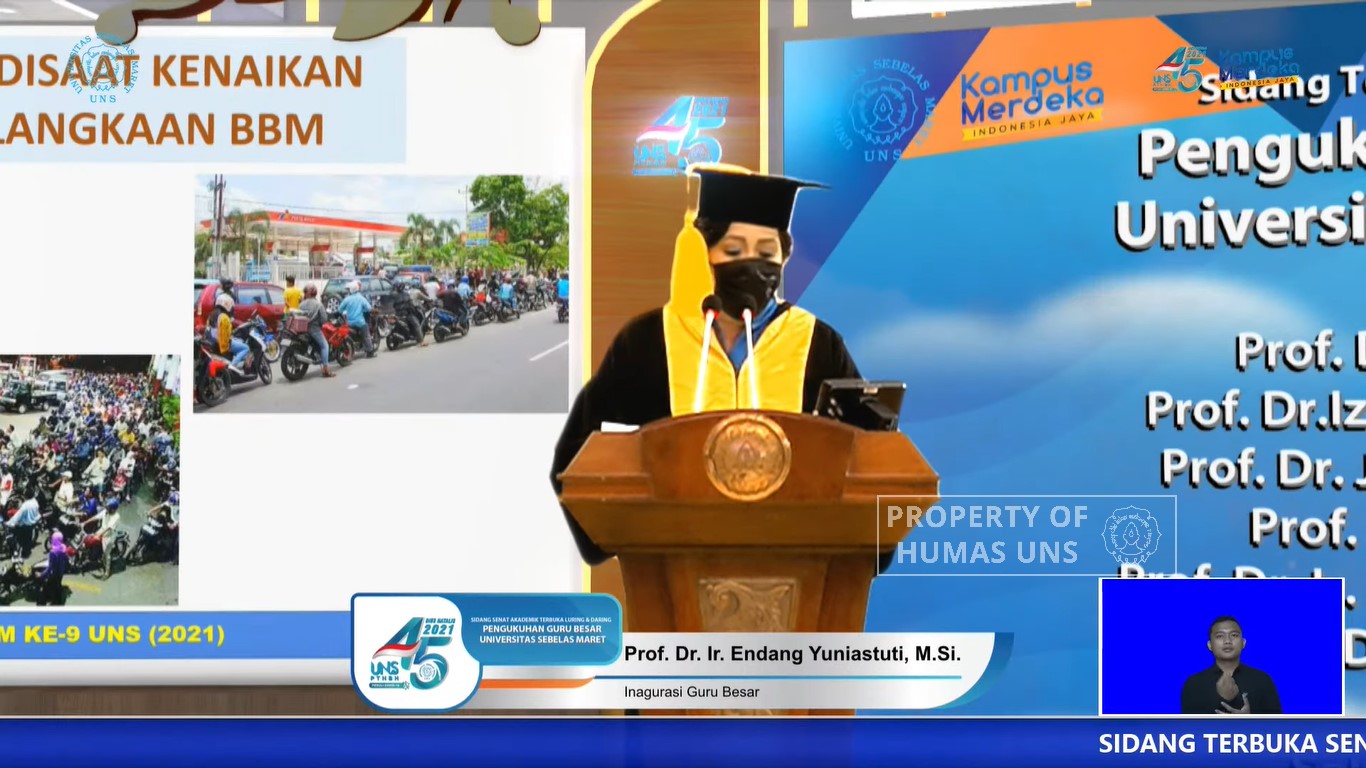
UNS — The Faculty Member of the Faculty of Agriculture (FP) Universitas Sebelas Maret (UNS) Surakarta, Prof. Dr. Ir. Endang Yuniastuti, M.Si., was inaugurated as UNS Professor on Tuesday (9/3/2021). Prof. Endang is the 33rd Professor in FP and 234th Professor in UNS. Her inauguration speech was titled ‘Peranan Genetika Dalam Pemuliaan Tanaman Bio-Energi’ (The Role of Genetics in Bio-Energy Plant Breeding). In her inauguration, Prof. Endang emphasized that plant genetics have a vital role in the plant breeding program.
“Plant genetics have a vital role in plant breeding program to create plant commodities that meet the desired outcome,” Prof. Endang explained.
In her current study, Prof. Endang focuses on bio-energy plant breeding. According to Prof. Endang, Indonesia is a country with high population density, creating a high energy demand. The energy demands continue to increase annually while the energy supply continues to decrease. This condition encouraged humans to find new energy sources. Indonesia has a large potential for natural resources and biological resources as alternative sources of energy.
As someone who works in the agricultural field, she feels responsible for participating and thinking of a means to solve the current energy scarcity using her agricultural knowledge. She stated that Indonesia has great natural and plants potential as new energy sources. The main requirements for biofuels (BBN) based on government regulation are multifunctional plants, high oil production and yield, and has no probability of usage conflict between foodstuffs and biofuel conversion.
“Since 2008 to this day, I have focused in the study on bioenergy field, especially agrofuel, in line with my discipline. The plants that I have researched are jarak pagar (Jatropha), ganyong (Canna discolor), kepuh (Sterculia foetida Linn), and pachira (Pachira aquatica). Since 2019, I started to pay interest in agrofuel research using unused fruit seeds such as rambutan (Nephelium lappaceum) seeds and matoa (Pometia pinnata) seeds,” Prof. Endang stated.
Prof. Endang added that from all her research in agrofuels, kepuh was found to have a good potential as a bio-diesel material. She explained that her study resulted in wastes in the form of pulp and seed shells. These wastes are not disposed to the environment but are processed further through carbonizing and extraction methods to produce powders ready to be pressed into bricks.
Concluding her speech, Prof. Endang hopes that her study can solve the current energy issues. “I hope we can take a role in solving the energy issues through the development of alternative energy according to our discipline and the development of alternative energy or environmentally friendly EBT to achieve energy independence,” Prof. Endang concluded. Humas UNS
Reporter: Zalfaa Azalia Pursita
Editor: Dwi Hastuti