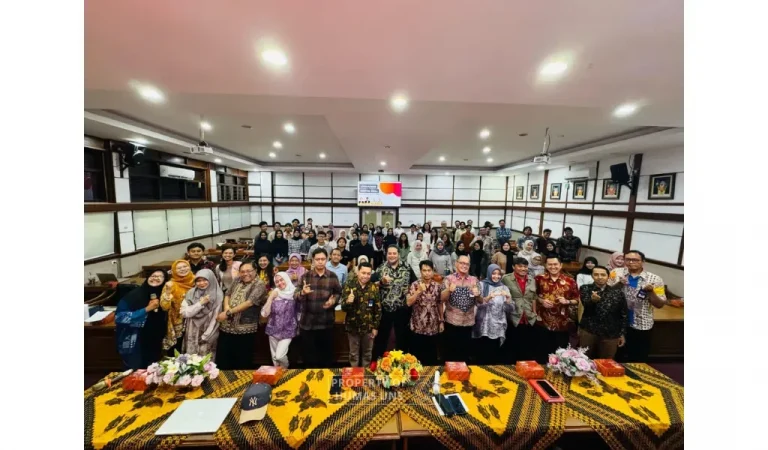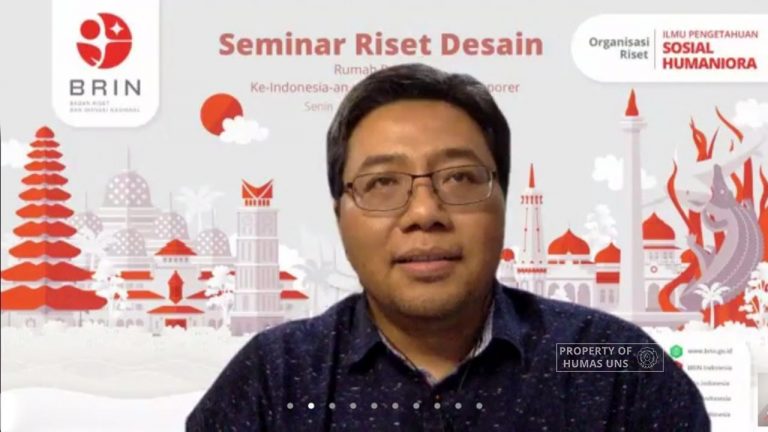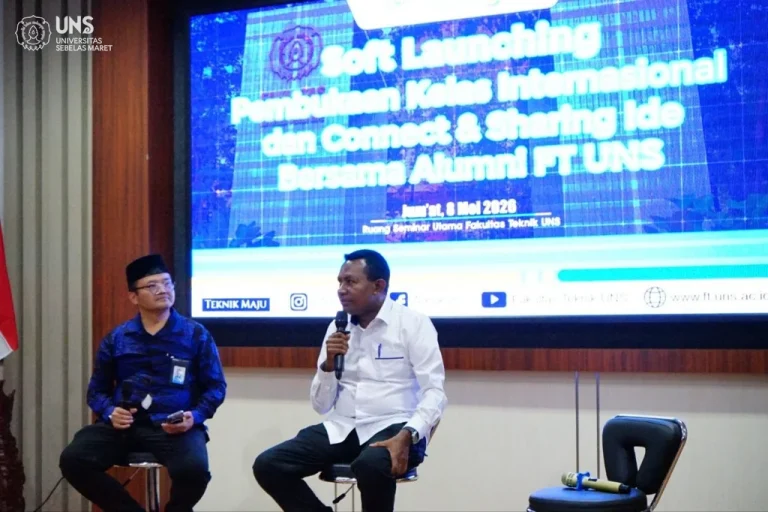
UNS — Attending the Vocational Week held by the Vocational School (SV) Universitas Sebelas Maret (UNS) Surakarta on Thursday (29/7/2021), the Director-General of Vocational Education, Wikan Sakarinto, S.T., M.Sc., Ph.D., shared the strength of vocational education which is dubbed as The Power of Vocational. The Power of Vocational is the strength of vocational education alumni who can choose to work, continue study, or becoming an entrepreneur or BMW (Bekerja, Melanjutkan Usaha, Wirausaha).
However, the Director-General added that this paradigm would be adjusted by putting entrepreneurs as the focus of Vocational School alumni. This adjustment will be made through several policies. The Power of Vocational is also inseparable from the competencies of alumni, which is a combination of soft skill, character, and hard skill. Wikan stated that these aspects would determine Vocational School alumni’s career in the workplace.
“GPA still important, but the real workplace shows that soft skill, character, and hard skill takes place forever,” Wikan stated.
The vocational education alumni also have cognitive and integrity as the competencies. To achieve these competencies, the Ministry has promoted Merdeka Belajar Kampus Merdeka Program (MBKM) tailored to shape Indonesian students’ characters to believe in God almighty and pious, have a noble character, understand global diversities, gotongroyong, creative, critical thinking, and independent.
For a long time, the alumni of universities, both bachelor and vocational degrees were criticized by users because they are less resilient in the workplace, have poor written and spoken communication skills, poor group performance, lack of initiative, and get easily bored. Therefore, a number of policies were taken to shape competent Vocational School alumni, for example, through the link and match policy. This policy involves 2,200 vocational higher education, 14,000 vocational high school (SMK), 17,000 course and training institutes, and partnership and alignment with DUDI.
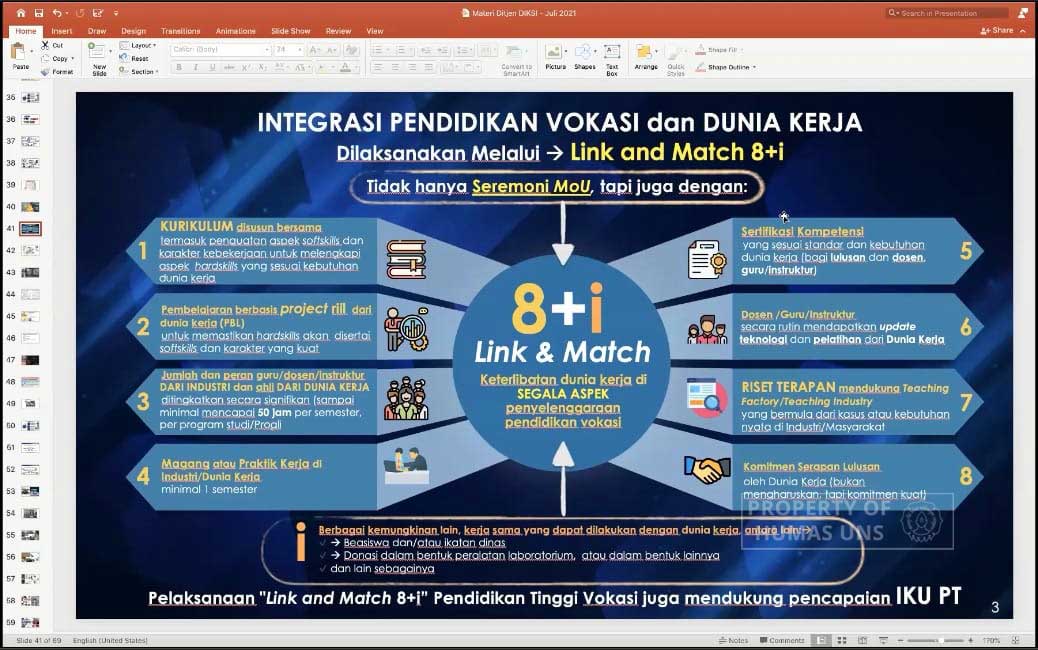
“Link and match policy does not stop at MoU signing ceremony, becoming newspaper news, but it reached a fully comprehensive link and match stage,” Wikan explained.
Link and match policy have 8 + 1 activities including curriculum development, project-based learning from the business world, improving teaching staff with a formal and industrial background, workplace internship, competency certification, training for teaching staff, applied research that supports teaching factory, and commitment for alumni absorption. “This policy might increase in the future,” Wikan added. Humas UNS
Reporter: Alinda Hardiantoro
Editor: Dwi Hastuti